
10 best Smartlead alternatives to fill your pipeline in 2026

Quiz · 60 seconds
Which Smartlead alternative fits your problem?
3 questions to find out what is really blocking your outbound. No email required.
Question 1 / 3
Why are you looking at alternatives?
Question 2 / 3
Where does your list come from today?
Question 3 / 3
What would change your month the most?
🎯
Your result
Your problem sits before the send button
Your answers point at the list and the timing, not at sending capacity. Changing sending platform moves the same names into a different tool. Gojiberry works out who is worth writing to, from more than 30 buying signals checked against your ICP, and you keep whatever you send with.
- More than 30 buying signals watched across socials and the web
- Every account checked against your ICP before it reaches you
- Email waterfall enrichment across 15+ providers
- Sits next to Smartlead, or next to whatever replaces it
📩
Your result
Sending volume is the bottleneck, so look at Instantly
You have the names and you want the sending to hold. That is the one case where another sending platform is the right answer, and Instantly is the closest match to what Smartlead does, with unlimited accounts and warm-up on the outreach plan.
- Fix delivery first, since that is the part you can measure
- When the list becomes the ceiling, that is the layer we add on top
🏢
Your result
You are paying per client, and that is the thing to fix first
Client workspaces billed one by one are what turns a small sticker price into a real invoice. Saleshandy includes unlimited clients and unlimited team members on every tier, which removes that line entirely.
- Move the client billing problem out of the way first
- Then the question becomes where each client's next 300 names come from
Smartlead starts at $39 a month with unlimited mailboxes and unlimited warm-up, which is why agencies end up there. Then you add the premium warm-up pool at $59, the mailboxes at $4.50 each, the inbox placement testing and the white label at $29 per client per month, and the invoice stops looking like $39.
And after all that, the tool still never tells you who to write to. This page gives you ten alternatives, what each one really costs in August 2026, and which one matches which problem, because the reason you are leaving decides where you should go.
Gojiberry finds your prospects for you
Every tool on this list sends. Gojiberry works out who is worth sending to, from more than 30 buying signals.
Get your first leads for freeTable of contents
- The 10 best Smartlead alternatives
- How we tested the 10 tools
- The 10 alternatives
- What is Smartlead?
- Why do people look for a Smartlead alternative?
- Which Smartlead alternative is right for you?
- Gojiberry vs Smartlead: which one brings you leads?
- Why we built this in the first place
- Your questions about Smartlead alternatives
The 10 best Smartlead alternatives
Gojiberry is the pick for most people reading this page. Every other tool here sends, and if raw sending volume is genuinely your bottleneck one of them will fix it. But for a team of two to ten, the list is almost always the ceiling rather than the send button, and Gojiberry is the only tool on this list that decides who is worth writing to.
How to read this table. Every price above was taken from the vendor's own public pricing page in August 2026, at the monthly rate. Where a plan is billed per user, we say so, and where it is billed per workspace, we say so too, because that is the difference between a $59 line and a $295 line once five people log in. Do the multiplication for your own team size before you compare anything.
How we tested the 10 tools
What we did. We opened each vendor's own pricing page in August 2026 and wrote down three things: the monthly price, the annual price, and what the meter runs on. That last one matters more than the sticker. Smartlead and Instantly meter on sending. Reply.io and Apollo meter on people. Woodpecker meters on prospects contacted. Snov.io meters on credits. Two tools with the same headline number can be four times apart at five users, and most comparison pages quietly skip that.
We also read what each vendor puts in writing about limits, client workspaces and add-ons, because the add-ons are where the bill really moves. Anything we could not find on a vendor page is not in this article.
What we did not do. We did not run ten parallel campaigns and time the deliverability. Nobody publishing a page like this has, and the reply-rate numbers you see quoted on comparison pages are almost never measured under conditions you could reproduce. So there are no invented benchmarks here, no scores out of ten, and no test results we cannot show you the source for. Where the only honest answer is that it depends on your domains and your copy, we say that instead.
The 10 alternatives
In order, with the problem each one solves. The first entry is ours, and we tell you plainly what it does not do.
1. Gojiberry
Gojiberry does not send cold email. It works out who you should be writing to, then hands you those people with the reason attached. It watches more than 30 buying signals across social platforms and the web, job changes, funding, hiring, competitor engagement, checks each account against your ICP, and enriches the contact through a waterfall of 15+ providers.
- 📡More than 30 buying signals, monitored continuously rather than pulled from a static list
- 🎯ICP filtering before an account ever reaches you
- 📧Email waterfall enrichment across 15+ providers
- 🔄Sits alongside your sending tool, including Smartlead
Price. Free plan to start, Pro at $99 a month. Flat, not per user.
Strength. It answers the question none of the other nine answer: who is worth writing to this week, and why now.
Limit. On pure cold email volume, Smartlead and Instantly beat us, and it is not close. They are sending infrastructure. We are not.
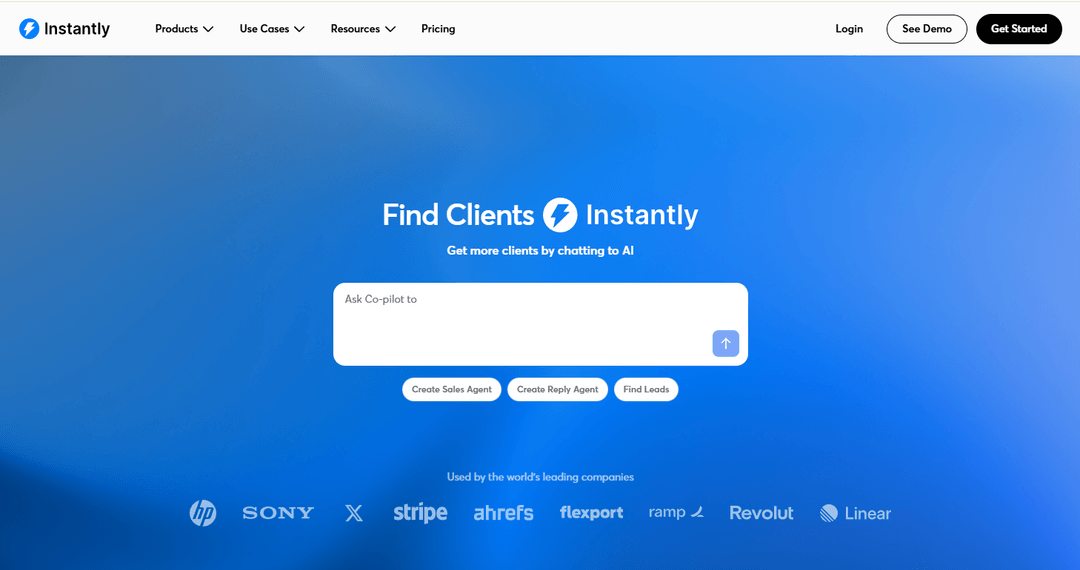
2. Instantly
The tool most people land on when they want what Smartlead does with fewer moving parts around it. Unlimited email accounts and unlimited warm-up are on the outreach plan rather than gated behind an add-on, which is the specific comparison people run when they leave.
- ∞️Unlimited email accounts and unlimited warm-up
- 📩5,000 sends and 1,000 contacts on the entry outreach plan
- 💰Bundled tiers if you also want the database and the deliverability tooling
Price. Growth, the outreach-only offer, is $47 a month per workspace. The bundles are Starter at $94 monthly or $85 annual, Scale at $194 or $175, Agency at $555 or $500.
Strength. If sending volume is genuinely your bottleneck, this is the switch that fixes it. We go through the head to head in Smartlead vs Instantly.
Limit. The 1,000-contact ceiling on Growth arrives faster than the send limit does, and the bundles are where the price jumps.
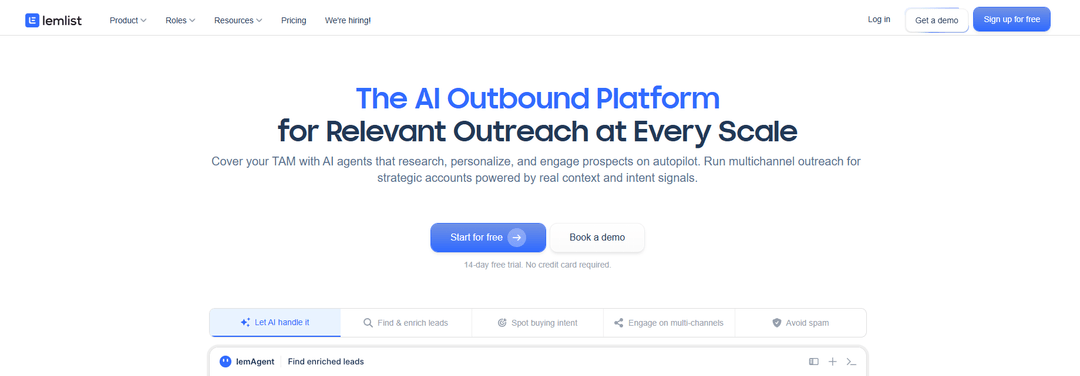
3. Lemlist
For teams whose emails get replies because of how they are written, not how many go out. Lemlist is built around personalisation at the message level, and it now sells buying intent signals as credits, which is the closest any tool on this list comes to answering the targeting question.
- ✍️Personalisation, custom variables and multichannel steps
- 👥Unlimited users and unlimited senders on the Email plan
- 📈Buying intent signals priced in credits, from 20 to more than 400 credits per signal
Price. Email is $69 a month, $55 annual, billed per workspace with unlimited users and 50,000 sends. Multichannel is $109 a month, $87 annual, billed per user with 5 senders.
Strength. Unlimited users on a workspace price is rare, and it makes Lemlist cheap for a four-person team. The comparison is laid out in Smartlead vs Lemlist.
Limit. Moving to Multichannel flips the billing model to per user, so the same team suddenly multiplies.
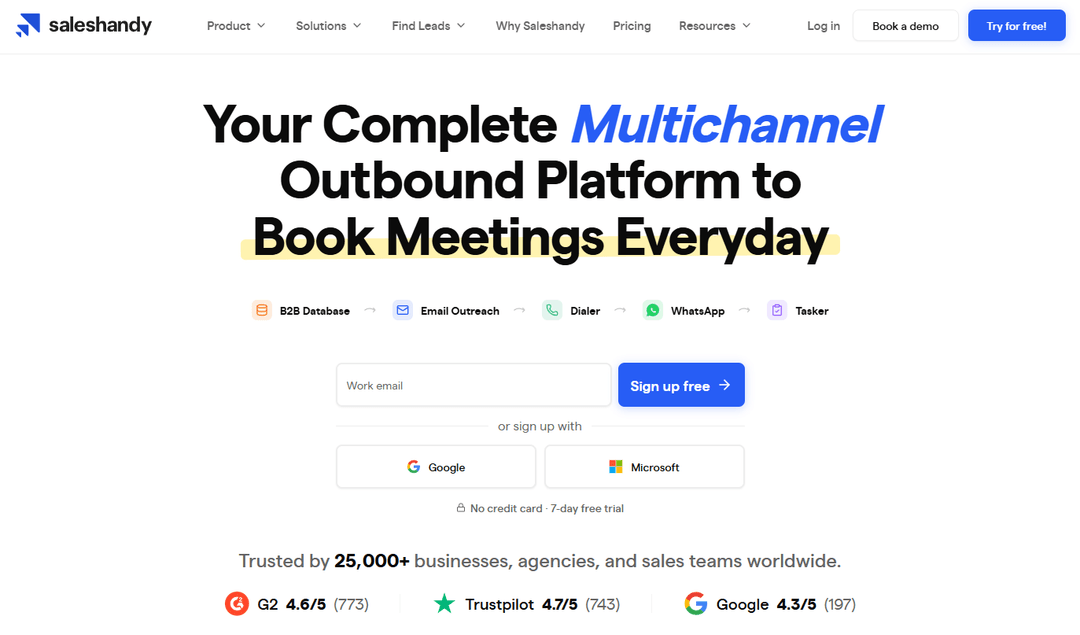
4. Saleshandy
The cheapest credible entry on this list, and the one that removes the line item agencies complain about most: clients cost nothing extra. Unlimited email accounts, unlimited team members and unlimited clients sit on every tier, including the entry one.
- ∞️Unlimited email accounts, team members and clients on every plan
- 📥Sender rotation and a unified inbox
- 🏷️White label included from the Scale plan rather than billed per client
Price. Per workspace, not per user. Starter is $36 a month, $25 annual. Pro is $99 a month, $69 annual. Scale is $199 a month, $139 annual. Mailboxes are a separate add-on from $2.99 each.
Strength. The exact thing Smartlead charges $29 per client per month for is included here, which is why agency margins survive the switch.
Limit. The meter runs on active prospects, 2,000 on Starter, and that ceiling arrives well before the email limit does.
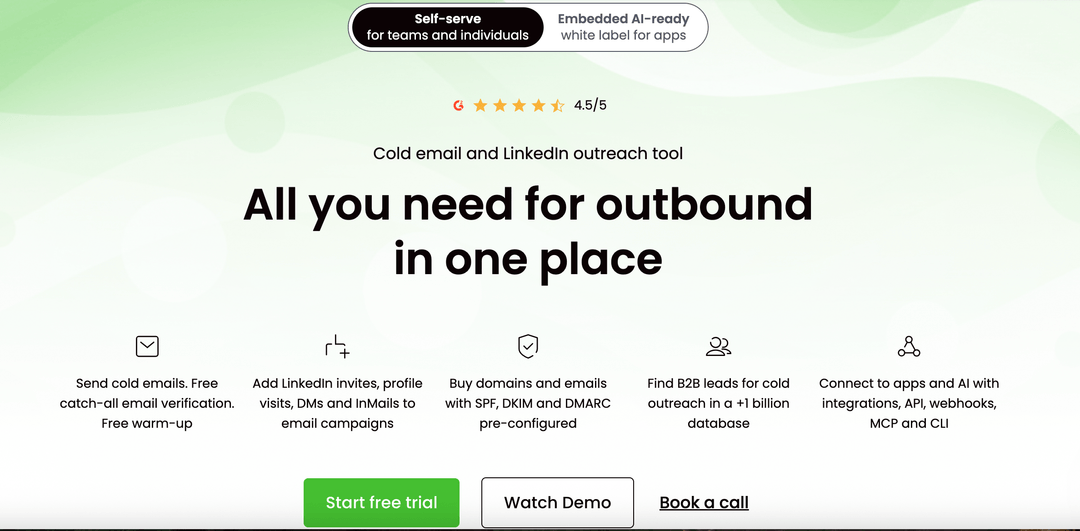
5. Woodpecker
Woodpecker sends more slowly on purpose. Adaptive sending, human-like randomisation, adjustable daily caps and bounce protection are the product, and the pricing follows the same logic: you pay for prospects contacted rather than for seats or mailboxes.
- 🛡️Adaptive sending, inbox rotation and deliverability monitoring
- 👥Unlimited team members and unlimited email accounts included
- 🏢Agency panel with client separation, billed per active client
Price. Per workspace, metered on contacted prospects: $7 per 100 prospects a month, so 500 prospects is $35. Annual billing takes 33 percent off. The agency panel is $27 per active client per month, white label $5, LinkedIn $29 per connected account, integrations and API $20.
Strength. If your domains are old and valuable, the slower default is the right default, and unlimited seats keep a small team cheap.
Limit. The agency panel and white label are billed per client, which is the same structure people leave Smartlead over.
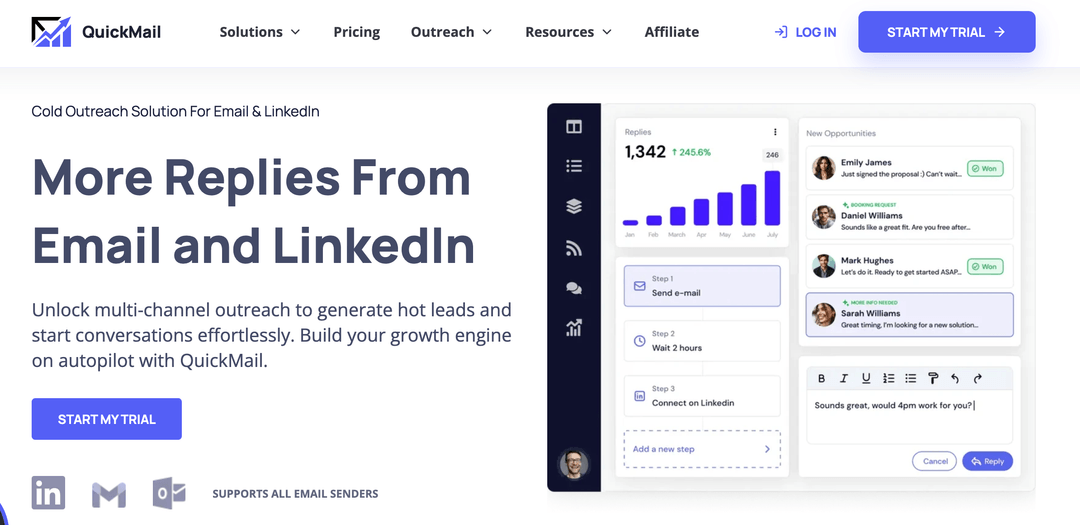
6. QuickMail
QuickMail's answer to the seat problem is to stop counting. Senders, LinkedIn accounts and users are unlimited on every plan including the cheapest one, so growing the team never changes the subscription line.
- ∞️Unlimited senders, LinkedIn accounts and users on all three plans
- 🔄Inbox rotation and deliverability tooling included
- 📂Extra workspaces for $49 each if you separate clients
Price. Per workspace. Starter $49 a month, Growth $99, Agency $299.
Strength. Nothing about your team size changes the bill, which makes budgeting for a year straightforward in a category where it usually is not.
Limit. Separating clients means buying workspaces at $49 each, so an agency with eight clients is doing the same arithmetic it was doing before, just with different numbers.
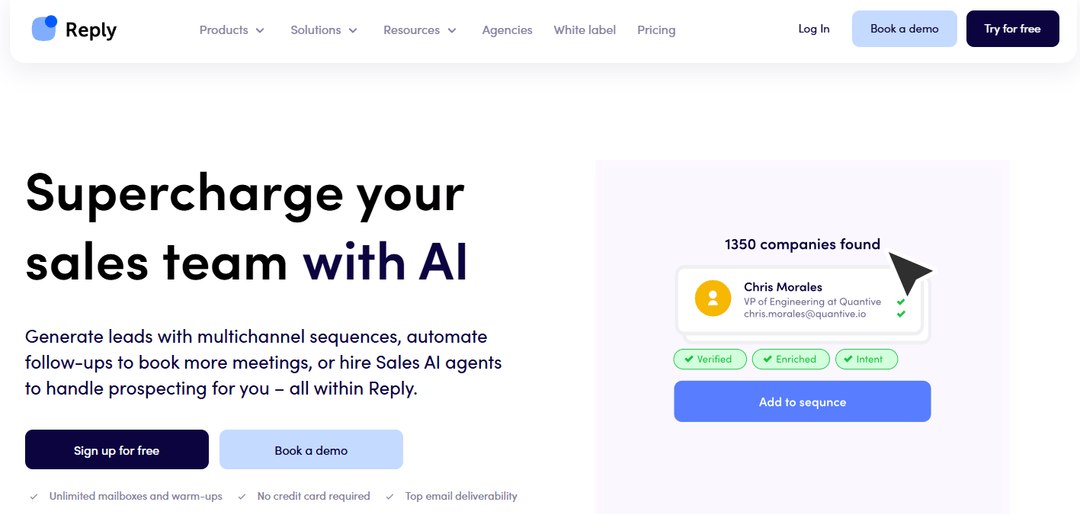
7. Reply.io
The widest channel coverage on this list. Email, LinkedIn, calls, SMS and WhatsApp live in the same sequence builder, and there is an AI rep, Jason, that runs prospecting and reply handling on its own. It is also the most expensive tool here once you add the pieces.
- 📡Email, LinkedIn, calls, SMS and WhatsApp in one conditional sequence
- 🤖Jason, an AI rep sold as a separate product
- 📊Unlimited mailboxes and warm-up under a fair usage policy
Price. Per user. Email Volume starts at $59 a month, $49 annual, for 1,000 active contacts. Multichannel is $99 a month, $89 annual. LinkedIn automation is $69 per account per month and calls plus SMS $29 per user. The AI rep starts at $500 a month.
Strength. If your motion genuinely runs four channels, keeping them in one sequence is worth paying for.
Limit. Per user, with channels billed on top. Three people on Multichannel with LinkedIn is $504 a month.
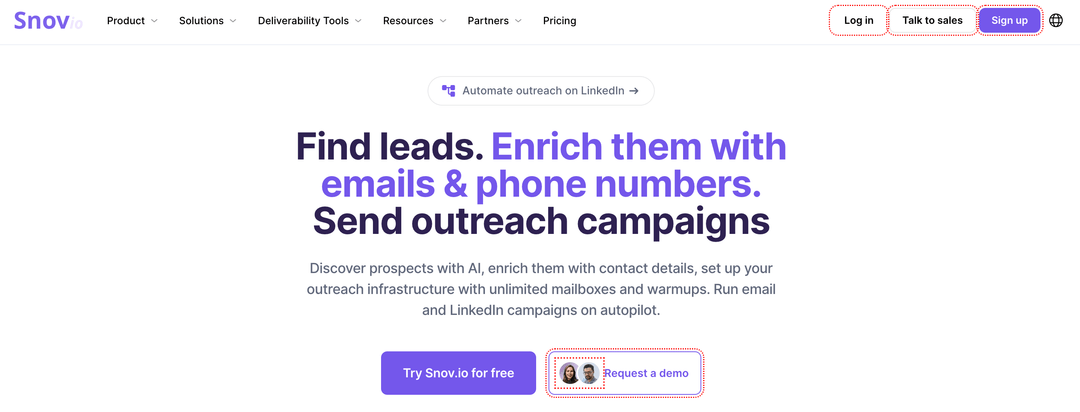
8. Snov.io
Snov.io finds the email, checks it, and sends it, all on one subscription. For a small team that would otherwise pay for a database, a verifier and a sender separately, that consolidation is the whole argument.
- 🔍Email finder, verifier, drip campaigns, warm-up and a light CRM in one place
- 👥Unlimited team seats, unlimited sender accounts and unlimited campaigns on paid plans
- 💳Usage metered in credits, with a separate recipients quota for sending
Price. Per workspace with unlimited seats. Starter is $39 a month for 1,000 credits and 5,000 recipients. Pro S is $99 a month for 5,000 credits. Annual billing takes around 25 percent off. LinkedIn automation is a separate slot at $69 a month, $62 on annual.
Strength. Unlimited seats on a workspace price, so a five-person team pays what a founder pays.
Limit. Credits are shared across finding, verifying and saving, and on Starter one person can spend the month's allowance in a fortnight.
9. Apollo
Apollo is the answer when the problem is upstream: you do not have enough people to write to. It gives you the contact database and the sequencing on the same invoice, which is why so many small teams start here rather than buying data and sending separately.
- 📚A contact database of more than 270 million records with filters and intent topics
- 📩Sequences, a dialer from the Professional plan, and CRM sync
- 💳Everything metered through one shared credit pool
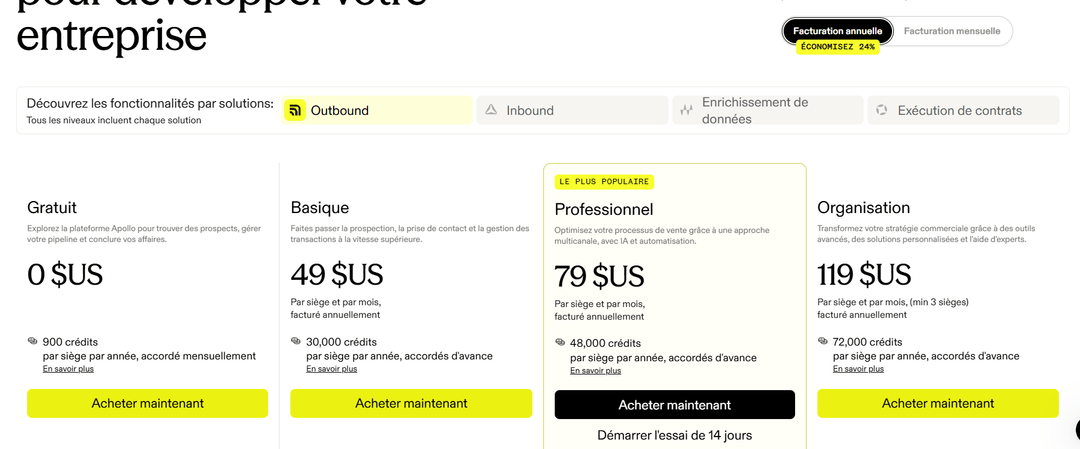
Price. Per user. Free plan, Basic $59 a month or $49 annual, Professional $99 or $79, Organization $149 or $119 with a three-seat minimum.
Strength. One invoice instead of three, and the free tier is genuinely usable for testing a market. More detail sits in our Apollo review and in Apollo alternatives.
Limit. Per user pricing plus credit burn. A three-person team on Professional is $297 a month before a single credit top-up.
10. HeyReach
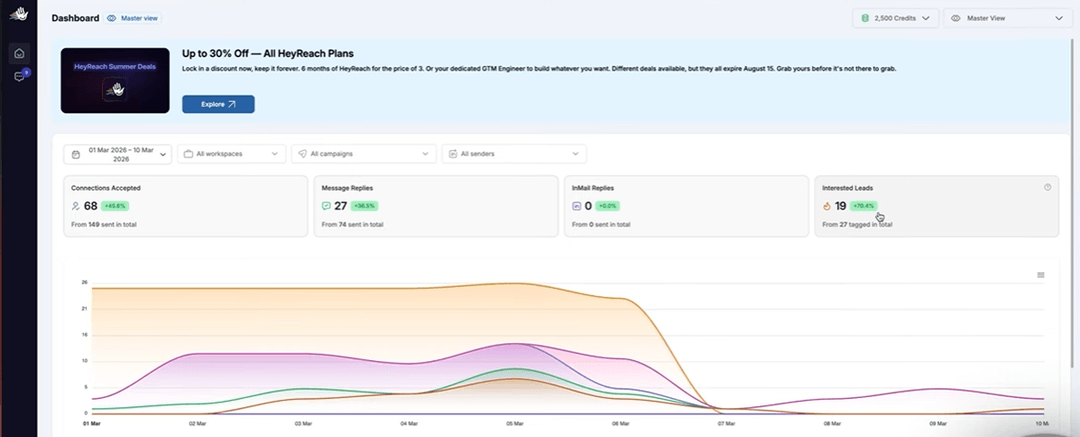
This is what Smartlead users bolt on rather than replace Smartlead with, because Smartlead has no LinkedIn steps at all. HeyReach runs many LinkedIn accounts from one dashboard, rotates volume across them, and pools every reply into a single inbox.
- 🔄Sender rotation across connected LinkedIn accounts
- 📥One pooled inbox and client workspaces
- 👥Teammates, assistants and client logins cost nothing, only senders are billed
Price. Per LinkedIn sender, not per user. Growth is $79 per sender a month, $63 on annual billing. The Agency bundle is $999 for 25 senders.
Strength. It adds the channel Smartlead does not have, without touching your email setup. We go deeper in our HeyReach review and in HeyReach alternatives.
Limit. Per sender billing gets expensive quickly. Six LinkedIn accounts is $474 a month, on top of whatever you pay for email.
You shouldn't have to guess who to contact
Gojiberry watches more than 30 buying signals across socials and the web, checks each account against your ICP, and sends you the ones worth writing to.
Get your first leads for freeWhat is Smartlead?
Smartlead is a cold email platform built around one idea: you should never have to ration mailboxes. Connect as many as you like on any plan, warm them all up, rotate sending across them, and manage every reply from a single inbox. It is sending infrastructure sold to people who send a lot, which in practice means lead generation agencies. The long version sits in our Smartlead review, which covers the product itself rather than the competition.
What can you do with Smartlead?
- ∞️Connect unlimited mailboxes on every tier, with unlimited warm-up included
- 🔄Rotate sending across those mailboxes so no single domain carries the campaign
- 📥Handle replies in a master inbox instead of opening each account
- 🏢Give each client their own space, with white label branding, billed separately
- 🔧Buy the infrastructure inside the tool: domains, mailboxes, dedicated servers, a dialer
- 📈Test inbox placement and monitor deliverability across the whole setup
The pros and cons of Smartlead
Where Smartlead is strong
- 🏆The sending infrastructure is excellent. Unlimited mailboxes and warm-up on a $39 entry plan is a real offer, not a headline trick.
- 💰Volume per dollar is hard to beat. 90,000 sends a month on Pro, 500,000 on the top tier.
- 🛠️The whole stack is buyable in one place, domains and mailboxes included, which saves an afternoon of setup.
- 📊Placement testing and deliverability monitoring exist natively rather than as a third-party bolt-on.
Where Smartlead costs you
- 🧾The sticker is not the bill. Premium warm-up, mailboxes, servers and placement testing are all separate lines.
- 🏢White label is $29 per client per month, so growth in clients is growth in cost.
- 🔗No LinkedIn steps inside sequences, which means a second tool and a second bill.
- 🔍It never tells you who to write to. The list is your problem, before and after.
How much does Smartlead cost?
Billing is per workspace, not per user, and the annual discount is 17 percent. Mailboxes and warm-up are unlimited on every tier. Unlimited Prime includes three SmartServers with OAuth and at least three client spaces.
Then the add-ons. Premium warm-up is $59 a month on Basic and Pro, included on both Unlimited tiers. Private infrastructure is $39 on Pro and Unlimited Smart. A client space with white label is $29 per client per month. SmartServers are $39 per server. New Google or Outlook mailboxes through Zapmail are $4.50 per mailbox plus $13 per domain per year, through InfraInbox $5 plus $16, SMTP mailboxes through Mailreef $3.99 plus $19, and pre-warmed mailboxes $9 plus $18. The dialer starts at $9 a month in credits.
What it costs once you stop reading the first column
A three-person team. Pro at $78 annual, nine fresh mailboxes at $4.50 each, three domains at $13 a year. That lands around $122 a month, against a $78 sticker.
An agency with five clients. Unlimited Smart at $144 annual, five client spaces at $29 each, twenty mailboxes at $4.50, five domains. That lands around $385 a month, against the same $78 people quote when they recommend it.
Neither of those numbers is a criticism of the product. They are what the product costs when you use it the way agencies use it.
What do Smartlead users think?
Checked on 8 August 2026, with the review counts attached, because a score without a sample size is not information.
Read that spread rather than any single line of it. The Capterra 4.3 rests on seven reviews and is not worth weighing. The G2 figure sits on a much larger base and is the friendliest of the three. The Trustpilot 3.2 across 128 reviews is the one worth reading properly, because Trustpilot is where billing and support complaints tend to land rather than product opinions.
Sources and date: prices from the Smartlead pricing page, ratings from Trustpilot, Capterra and G2, all checked on 8 August 2026. The G2 figure is approximate and should be reopened by hand, since the site blocks automated access.
If you want the feature by feature read rather than the alternatives, the full Smartlead review goes through the master inbox, the warm-up pool and the infrastructure catalogue one at a time.
Why do people look for a Smartlead alternative?
Four reasons come up, and they are not equally serious.
The add-ons multiply the sticker price
$39 buys the platform. It does not buy premium warm-up, mailboxes, domains, placement testing or servers. Each one is defensible on its own, and together they are why the invoice and the pricing page stop matching after month two.
The white label is billed per client
At $29 per client per month, an agency's tenth client costs the same as its first, forever. That is a fixed tax on the exact growth an agency is trying to produce, and it is the single most common reason agencies compare Smartlead with Saleshandy.
There is no LinkedIn inside sequences
Smartlead does email. If your sequence needs a connection request or a LinkedIn message between two emails, that step lives in a second tool with a second subscription and a second inbox to watch. Most teams end up bolting HeyReach onto it.
It sends perfectly and never tells you who to write to
This is the deepest one, and it is not a Smartlead flaw. No sending platform on this page decides who goes into the sequence. They all assume you arrived with a list and a reason to write today. When reply rates fall, the instinct is to buy more sending, and more sending applied to a cold list produces more of the same result.
Which Smartlead alternative is right for you?
Find the line that sounds like your month, not the column that sounds like your company.
Your competitors' customers are moving right now
Someone in your market just changed jobs or started following a competitor. Gojiberry spots it, checks they match your ICP, and writes before anyone else does.
Get your first leads for freeGojiberry vs Smartlead: which one brings you leads?
Start with a number we did not produce. A third party tested Smartlead's built-in prospecting against their own ICP and pulled 413 contacts with a usable email address. One of them matched the job title they were targeting. One. That is not a claim about deliverability, which Smartlead does well. It is a claim about targeting, which is a different job, and the sending part of the product is not responsible for it.
The line that matters: Smartlead optimises sending capacity, Gojiberry optimises who receives it. Those are not competing answers to one question. They are answers to two questions, and most teams under ten people have already solved the first one.
What that looks like in practice, from customers who agreed to be named: Wispra rebuilt their outbound around intent signals and report reply rates up around 60 percent. Mindflow moved from spraying their ICP to writing only to accounts that moved, and report a 31 percent lift. GTE Localize passed 100 meetings booked. Baur Software runs the same motion on a smaller team. The full write-ups sit in our case studies.
Why we built Gojiberry
This started as a problem we had
Before Gojiberry, Roman prospected by hand on socials for Coco.ai. Not sending sequences: doing the intent research himself, one browser tab at a time. Watching who had just changed jobs, who had started engaging with the category, who had commented on something that suggested they had the problem. Then writing to those people with a reason that was true.
It worked, which is the part worth saying plainly, because it is why the product exists. And it did not scale. One person can follow about thirty accounts properly. Past that the method collapses, and what collapses first is the reason for writing. You stop noticing the signal, you keep the cadence, and within a month you are doing mass outreach with a personalisation field.
Gojiberry is that routine running on its own, which is also why the product assumes a team of two to ten people rather than an enterprise sales floor. It was built for the size of team where nobody has a spare afternoon to rebuild the list.
Your questions about Smartlead alternatives
What is the cheapest Smartlead alternative?
Saleshandy, at $36 a month per workspace monthly or $25 on annual billing, with unlimited email accounts, unlimited team members and unlimited clients included. Snov.io at $39 a month is close behind and adds the email finder and verifier, and Woodpecker starts at $35 for 500 contacted prospects.
Cheapest on the sticker is not always cheapest in use. Saleshandy meters on active prospects, 2,000 on the entry tier, and Snov.io meters on credits shared between finding, verifying and saving. Check which meter you would hit first.
Which Smartlead alternative is best for agencies?
Saleshandy, if the thing pushing you out is the $29 per client per month white label. Unlimited clients and team members sit on every tier, and white label is included from the Scale plan rather than metered per client. For an agency with five clients, that difference alone is $145 a month.
QuickMail is the other one worth pricing, since senders, LinkedIn accounts and users are unlimited on all plans. Extra client workspaces are $49 each there, so run the arithmetic on your own client count before you switch.
Does any Smartlead alternative do LinkedIn natively?
Yes. Lemlist runs LinkedIn steps inside sequences on the Multichannel plan at $109 per user per month. Reply.io covers LinkedIn, calls, SMS and WhatsApp, with LinkedIn automation billed at $69 per account per month on top of the plan. Woodpecker adds LinkedIn at $29 per connected account, and Snov.io sells LinkedIn slots at $69 a month.
If LinkedIn is the main channel rather than a step, HeyReach at $79 per sender per month is the specialist, and it is designed to sit next to an email tool rather than replace one.
Is Instantly better than Smartlead?
On the specific thing people leave for, it is simpler. Instantly's outreach plan is $47 a month per workspace with unlimited email accounts and unlimited warm-up included, where Smartlead sells premium warm-up as a $59 add-on on Basic and Pro. Smartlead gives you more raw sending at the top of the range and a deeper infrastructure catalogue.
Neither is better in the abstract. If you are sending 90,000 emails a month and buying mailboxes in bulk, Smartlead's catalogue is an advantage. If you want fewer lines on the invoice for a similar job, Instantly is the cleaner switch.
How much does Smartlead really cost once the add-ons stack?
A three-person team on Pro at $78 annual, with nine fresh mailboxes at $4.50 each and three domains, lands around $122 a month. An agency running five clients on Unlimited Smart at $144, with five client spaces at $29 and twenty mailboxes, lands around $385 a month.
The lines that move the number most are premium warm-up at $59 on the two lower tiers, the client space at $29 each, and the mailboxes at $4.50 to $9 each depending on the provider. None of it is hidden. It is just not in the first column of the pricing page.
How do I switch from Smartlead without losing my campaigns?
Move in this order. Export your prospects and your sequence copy first, since those are the only two things that are genuinely yours. Then connect your mailboxes to the new tool and let them warm up there before you point any campaign at them, because a mailbox that changes platform mid-campaign is the classic way to lose a domain.
Run both platforms in parallel for two or three weeks, with the old campaigns finishing where they are and new ones starting in the new tool. Cancel only once a full sequence has completed on the new side and replies are landing where you expect.
Do I need to replace Smartlead, or add something next to it?
Replace it if the problem is the bill or the sending itself: add-ons stacking, the per client white label, a volume ceiling you keep hitting. Those are platform problems and a different platform solves them.
Add something next to it if the sending is fine and the results are not. Low reply rates on a technically healthy campaign are almost never a sending problem, and swapping platforms in that situation moves the same names into a new dashboard and produces the same numbers a month later.
Can I run Gojiberry alongside Smartlead?
Yes, and that is the normal setup rather than the exception. Gojiberry does not send cold email, so there is nothing to migrate and no campaign to rebuild. It watches more than 30 buying signals, checks each account against your ICP, enriches the contact, and hands you people worth writing to. Smartlead keeps doing the sending.
Teams that do this keep the deliverability work they already paid for, and change what goes into the top of the sequence. That is usually the cheaper half of the fix.
Want us to find the prospects too?
Tell Gojiberry who you sell to and it starts finding prospects who are already looking. Keep your sending tool, we handle the who.
Get your first leads for free