
10 best LeadIn alternatives to fill your pipeline in 2026

Which LeadIn alternative fits your team?
Three questions, one straight answer. No email asked.
QUESTION 1 / 3
LeadIn runs your social and email prospecting from one cloud dashboard, at 97€ per seat per month, with no sending quota and every reply in the same inbox. For a founder prospecting alone, it does the job.
Then a second and a third person join. The invoice triples while the pipeline doesn't. And the tool still never tells you who deserves a message this week. Here are the ten alternatives we tested against it. What they cost in July 2026. Which one fits a team of two to ten.
Stop building lists by hand. Let the people who are already looking come to you.
Launch my agent for freeTable of contents
The 10 best LeadIn alternatives
Short version. If the hard part of your week is working out who to contact, start with Gojiberry. It brings the leads to you instead of sending you off to build another list. If your bottleneck is something else, raw sending volume or dirty data or ten client accounts to juggle, then something else on this list will serve you better. We'll tell you which one as we go.
Entry prices checked on each vendor's public pricing page in July 2026. Most of them bill per seat, so do the multiplication for your own team.
How we tested the 10 tools
Two weeks per tool, between May and July 2026, one at a time. Same offer and same market everywhere so the tool was the only thing that changed. We kept the volume deliberately small. 400 prospects a month, run by three people who prospect part time and have no ops person behind them.
Four things decided the verdict. Time to a first campaign live. How many contacts survived a manual ICP check. Deliverability on the email steps. And how fast support answered a real question sent from an ordinary account. We pay for every tool ourselves and Gojiberry is our own product. That's exactly why its limits are written down like everybody else's.
The 10 alternatives
Same four things for each one: what it is and who it suits, what you can automate with it, what it really costs once you count your seats, and where it stops being a good idea. We've used all ten. Some of them we still use.
1. Gojiberry
Gojiberry is an AI-powered multichannel prospecting platform. It tracks more than 30 buying intent signals across socials and the web, surfaces the leads who are actively looking right now, and triggers personalized outreach across several channels.
In daily use, you never open it to choose who to contact. You paste your website URL at onboarding, correct the ICP the agent proposes, and after that you're looking at the twenty people who moved this week instead of a list of ten thousand names.
What the agent handles without you:
- 🎯 30+ intent signals : job changes, funding rounds, competitor engagement, group activity and keyword mentions. You keep the ones that mean something in your market.
- 🧠 ICP filtering before anything is sent : the people who were never going to buy get dropped, which is why reply rates hold instead of decaying.
- 📝 AI written first messages : the opening line refers to the actual reason you're writing today, not a first name in a template.
- 📬 Email waterfall enrichment : more than 15 providers queried in turn to find a professional address.
- 🔁 Multichannel outreach : socials and email coordinated for you, with no sequence to build.
- 📊 Reply rates per signal : after three weeks you know which triggers are worth acting on.
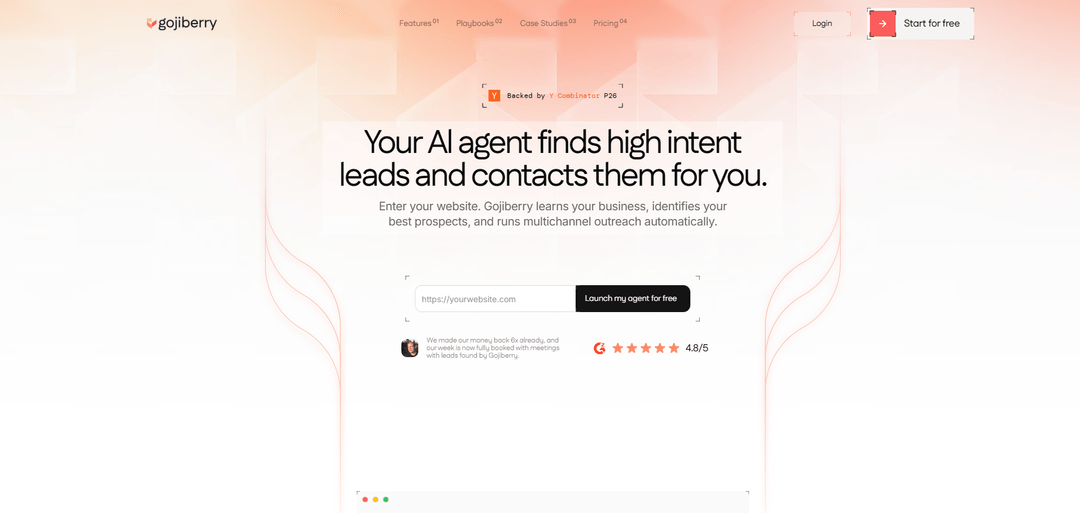
Gojiberry charges $99 a month on the Pro plan. That covers two social senders and as many campaigns as you want to run. If you need more senders there's an Elite plan, priced on what you connect to it.
We're not neutral here, so let's be blunt about it. It wins because the qualifying step stops depending on somebody finding the time for it, and in a team of three that's always the step that gets skipped. Where it stops is the sender count, because Pro covers two social senders, so if you need six of them live on day one a tool priced per sender will cost you less. And if your buyers aren't active online, no signal engine invents activity that's not there.
2. Waalaxy
Waalaxy is a French Chrome extension for LinkedIn automation, with email steps on the higher plans. It's usually the first tool a founder installs, because the free plan lets you send a few dozen invitations a month without handing over a card.
What you can automate with it:
- 🚀 Connection requests, messages and follow ups : pick a template and set your delays. There's nothing to learn here, and that's most of the appeal.
- 📥 Automatic prospect import : pull people from a search result or from the comments under a post, instead of copying contacts one by one.
- 📧 Email steps from the Advanced plan : the finder allowance went from 25 to 500 credits in 2026, which finally makes multichannel realistic.
- 📇 A shared inbox and a team plan : replies from both channels in one place, and several people working side by side.
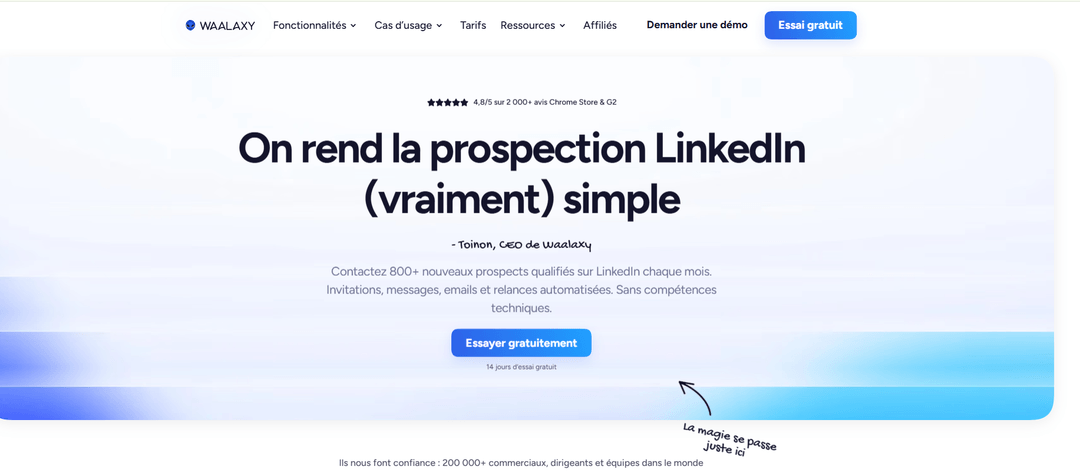
Waalaxy starts at 19€ per user per month on Pro. Advanced is 49€ and Business is 69. Paying a year upfront cuts roughly half of that. Be aware of what the entry price actually buys you though. The 19€ plan is social only with 25 email credits, so the tier you'll really end up on is the 69€ one.
Nothing here is easier to start with. The catch is the architecture. It runs in your browser, so your campaigns stop when you close the laptop, and prices have climbed hard over the last two years.
3. Lemlist
Lemlist started as a cold email tool and grew into a multichannel platform with social steps, calls and its own contact database. It's the tool for people who believe the message is what makes outbound work, and who will spend real time on each campaign.
What makes it different from a plain sequencer:
- 🎨 Personalization beyond a first name : images, short videos and landing pages generated per prospect, with their name or logo inside the visual.
- 🔥 Deliverability included : lemwarm warms your mailboxes and watches where your emails land, so that's one subscription you skip.
- 🧩 Conditional multichannel sequences : email, social steps and calls in one campaign, branching on what the prospect did.
- 🗂 A built in lead database : several hundred million contacts with enrichment credits, so you build lists without leaving the tool.
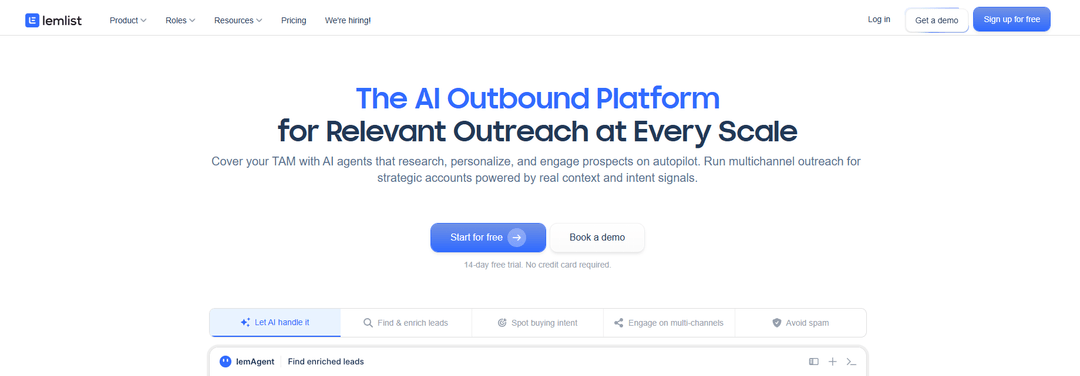
The email plan costs $69 a month for the whole workspace, with unlimited users on it, and the multichannel plan moves to $109 per user per month. Lemlist has reworked its pricing twice this year, so check the live grid before you build a budget around any of those numbers.
For two or three people who personalize seriously, the bundle is decent value. Past three seats on multichannel, the per user model starts to hurt, and high volume senders will find infrastructure tools far cheaper.
4. HeyReach
HeyReach was built for agencies and teams running several sender accounts at once. You pay per connected sender rather than per human, so you can invite as many teammates, assistants or clients into the workspace as you like.
Where it earns its keep:
- 🔀 Sender rotation : outreach spreads across accounts instead of stacking on one, which is how you get volume without pushing an account into the red.
- 📨 One unified inbox : every reply from every account in the same place. Agencies stay for this feature alone.
- 🔖 Client workspaces and white label : a separate space per client, with your branding on the higher plans.
- 🔗 Native integrations : it plugs into the usual senders and enrichment tools rather than replacing them.
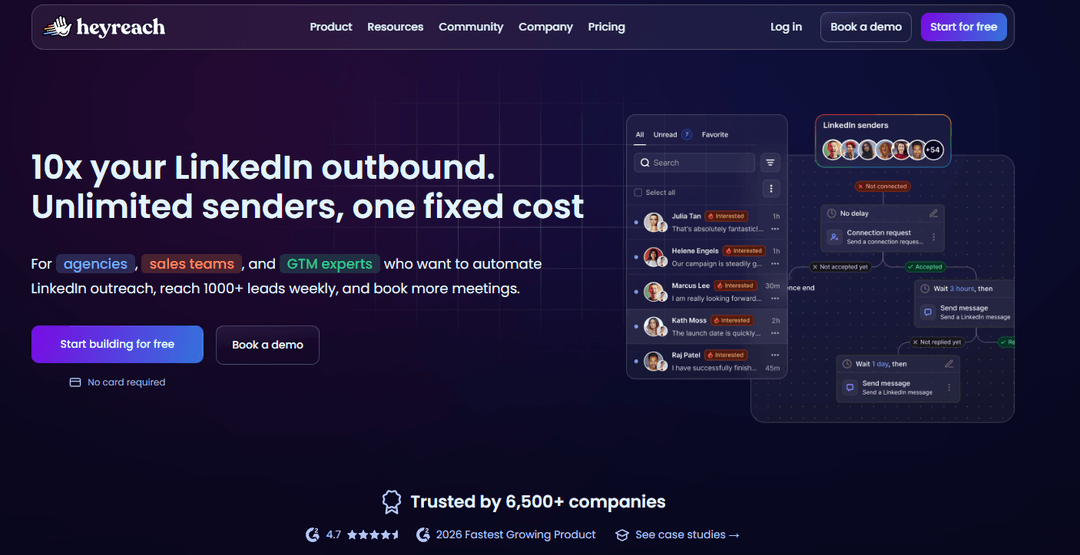
The Growth plan costs $79 per sender per month, which comes down to around $59 if you commit for a year. Agencies running dozens of accounts move onto bundle tiers where the price per sender drops a good deal further.
Past five sender accounts, we would tell you to pick HeyReach over Gojiberry without hesitating. For one or two senders it's expensive per seat, and there's no native email sending, so budget for a second tool. We break the two apart line by line in the Gojiberry vs HeyReach comparison.
5. PhantomBuster
PhantomBuster is a library of cloud automations. Each Phantom does one job. Extract a list. Enrich a batch of profiles. Push the result somewhere else. Chain a few together and you have a pipeline no packaged tool would ever have handed you.
What you get:
- 🔧 More than a hundred ready made automations across social platforms, maps and the wider web.
- 🕒 Scheduled runs in the cloud : your computer can be off and the automation still fires, which is the main gain over a browser extension.
- 🧾 Email enrichment credits in every plan, 500 a month on the entry tier.
- 📤 Exports everywhere : CSV, Sheets, HubSpot, Zapier, Make and an API. The tool is built to sit in the middle of a stack rather than at the end of it.
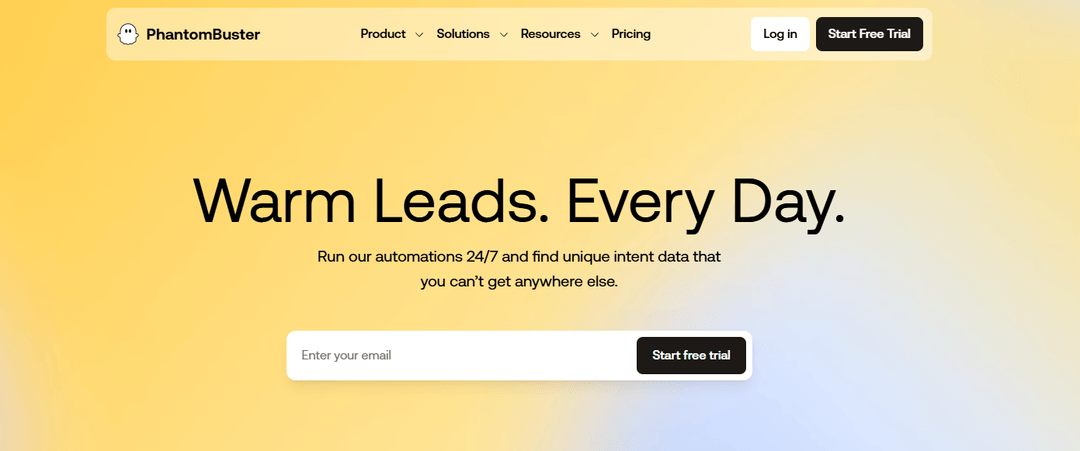
The Starter plan costs $69 a month and gives you 20 execution hours. Pro goes to $159 for 80 hours and Team sits at $439. Annual billing takes off roughly 20 percent. Watch that unit though. You're billed for execution time rather than for results, and unused hours never carry over.
If you can describe a workflow out loud, you can probably build it here. The cost is your evenings. A three person team with nobody who enjoys this ends up wiring automations instead of selling.
6. TexAu
TexAu plays in the same territory as PhantomBuster. The difference that matters is that steps chain natively here. One automation feeds the next inside the same workflow. No CSV files shuttled between tools, no wondering which version of the list is current.
What it does well:
- 🌐 A large automation library covering many platforms and sources, useful when your buyers live somewhere unusual.
- 🧱 Native multi step workflows : no manual export between steps, which alone saves hours a week.
- 🔍 Enrichment and verification in the same pipeline, so the list that comes out is already usable.
- 🔌 API and webhooks on the paid tiers, for teams triggering runs from their own stack.
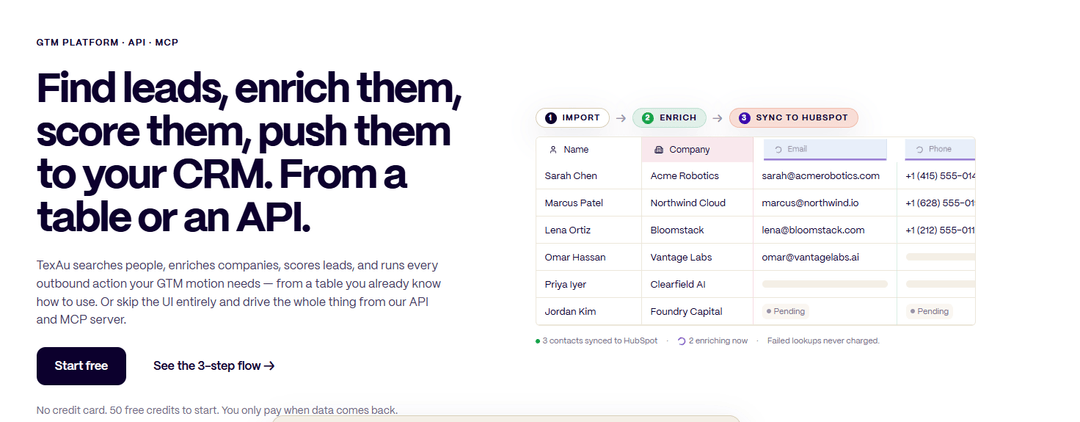
The v3 platform starts at $99 a month and moves into credit based tiers above that. TexAu has restructured its plans more than once in the past year. The tier names you'll find in older comparison articles may not exist anymore.
Great if you have a growth person who lives inside tools like this. It does no outreach of its own, so it's one piece of a stack, not an answer to where your next meeting comes from.
7. Dripify
Dripify is cloud based LinkedIn automation with the plainest sequence builder in this comparison, and that's a compliment. Drag your steps, set the delays, launch. It's the closest thing to LeadIn's core promise at a third of the price per seat.
What is inside:
- 🧭 Visual drip campaigns with conditions : a prospect who replies stops receiving the rest of the sequence.
- 🔒 Safety limits by default : randomized delays and daily caps, so activity looks human.
- 📇 A dedicated inbox with tags, genuinely useful once three or four campaigns run in parallel.
- 👥 Team management on Advanced : roles, permissions and shared reporting for a manager.
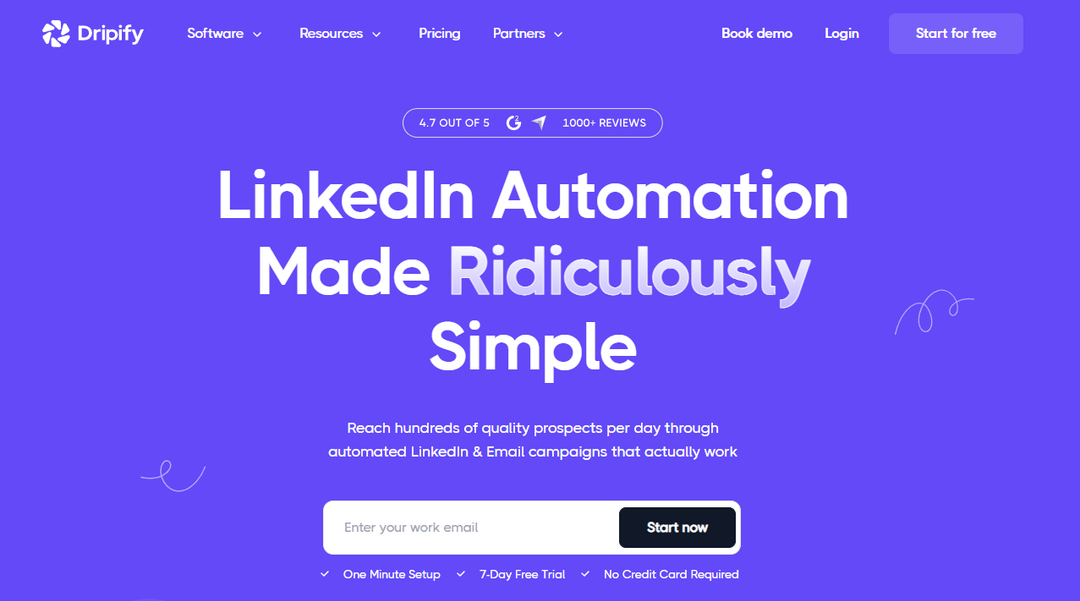
Dripify charges $39 per user per month on annual billing and $59 month to month. Pro sits at $59 and Advanced at $79. That first jump matters more than the price suggests. Basic caps you at a single campaign and blocks the integrations, so most people upgrade inside a fortnight.
The fastest tool here from signup to a running campaign. The limits are structural rather than fixable: it works on one channel, it charges per seat, and it expects you to add a paid search subscription on top for serious filtering. Dripify sends. It doesn't find.
8. Clay
Clay is a spreadsheet that thinks. You drop in companies or people, add enrichment columns, and it queries more than 150 data providers in waterfall until one returns an answer. Then AI columns read websites and draft the line you'll use.
Why growth teams love it:
- 💧 Waterfall enrichment : several providers queried in order, which lifts your fill rate on lists that would come back half empty.
- 🤖 AI research columns : one prompt run across every row, so you score a thousand companies without reading a thousand websites.
- 🧮 Conditions and formulas on every row for routing, scoring and cleaning.
- 📤 Push to your CRM and your sending tool once the table is clean.
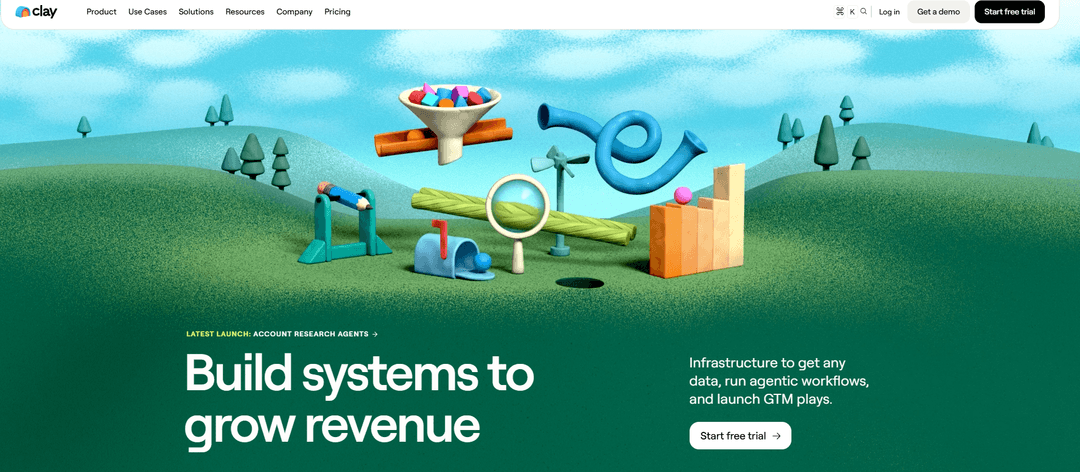
There's a free tier worth a couple of evenings. Then Launch at $185 a month and Growth at $495. Both run on a dual credit system that separates data lookups from workflow actions. Clay replaced its Starter and Explorer plans in March 2026, so most comparisons online describe tiers that no longer exist for new customers.
Nothing gives you this much control over a list. But it's a workbench, not an outcome. Someone has to build the tables and watch the credits burn. For three people with no ops person, that budget buys more meetings elsewhere. If building tables is the part you'd rather skip, we tested nine Clay alternatives for enrichment.
9. Smartlead
Smartlead is cold email infrastructure and refreshingly honest about being exactly that. If your motion is volume email and your bottleneck is deliverability, this is the cheapest serious answer here.
What you're paying for:
- 📮 Unlimited connected mailboxes on every tier : the decision the whole product is built around, and it changes the cost maths at volume.
- 🔥 Unlimited warmup included : no separate subscription, no per mailbox fee, which is where competitors take their margin.
- 🔀 Automatic rotation across inboxes and domains, so volume spreads instead of burning one address.
- 📊 A master inbox and campaign analytics, because replies scattered across twenty addresses is how deals get lost.
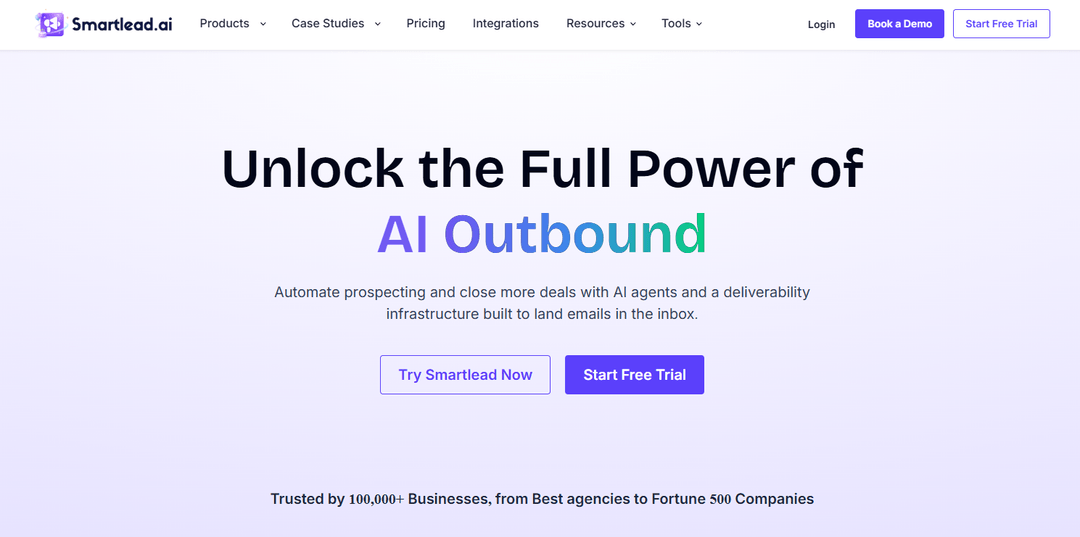
The Basic plan costs $39 a month and covers 2,000 active leads with 6,000 sends. That's enough to test the thing properly. Pro at $94 opens the API, the webhooks and the CRM integrations. The two Unlimited tiers above sit at $174 and $379 for agencies, and annual billing takes off roughly 17 percent.
On pure cold email, Smartlead beats us, and we would say the same on a sales call. What it won't do is tell you who to write to: no intent signals, no social, and the domains and copy stay your job. That's why teams run it next to a signal tool rather than instead of one.
10. Apollo.io
Apollo bundles a large B2B database with sequencing, a dialer and a few intent topics. For a small team that wants data and sending on one invoice, it's the most economical all in one here, and the free plan is usable for a founder starting out.
What comes in the box:
- 🗃 Hundreds of millions of contacts with filters, saved searches and a Chrome extension that reveals details while you browse.
- 📈 Buying intent topics on the paid plans : useful, but topic level, not what a specific person just did.
- 📞 Sequences and a dialer in the same seat, so email and calls live in one place.
- 🔗 CRM sync with HubSpot and Salesforce from the Basic plan upwards.
Apollo is free to start. Basic costs $49 per user per month on annual billing and $59 monthly. Professional is $79 and Organization is $119 with a three seat minimum. Keep an eye on the credit system: credits reset every month whether you used them or not, and a phone number costs far more than an email address.
For the money, the sheer volume of data is hard to argue with. Accuracy varies by market though, so verify before you send at scale. And there's one limit no database gets past: it tells you who exists, not who's ready.
Your competitors' customers are moving right now
Somebody in your market just changed jobs or started following a competitor. Gojiberry spots it, checks they match your ICP, and writes before anyone else does.
Launch my agent for freeWhat is LeadIn?
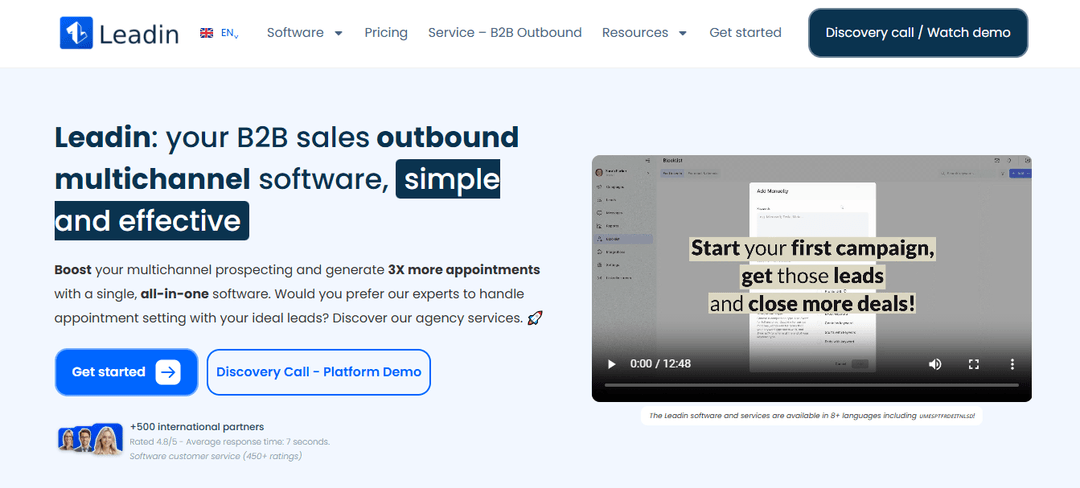
LeadIn is a B2B prospecting platform launched in 2020 by a French team, sold as software and as a done for you agency service. It runs in the cloud rather than as a browser extension, so campaigns keep going when your laptop is shut. One plan, one price per seat, no quota on how much you send.
What can you do with LeadIn?
The heart of the product is what they call smart sequences: you drag actions and conditions onto a canvas, mix social steps with email steps, and run A/B tests on the copy. Around that core sit most of the pieces a team would otherwise buy separately.
- 🧩 Multichannel smart sequences : social actions, InMails and emails in one scenario. The conditions react to what the prospect did.
- 📮 Unlimited connected email accounts on one licence, with automatic rotation during a campaign.
- 🔥 Unlimited email and domain warmup through a partner, a line item most competitors bill for.
- 🔍 Email finding and verification built in, so no third party subscription hanging off the side.
- 🎨 Personalized images and GIFs with the prospect's name, photo or company pulled into the visual.
- 📥 One inbox for every channel, plus centralized reporting and an interface in eight languages.
The pros and cons of LeadIn
- One flat price with no sending quota, rare in this category
- Cloud based, nothing depends on a browser staying open
- Email finder, verification and warmup bundled in
- A single inbox across every channel
- Live chat support seven days a week, answering in minutes
- An agency offer if you would rather delegate
- 97€ per seat, so three people is 291€ a month
- No native CRM integration, only webhooks and the API
- You still build the target list yourself
- Their own FAQ recommends a paid search subscription on top
- No intent layer, so nothing says who is worth a message today
How much does LeadIn cost?
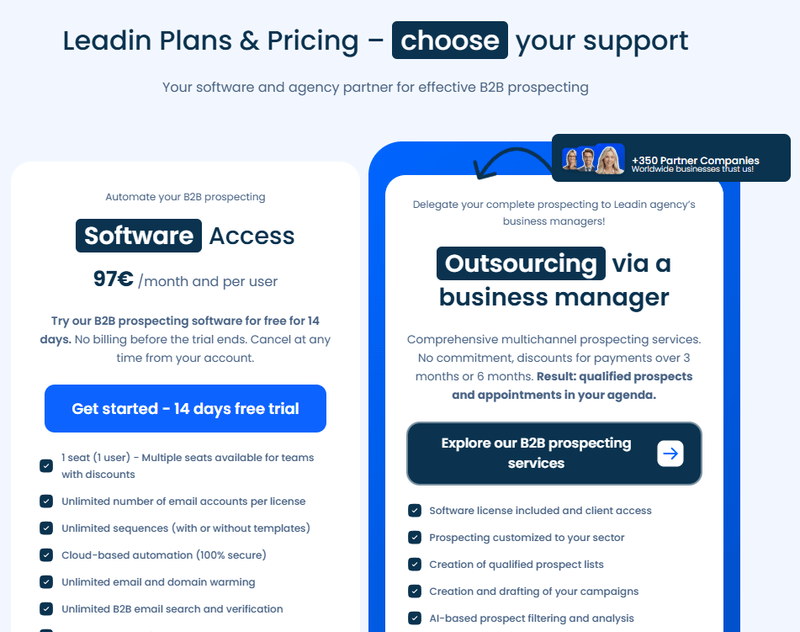
A single plan at 97€ excluding VAT per user per month, with a 14 day free trial and no commitment. Discounts appear above a certain number of accounts, and the agency service is quoted separately.
The number that matters isn't 97€. It's 97 multiplied by the people who prospect. Three people costs 291€ a month and 3,492€ a year, before a search subscription and whatever data tool you bolt on.
What do LeadIn users think?
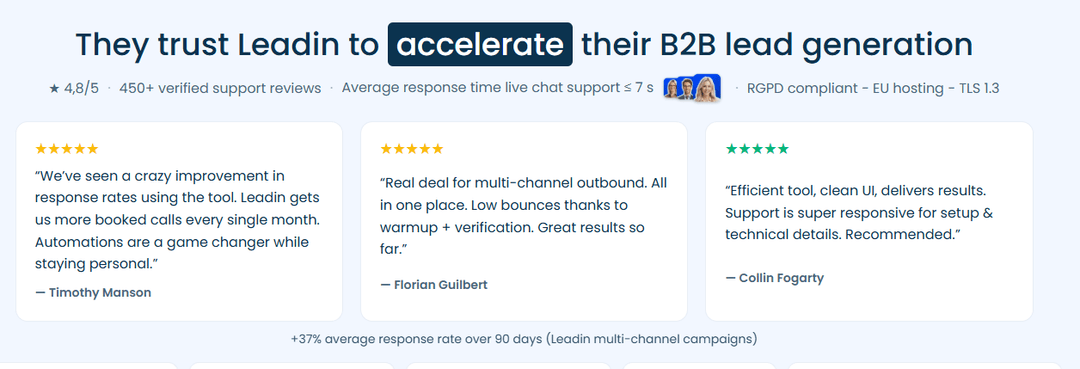
LeadIn advertises 4.8 out of 5 across more than 450 verified reviews on its own site, and support speed is what customers mention most. That matched our test: answers in minutes, in French and English, from someone who knew the product.
The criticism is just as consistent, and none of it is about quality. Independent French reviews flag the per seat price and the missing native CRM connection. Nobody says the tool is bad. They say it gets expensive as the team grows, and that it leaves the harder half of the job untouched.

More High-Intent Leads = Your New Growth Engine.
Start Now and Get New High Intent Leads Delivered Straight to Slack or Your Inbox.