
12 best Lusha alternatives to fill your pipeline in 2026

2 minute quiz
Which Lusha alternative fits your gap?
No email required.
QUESTION 1 / 3
What breaks first in your month?
QUESTION 2 / 3
How many people prospect on your team?
QUESTION 3 / 3
Where do you want the work to happen?
🧭
Your result
Gojiberry
You don't have a lookup problem, you have a timing problem. Gojiberry watches the accounts in your market, flags the ones that moved this week, and hands you the opener with the contact.
Start free📌
Your result
Kaspr
Kaspr is your fit: same click-to-reveal habit, better European numbers, cheaper entry. If the dialing is fine and the replies are the problem, that second half is what we do.
See the other half🧮
Your result
Apollo.io
Apollo is your fit. One bill instead of two, and a free tier big enough to test properly. When the list is built and the sequence still goes quiet, that's the gap we fill.
See what we add🔖
Your result
Cognism
Cognism is your fit, assuming the annual contract clears your budget. If it doesn't, or if you'd rather fix which accounts you call before you buy better numbers, start with us instead.
Try the cheaper routeLusha turns the profile in front of you into a verified mobile and a work email in about two clicks. That's why reps like it, and it's also where it stops. It doesn't send anything, it has no view on timing, and a phone reveal costs ten credits against a single credit for an email.
Below you'll find the twelve tools we looked at, what they really cost, and which one fits a team of two to ten.
Gojiberry finds your prospects for you
You already know how to reach people. Gojiberry tells you which of them started looking for what you sell this week, and drafts the opening line.
Get your first leads for freeTable of contents
- The 12 best Lusha alternatives compared
- How we tested these tools
- The 12 best alternatives to Lusha
- What is Lusha?
- Why do people look for a Lusha alternative?
- Which Lusha alternative is right for you?
- FAQ about Lusha
- Gojiberry vs Lusha: which one brings you leads?
- What about customer support?
- Where Gojiberry comes from
The 12 best Lusha alternatives compared
If coverage is your gap, Kaspr and Cognism beat Lusha on European mobiles. If credits are your gap, Apollo and Saleshandy give you more room per dollar. And if you can already find anyone but nobody answers, the gap isn't data at all, it's timing, and that's the one Gojiberry was built for.
Those are entry prices as published in July 2026, and they're the least useful number on the page. What decides your budget is further down: the credit weighting, the seat minimums, and the add-on nobody puts on the pricing page.
How we tested these tools
We ran this the way a small team would. Every self-serve product on the list got started on its own free or entry plan, pointed at the same target list of French and British software companies between ten and two hundred people, and asked the same three things: find the person, find a way to reach them, and tell me whether now is a good moment. For the tools with no self-serve door, Cognism and ZoomInfo, we worked from published material and public reviews on G2 and Capterra. Every price quoted here came off the vendors' own pricing pages in July 2026.
We pay for every plan ourselves, and no vendor read a word of this before publication. Gojiberry is our own product, so read that entry as informed rather than neutral. One thing you won't find here: a scorecard of measured hit rates. We haven't run a controlled reveal test across twelve tools on an identical list, and an invented percentage would be worth less than this sentence admitting it. When we run it, the numbers land on this page.
The 12 best alternatives to Lusha
Twelve tools, and they don't all do the same job. Eight are places to look someone up. Two are senders you'd pair with one of the eight. One is a workbench you assemble yourself. And the first one doesn't ask you to look anyone up at all. They're ordered by how close each sits to what you already do, so the entries near the top are the ones you could swap in this week.
1. Gojiberry
Gojiberry is an AI-powered multichannel prospecting platform. It tracks more than 30 buying signals across socials and the web, surfaces the leads in active research right now, and triggers personalized outreach across several channels. It answers the question Lusha never asks: who deserves a message today?
- 🔔Signal tracking: more than 30 triggers, from a job change to a funding round to a competitor picking up followers.
- 🎯ICP filter: every account is checked against who you sell to before it reaches you. No 400-row export to clean on Monday.
- 🤖Drafted openers: the first message arrives with the lead, written from the signal that surfaced it.
- 🤝Multichannel sequences: email and social run from one place, with 2 social senders on the paid plans.
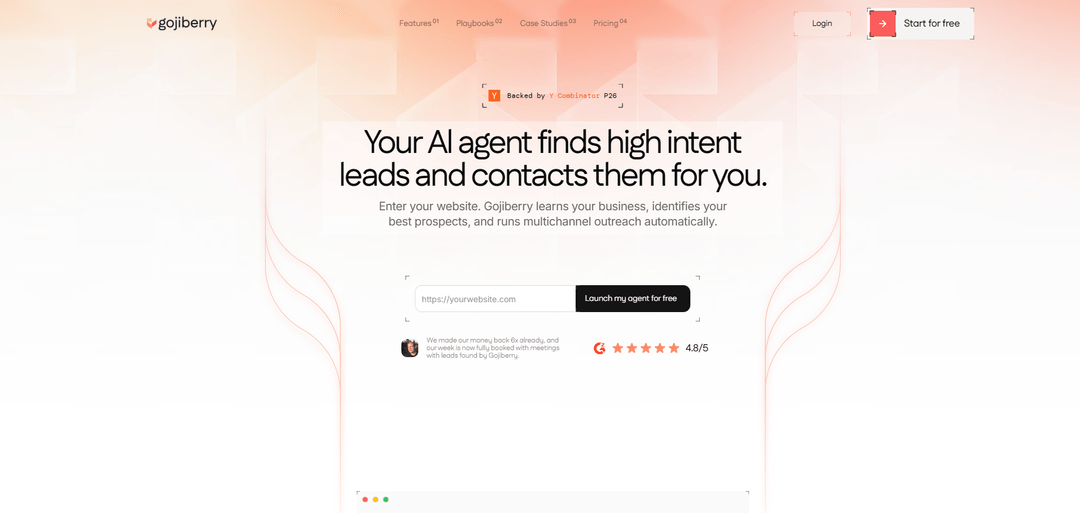
Gojiberry starts free, and paid plans include 2 social senders instead of charging per reveal. There's no credit weighting to model here.
Timing is where it wins. Lookup is where it loses: hand it a name and ask for the mobile, and a database beats us. Wispra now sources 60% of its weekly demos from intent signals.
2. Kaspr
Kaspr is a browser extension that reveals phone numbers and emails from the profile you're viewing, backed by a database weighted toward Europe. If your dialing is French, German or Dutch, it's the closest like-for-like swap you can make.
- 📞Direct dials: the reason people move over. European mobile coverage is where the product spends its money.
- 🌍Europe-first database: built by a French team, and it shows in the hit rate on French numbers.
- 📥Bulk enrichment: upload a list, get contacts back, keep working.
- 🧩CRM push: native sync drops a revealed contact where your reps already work.
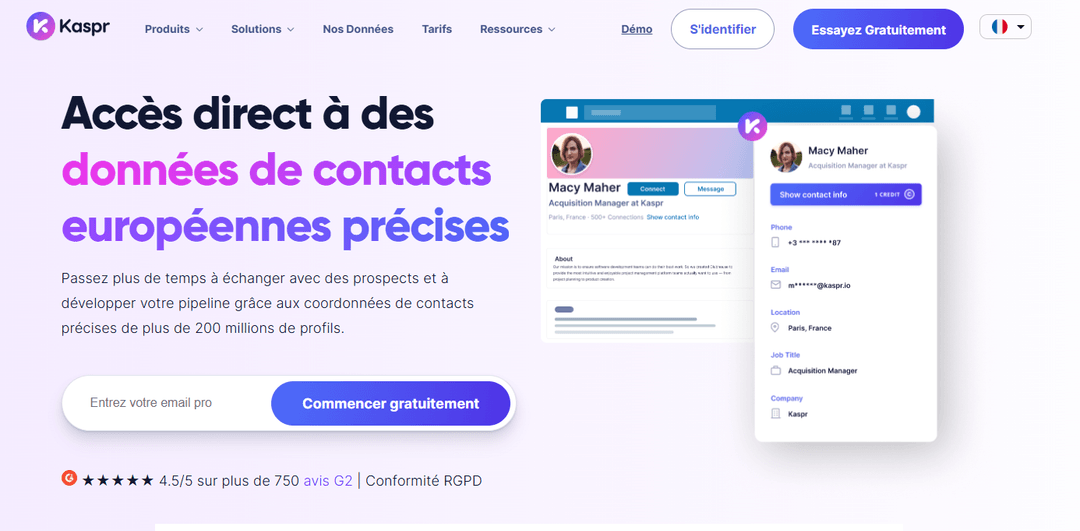
There's a free plan with a small monthly credit allowance, and paid plans start around $49 a user a month. Phone and email draw on separate pools here, so check their current pricing page before you plan a month around a number.
You still choose the account yourself, and you'll still need a second tool to send anything. What changes is the hit rate on a French mobile, and for a team dialing Paris every morning that alone can justify the switch.
3. Apollo.io
Apollo puts a database and a sequencer on one invoice, which for a founder paying two vendors is the obvious consolidation. Its free tier is the most generous of the twelve, and plenty of small teams never leave it.
- 📨Sequences included: email steps, call tasks and follow-ups sit on the same screen as the data.
- 🧮Separate credit pools: exports, emails and mobile reveals draw from different meters, and mobiles are the expensive one.
- 🔗CRM sync: two-way with Salesforce and HubSpot on the paid tiers.
- 📊Deep filters: the search side is good enough to build a list without leaving the product.
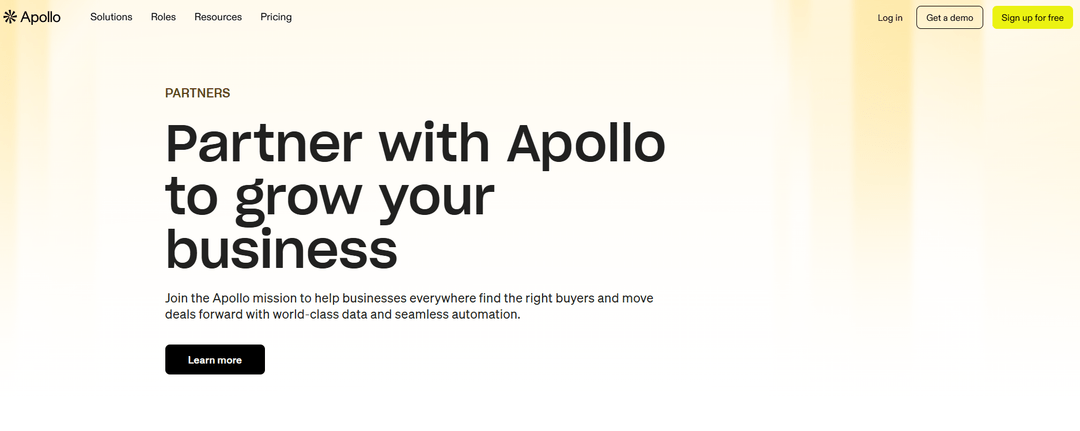
Paid plans start around $49 a seat a month on annual billing, roughly a fifth more month to month. Overages move the invoice far more than the tier you pick, so it's the mobile meter you want to watch in week one.
It collapses two subscriptions into one and answers the credit math, at the price of checking a title before you dial, because enough reviewers report stale ones that you'll learn to.
4. Cognism
Cognism sells human-verified mobiles and compliance, mostly to teams selling into Europe. It's the one tool here where a person has picked up the phone to check the number before it reaches you.
- 🔒Compliance built in: do-not-call screening across European registers, which matters more here than in the US.
- 🧭Diamond Data® verification: a subset of numbers checked by a human before release.
- 🏢Account-level intent: intent topics sold alongside the contact data.
- 🎧Named onboarding: you get a person rather than a help center.
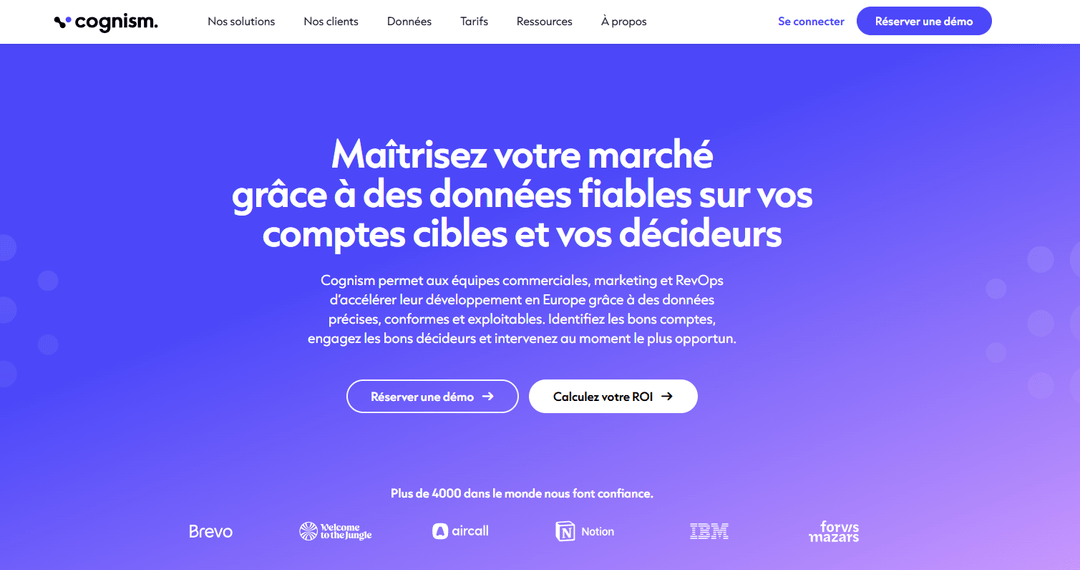
There's no self-serve tier, and no published price. Expect a quote, an annual contract and a budget in five figures a year for a small team. Ask about seat minimums before you get attached to the data.
The contract ends the conversation for most teams of two to ten. For the ones it doesn't end, no European phone data here comes close.
5. RocketReach
RocketReach is a lookup engine sitting on a large profile database, and it's one of the cheapest ways onto one. The limit sits in the tier list: the entry plan doesn't include phone numbers.
- 🔎Breadth: hundreds of millions of profiles, useful well outside software.
- 📦Annual lookup quotas: current tiers allocate lookups per year, so one heavy month doesn't strand you.
- 🔧API access: available on the upper tiers for teams wiring it into something else.
- 💰Low entry price: the cheapest door onto a database this size.
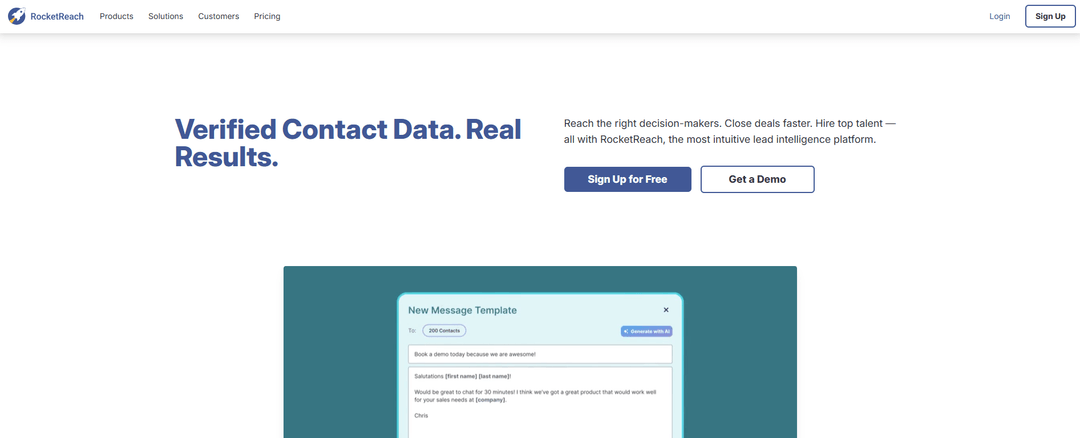
Essentials runs about $33 a month on annual billing and hides phone numbers entirely. Mobile reveals don't appear until the tier above, near $75 a month annual, and monthly billing costs a good deal more.
Buy the entry plan expecting phone data and you'll be back within a week. As an email research tool at that price, it holds up fine.
6. UpLead
UpLead sells accuracy as the product. Every email is verified at the moment you pull it, and a bounce comes back to your credit balance rather than costing you twice.
- 🧪Real-time verification: the check runs the moment you reveal rather than on last quarter's file.
- 📁Credit refunds on bounces: rare enough in this category to be the reason to look.
- 🎯Technographic filters: filter by the software a company already runs.
- 🌐Global records: a decent spread outside the US, thinner than Cognism across Europe.
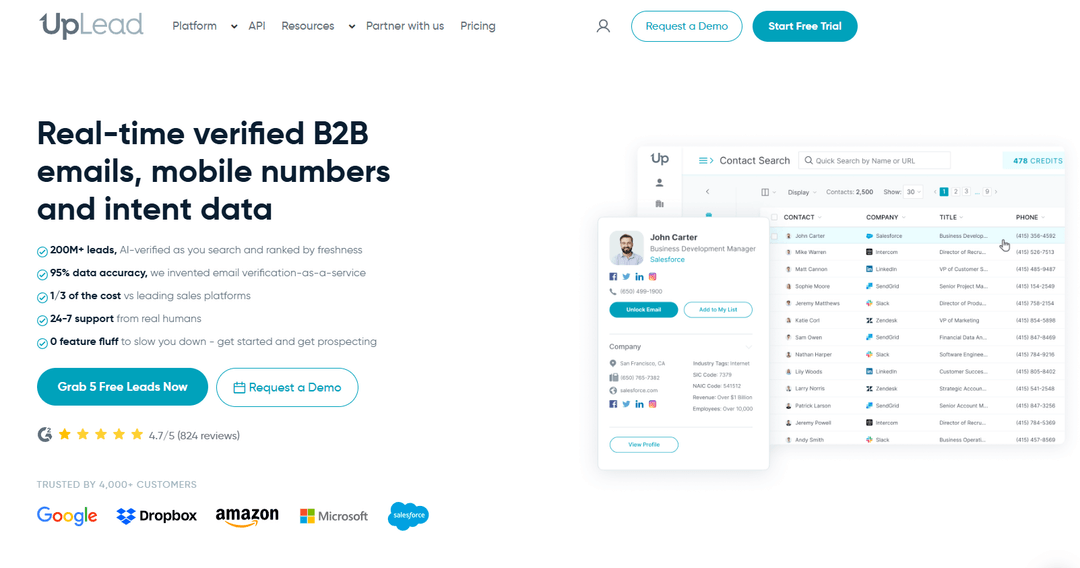
Plans start around $99 a month on annual billing, and credits don't roll over. It isn't the cheapest entry here, and the refund policy is most of what you're paying for.
The credit frustration this whole article is built around has one direct answer, and this is it. Database size is the trade, since it's smaller than Apollo or ZoomInfo.
7. Hunter.io
Hunter finds work emails from a domain rather than from a profile, and it doesn't charge per seat. For a team of three sharing one credit pool, that pricing model is worth real money.
- 🌐Domain search: one query returns the addresses behind a company domain.
- 📧Verification: a separate check on any address before you send to it.
- 🧵Campaigns: a light sequencer bundled with the paid plans.
- 📤Unlimited users: add the whole team without adding a line to the invoice.
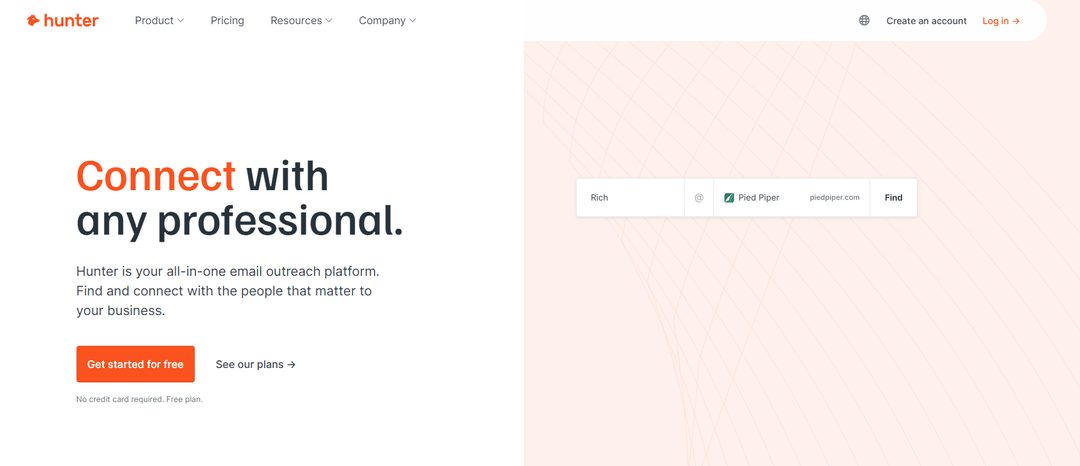
There's a free plan covering a handful of searches a month. Starter sits near $34 a month on annual billing, closer to $49 month to month, and Growth lands around $104 with the API attached.
No phone numbers at all. If your motion is email and you sell to companies rather than to named individuals, nothing here costs less for what it does.
8. LeadIQ
LeadIQ is built for reps who live in the CRM: capture the contact, push it, move on. It's also the only other tool here that tells you when someone changes jobs.
- 🔔Job-change alerts: a tracked contact moving company triggers a notification.
- 📝Drafted openers: messages generated from the profile you just captured.
- 🔁One-click capture: contact and company land in the CRM together, deduplicated.
- 🧠Account tracking: follow a working set of accounts instead of a frozen list.
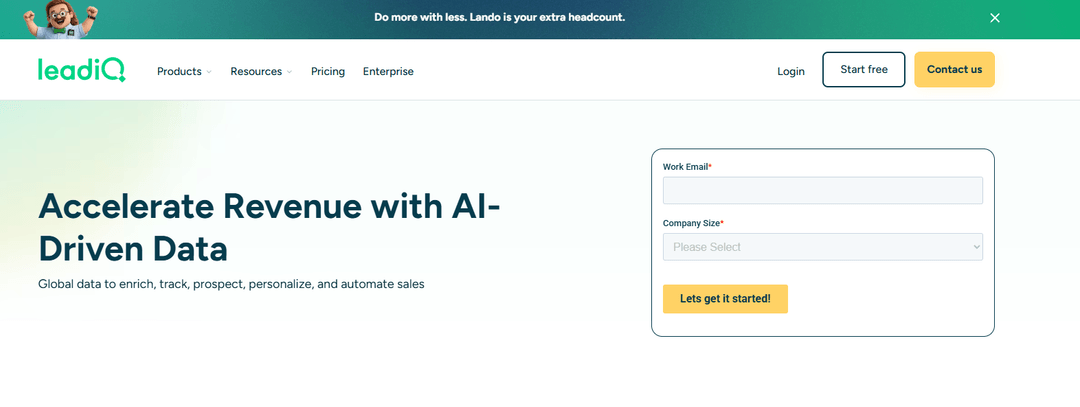
There's a free tier, and paid plans start around $36 a user a month with a steep step up to the pro tier. Credits pool across the account rather than per seat, which helps a small team.
Nothing else in these twelve comes as close to a timing signal, and the CRM workflow is quick. Then you notice what it watches: contacts you already knew about. A much smaller world than your market.
9. Clay
Clay is a spreadsheet that calls a hundred data providers, one column at a time. Nothing here gets you more coverage per dollar, and nothing here asks more of you before it works.
- 🔀Waterfall enrichment: try one provider, then the next, until a value comes back.
- 🧰Provider library: more than a hundred sources, some of which need their own subscription.
- 🧩AI columns: research, classification and message drafts run inside the table.
- 📈Credit rollover: unused data credits carry forward up to a cap on paid plans.
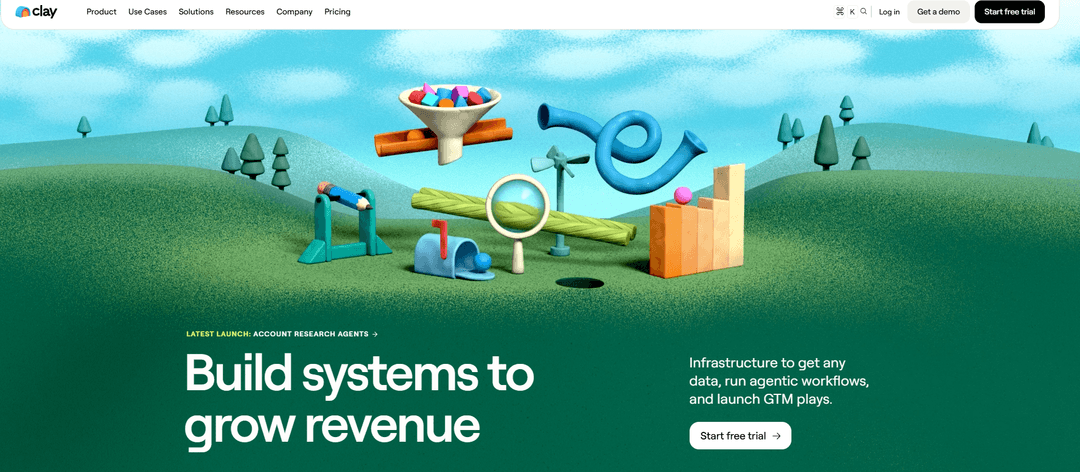
Free covers a hundred data credits a month. Launch is $185 a month and Growth is $495, and the dual meter, data credits for results and actions for operations, is the part you'll have to model before you commit.
Budget a week before it earns anything back. A founder with no ops help usually stalls somewhere around the second table.
10. ZoomInfo
ZoomInfo is the enterprise end of this market: the deepest database, the most intent data, and a procurement process to match. It's on this list so you can rule it out with a number.
- 🏢Scale: the largest contact and company database in the category.
- 📚Research layer: org charts, funding, hiring and topic-level intent.
- 💬Conversation intelligence: call recording and coaching sold alongside the data.
- 🔬Data operations: CRM enrichment and hygiene at company scale.
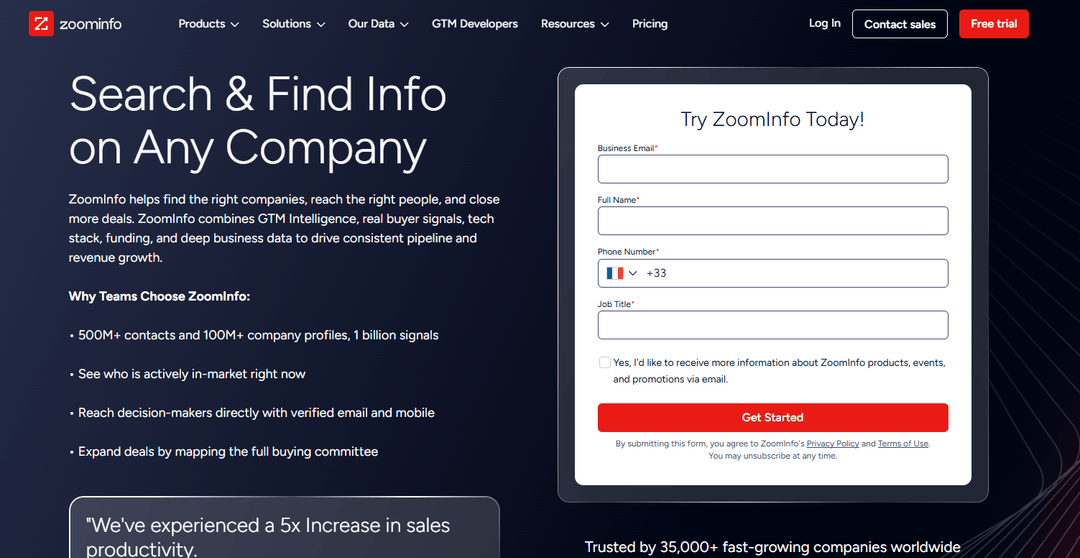
Quote only, annual contract, and budget from roughly $15,000 a year before seats and add-ons. Seat minimums are usually where a team of five doesn't get through the door.
The seat minimum decides this one. Below twenty reps with nobody owning ops, the contract costs more than the pipeline it would find you. Above it, ZoomInfo earns its keep.
11. Saleshandy
Saleshandy is a cold email platform first, with contact data bolted on as an add-on. It's here because the cheapest exit from a two-subscription setup sometimes runs the other way: keep the data you have, change the sender.
- 📬Unlimited mailboxes: connect as many sending accounts as you have domains.
- 🚀Warm-up included: ramping and rotation come with the plan rather than as an upsell.
- 👥No per-seat pricing: the team shares the plan limits.
- 🔥Lead Finder add-on: a contact database priced separately from the sending plan.
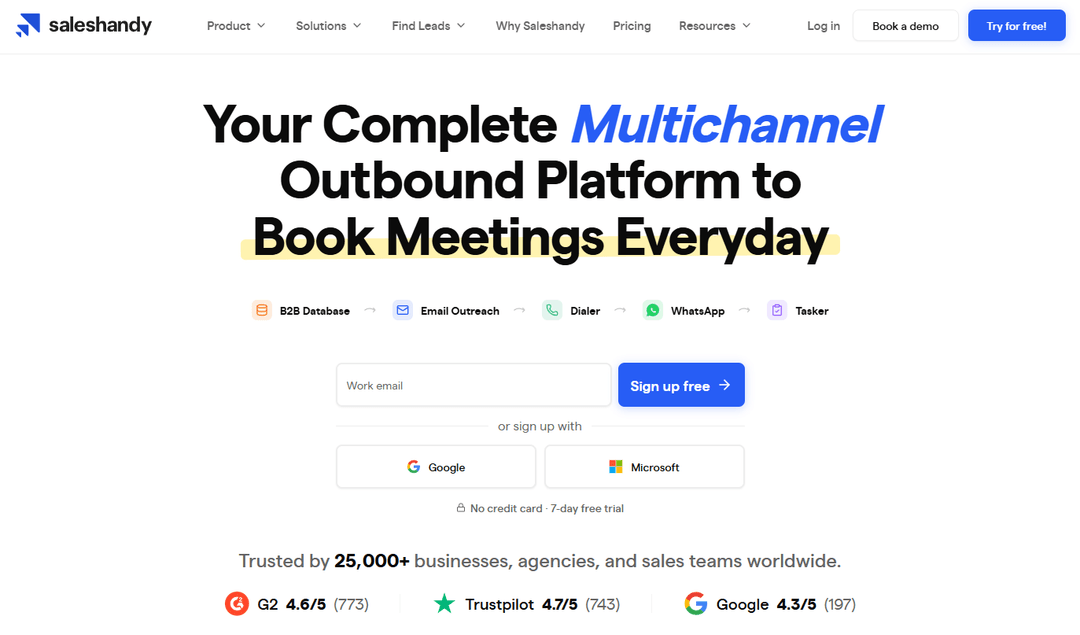
Outreach plans start near $25 a month for a couple of thousand prospects. Lead Finder is a second line on the invoice from around $29 a month, so you'll want to price the pair rather than the headline.
Nothing here moves more email for less money, and nothing here does less to tell you who should be receiving it.
12. Instantly
Instantly is the other sender here, known for unlimited mailboxes and the volume playbook that comes with them. Contact data is an add-on in this one too.
- 📤Mailbox rotation: sends spread automatically across every connected account.
- 📅Warm-up network: a large shared pool that ramps domains before a campaign starts.
- 🧪Deliverability tooling: placement tests and bounce protection built into the platform.
- 💡Lead Finder: a separate subscription if you want the contacts too.
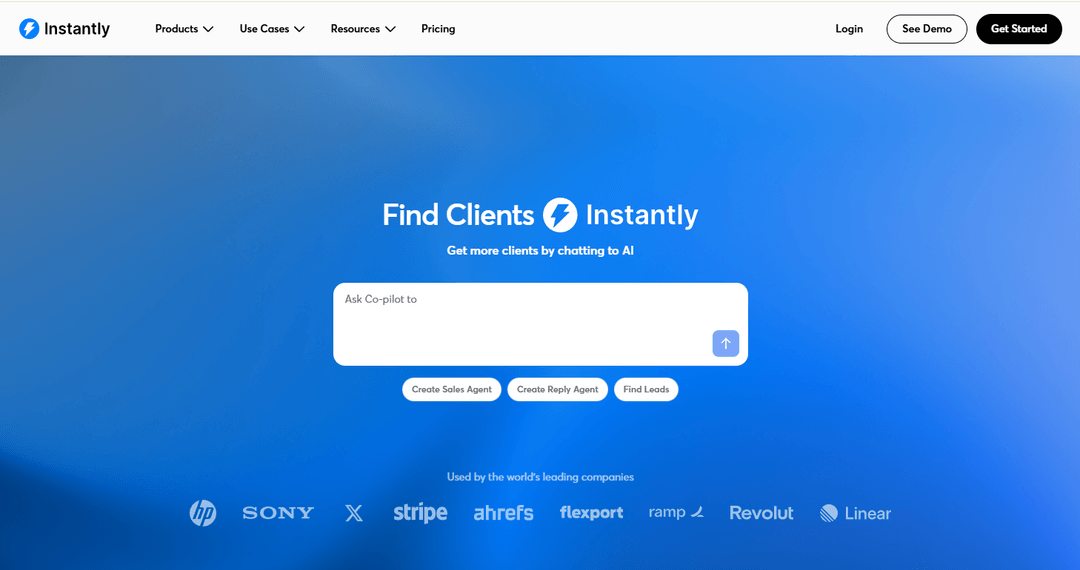
The Growth plan is $37 a month, or about $30 on annual billing. Contact data starts near $47 a month on top of that, so you're really starting at $77 rather than at $30.
Volume is the entire proposition, and it delivers on it. Since February 2024, Google has asked bulk senders to keep user-reported spam complaints under 0.3%, and sending at volume without targeting is the fastest way to test that ceiling.
You shouldn't have to guess who to contact
Gojiberry watches more than 30 buying signals across socials and the web, checks each account against your ICP, and sends you the ones worth writing to.
Start free on your marketWhat is Lusha?
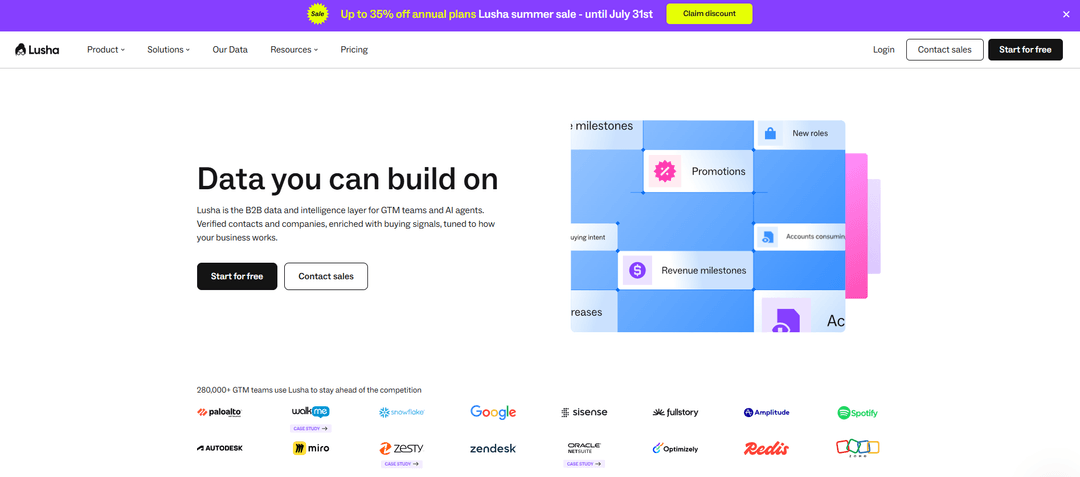
Lusha is a contact data platform with a browser extension at the center of it. You open a profile, you click, and it returns a verified work email and, if you're willing to spend the credits, a direct phone number. It sits on a few hundred million business profiles, and it's strongest in the United States, in the United Kingdom, and in Canada.
The reason it spread through sales teams isn't coverage, it's friction. Two clicks, no export, and no list to build the night before, night after night. Speed is the whole product, and speed, unfortunately, is also the whole ceiling.
What can you do with Lusha?
- 🔍Reveal a contact from a profile: the extension is the product, and it's fast.
- 📥Reveal in bulk: pull a batch of contacts at once, capped by your plan.
- 🔄Push to your CRM: integrations with Salesforce, HubSpot and a long tail of others.
- 📌Build lists in-app: filter a prospecting database by title, headcount and geography.
The pros and cons of Lusha
What works well
- Two clicks from profile to phone number, with no workflow to learn
- Strong mobile coverage across the US, UK and Canada
- A free plan usable enough to judge the data before you pay
- CRM integrations that hold up in daily use
- Compliance certifications that survive a procurement review
Where it stops
- A phone reveal costs ten credits against one for an email
- Unused credits reset at the end of the cycle
- Coverage thins noticeably outside the core English-speaking markets
- It sends nothing, so you're buying a second tool for outreach
- Per-seat pricing stacks on top of the credit spend
How much does Lusha cost?
Lusha charges you twice for the same contact: once for the seat, then again for the action. The seat is the number on the pricing page. The action is the one that'll decide your month.
An email reveal costs one credit. A phone number costs ten. A contact where you want both burns eleven, so a plan advertising 400 credits is really about 36 complete contacts a month. That rate also doubled at some point from five credits to ten, which means every pricing guide written before the change understates the cost by half.
The self-serve tiers run from roughly $20 to $60 a seat a month on annual billing depending on the tier and where you drag the credit slider, and monthly billing adds something like 25% to 35% on top. Above a handful of users you're pushed onto a quote-based plan with an annual commitment. Plan names and allowances have moved more than once this year, so treat any figure you read, including ours, as a starting point and check their current pricing page before you budget.
Run the math for a team of three. Say each rep wants a mobile for 40 people a month. That's 400 credits of phone reveals per rep, per month, before a single email address. Three reps on a 400-credit plan run dry in the first ten days.
Then the reset. Unused credits don't roll over, so the month you prospect lightly subsidizes nothing at all, and the month you push hard costs extra. Budget the credits first, the seats second, because the seats are the smaller line. GTE Localize booked 100+ meetings after moving that budget from lookups to timing.
What do Lusha users think?
We didn't collect our own reviews, so this is a reading of what's public on G2 and Capterra rather than a survey. Three themes repeat with real consistency.
Praise lands in the same place every time: speed and simplicity. People describe onboarding a new rep in an afternoon. That counts for something in this category. Complaints cluster just as tightly, and they're almost always about credits, with the ten-to-one phone rate named directly. The second complaint is coverage: reviewers selling into Southern Europe, the Nordics or APAC report hit rates well below what they see in the US.
The third theme shows up at renewal rather than at signup. The invoice doesn't match what people remember agreeing to, usually because credit consumption grew faster than headcount did.
Why do people look for a Lusha alternative?
Credits that don't stretch. The ten-to-one phone rate is the single most cited reason for leaving. A plan reads as hundreds of credits, resolves to a few dozen full contacts, and nobody discovers this on the pricing page. They discover it on the 12th, when the meter stops.
Coverage that thins outside the US and UK. The database is strong where it's strong and thin where it isn't. This gets worse over time on its own, because B2B data decays: HubSpot puts the rate at around 2.1% a month, roughly 22.5% a year. A weak region doesn't stay static, it degrades.
Nothing happens after the reveal. You get a contact, and a blank cursor. So one workflow ends up costing two subscriptions, and the pair usually lands somewhere north of $100 a seat a month once the sender is on the invoice.
No sense of timing. This is the deepest gap and the one nobody puts in a support ticket, because it doesn't feel like a product defect. It feels like sales being hard. Median job tenure in the US sits at 3.9 years, with 22% of workers in post under a year, which means your market reshuffles constantly and a reveal tool has no opinion about any of it.
Which Lusha alternative is right for you?
Pick by the gap you have rather than by the feature list you'd enjoy reading.
Coverage is the problem
European mobiles that don't show up? Kaspr if you want the same extension habit at a self-serve price, Cognism if the numbers are worth an annual contract. Gojiberry if the harder question is which accounts to dial at all.
Credits are the problem
Apollo gives you more room per dollar with sending included. Saleshandy is cheaper still if the volume you need is email. Gojiberry charges per plan, so no meter runs when you open a lead.
You pay twice for one workflow
Consolidate on Apollo, or pair Instantly with Hunter and keep each piece cheap and replaceable. If the second subscription is a social sender rather than an email one, our LeadIn alternatives roundup covers that half.
You find everyone, nobody replies
That's a timing gap. Gojiberry reads the signals and hands you the shortlist, and LeadIQ is the lighter option if job changes alone would do it. We put the signal tools against each other in the Trigify alternatives roundup.
Maximum coverage per dollar
Clay, provided you have a week to build tables and someone who enjoys it. The ceiling is high, and so is the floor.
Past twenty reps with an ops hire
ZoomInfo. Below that headcount, the contract costs more than the pipeline it finds you.
None of those six is your gap if what you want is an agent running the whole motion instead of a tool you drive yourself. That's a different shortlist, and it lives in our 11x alternatives roundup.
Whatever you land on, run it in parallel for two weeks before you cancel anything. Point both tools at the same fifty accounts, count what each one returns, and count what each one costs you to get there. Two weeks of overlap is cheaper than a year on the wrong plan.
FAQ about Lusha
What is better than Lusha?
It depends which half of the job you mean. For European mobiles, Kaspr and Cognism are better. For getting data and sending on one invoice, Apollo is better. For knowing who to contact in the first place, that's a different category, and it's where Gojiberry sits: Mindflow lifted reply rates 31% by writing to accounts that had just moved rather than to a static list.
Nothing on this page is better than Lusha at what Lusha does, which is turning a profile into a phone number in two clicks.
What is better, Apollo or Lusha?
Apollo for most small teams, because it covers the sending too and its free tier is far more usable. Lusha wins on the narrow thing: mobile numbers in the US, UK and Canada, where reviewers consistently rate its accuracy above Apollo's. If you dial into those markets every day, that difference is worth paying for. If you send email and want one bill, Apollo is the easier call.
Is there a free Lusha alternative?
Several, and they're not all equal. Apollo's free tier is the most generous of the twelve and includes sending. Hunter's free plan covers a handful of searches a month with no seat limit. Kaspr and LeadIQ both give you a small monthly credit allowance. Gojiberry starts free as well.
Free tiers are for judging data quality against your own market, not for running outbound. Test them on twenty accounts you know well, so you can tell a wrong answer from a right one.
Why do Lusha credits disappear so quickly?
Because a phone number costs ten credits and an email costs one. If your motion involves dialing, you're spending at ten times the rate the plan's headline number suggests. A 600-credit plan is 60 phone numbers.
Two other things drain the pool faster than people expect: unused credits reset at the end of the billing cycle with no rollover, and features beyond straight reveals can draw from the same balance. Check what counts as a billable action on your specific plan.
Which alternative has the best European mobile coverage?
Cognism, on the strength of human-verified numbers and do-not-call screening across European registers, with Kaspr close behind at a fraction of the commitment. We're reporting the consensus from public reviews and vendor documentation. We haven't run a controlled coverage test of our own across these databases.
If your market is France, Benelux or the DACH region, test both against fifty accounts you already know before you sign anything.
Can Lusha get your social account restricted?
Browser extensions that read profile pages sit in a gray area with most professional networks, whose terms generally prohibit automated data collection. Reveal tools like Lusha are widely used and rarely the direct cause of a restriction on their own. What draws attention is volume and pace: hundreds of profile views a day from one account looks automated whether or not it is.
Keep your activity at human pace, and treat any tool that promises unlimited scraping as a risk to the account you've spent years building.
Do I need to cancel Lusha to add something else?
No, and you shouldn't. Run the new tool alongside it for two weeks on the same target accounts, then compare what each one returned and what each one cost. Most of these tools have free tiers or monthly billing precisely so you can do that.
Cancel once you have evidence, not on the strength of an article. Ours included.
Can any of these tools send the outreach too?
Apollo, Hunter, Saleshandy and Instantly all send. Gojiberry sends across email and socials, and drafts the first message from the signal that surfaced the lead. Lusha, Kaspr, Cognism, RocketReach, UpLead, LeadIQ, Clay and ZoomInfo don't send anything on their own.
If you're pairing a finder with a sender, budget for both from the start. A $34 email finder plus a $30 sending platform costs a real $64 a month, so $64 is the figure a consolidated plan has to beat.
Your competitors' customers are moving right now
Someone in your market just changed jobs or started following a rival. Gojiberry spots it, checks they match your ICP, and writes before anyone else does.
Get leads without the lookupGojiberry vs Lusha: which one brings you leads?
These two aren't competing for the same job, which is exactly why the comparison is worth making. One answers how to reach a person. The other answers which person.
Lusha waits for you to pick the account. Gojiberry picks it from live signals. Gojiberry is an AI-powered multichannel prospecting platform: it tracks more than 30 buying signals across socials and the web, surfaces the leads in active research right now, and triggers personalized outreach across several channels. That's the whole difference, and it decides everything downstream, including what you spend.
Where we lose: point Gojiberry at a specific person whose mobile you need in the next ninety seconds and a database wins. We're not a lookup tool and we won't beat Lusha on phone coverage in its home markets. What we're claiming is that the lookup was never the hard part.
Wispra
60% of weekly demos now come from intent signals rather than from list building.
Read the case studyMindflow
A 31% lift in outbound reply rate after switching to intent-based targeting.
Read the case studyGTE Localize
100+ meetings booked after moving from email outbound to intent-led outreach.
Read the case studyBaur Software
Network doubled by scaling authentic outreach instead of raw sending volume.
Read the case studyWhat about customer support?
Support matters more at this company size than anyone admits, because you don't have an ops person to absorb a broken integration. Here's the shape of it across the twelve, without numbers we didn't measure.
Self-serve tools
Apollo, Hunter, RocketReach, Saleshandy, Instantly and Kaspr answer through chat or a ticket queue, in business hours, in English. Fast for a billing question, slower when it's something that needs an engineer.
Enterprise platforms
Cognism and ZoomInfo give you a named contact and structured onboarding. That's the thing you're buying with the annual contract, and it's worth real money when data breaks.
The middle
UpLead, LeadIQ and Clay hand you a human once you clear a seat or spend threshold. Below it, you're in the same queue as everyone else.
What we haven't done is time a first human reply from a paying account across all twelve vendors. That's a real test and it deserves real numbers, so we'd rather leave the table empty than fill it with estimates. When we've run it, it goes here.
Where Gojiberry comes from
Before Gojiberry there was Coco.ai, and before Coco.ai there was Roman spending most of his week prospecting on socials by hand. He wasn't short of contact data. He was short of a reason to write to any particular person on any particular Tuesday, so he started checking by hand for the things that suggested somebody had begun looking: a new role, a funding round, a competitor's post getting attention from the wrong crowd.
It worked, and it capped out at about thirty accounts a person. That ceiling is why the product exists and why it assumes a team of two to ten rather than a sales floor with an ops hire. Coco.ai was where the founders learned that finding the number was never the hard part.
Which brings the whole thing back to a question you can answer this week rather than next quarter. You already know how to write a good first message. The only thing missing is knowing who's ready to read one.
Try it on your own market
Tell Gojiberry who you sell to, and it brings back qualified prospects. No list building, no manual lookups.
Start for free Read the customer stories
More High-Intent Leads = Your New Growth Engine.
Start Now and Get New High Intent Leads Delivered Straight to Slack or Your Inbox.