
7 best Trigify alternatives to fill your pipeline in 2026

60 second quiz
Which Trigify alternative fits your team?
Three questions about how you find leads today, one recommendation at the end.
Trigify watches social platforms and tells you when someone engages with a post, changes role or matches a keyword you're tracking. That's useful, and it stops one step short of what a small team needs. A flagged signal still has to be qualified and written to by someone. Below are seven alternatives that go further than the alert, what each one costs, and which one fits a team of two to ten.
A signal is not a lead until someone acts on it. Let the tool do both.
See how Gojiberry worksTable of contents
The 7 best Trigify alternatives
For a B2B team of 2 to 10 people, Gojiberry is the pick, because it qualifies the signal against your ICP and runs the outreach instead of leaving both jobs on your desk. If you'd rather shape the data yourself, Clay goes deeper than anything else here, and if your traffic is already strong, RB2B works on a problem none of the others touch.
Prices come from each vendor's public pricing page, checked in July 2026. Several of these tools bill on credits, so the entry figure is a floor rather than a monthly bill.
How we tested these tools
We spent roughly a week inside each tool between May and June 2026, on a paid plan whenever the trial ran out before the setup did. The workload we simulated is the one a three person B2B team carries: around 400 new prospects a month sourced from signals rather than from a bought list, with an ICP tight enough that most of what a scraper returns gets discarded. Every account was set up from scratch, without vendor onboarding.
What we looked at, in order: how long it takes to turn a signal into a first message, how much of the output survives an ICP check, what the tool does when a prospect replies, and how fast support answers a question that isn't in the help centre. Two things are worth stating before you read further. We pay for these tools like anyone else and no vendor reviewed a line of this article, and Gojiberry is our own product, which is precisely why its limits are written down alongside everyone else's.
The 7 alternatives in detail
1. Gojiberry, the alternative that acts on the signal
Gojiberry is an AI powered multichannel prospecting platform. It tracks more than 30 buying intent signals across socials and the web, surfaces the leads who are actively looking right now, and triggers personalized outreach across several channels. Trigify tells you that something happened, Gojiberry decides whether it matters and writes the message.
What you can do with it:
- 🎯Track intent: more than 30 signals, from a new head of sales landing in an account to a hiring push, a funding round or engagement on a competitor's post.
- 🧠Filter against your ICP: anyone who doesn't match your profile is dropped before they reach a sequence, which is the step most signal tools leave to you.
- 💬Send on the signal: social and email sit in the same sequence, and the opening line references the event that surfaced the lead.
- 📥Work from a queue: you open the app to the accounts worth contacting this week, instead of a Slack channel nobody reads by Thursday.
- 👥Run it as a small team: every plan includes 2 social senders, enough for a founder and one rep.
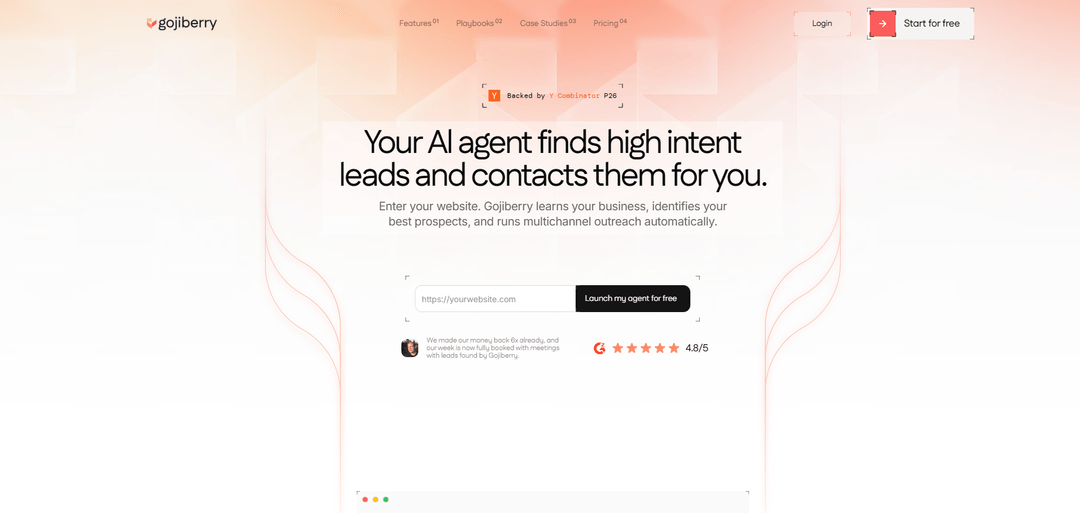
The Pro plan costs $99 a month and includes 2 social senders, unlimited campaigns and the full set of 30+ signals. Above five people there's a custom tier that adds senders and volume, and onboarding starts with a conversation about your ICP rather than a checkout page.
The strength is that nothing sits between the signal and the conversation, which is where most teams lose the timing advantage they paid for: Wispra now sources 60% of its weekly demos from intent signals. What you won't get is a data warehouse you can shape yourself, so if your team already has someone who builds enrichment workflows for a living, Clay below will feel less constrained.
2. Clay
Clay is a spreadsheet that calls data providers, where each column can run an enrichment, an AI prompt or an API request against the rows you loaded. It's the most flexible tool here and the one that asks the most of you.
- 🗃Waterfall enrichment: query provider after provider until one returns an email, instead of trusting a single source.
- 🧠AI research agent: ask a question about each row and let it read the web for an answer.
- 🔧Custom workflows: chain steps together and push the result to a CRM or a sequencer.
- 🔖Signal sources: import job changes, hiring data or funding news as a column and filter on it.
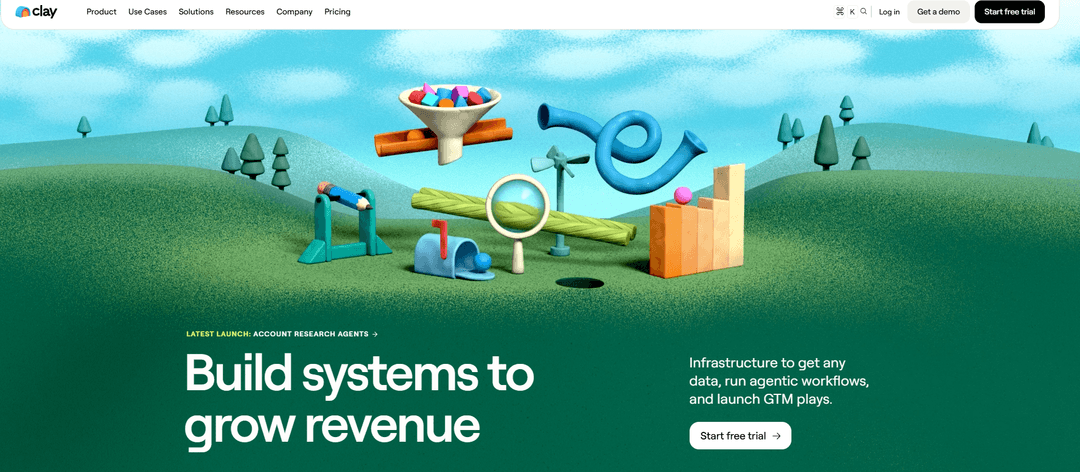
There's a free tier with a hundred data credits a month, then the Launch plan at $185 a month and Growth at $495, both billed on credits that a failed lookup consumes just as happily as a successful one.
For a team with a technical operator, Clay replaces four subscriptions and does it well. For everyone else the truth is less comfortable. Those tables take days to build and the credit bill moves in ways you can't predict until you've run a full month through it.
3. Apollo
Apollo bundles a large contact database with sequencing, so you can find someone and email them without leaving the tab. It's the cheapest way to get data and sending under one subscription.
- 🔍Prospect search: filter a huge database on role, company size, tech stack and more.
- 📧Email sequences: build a cadence and send it from the same account.
- 📊Basic intent data: topic level signals on accounts, sold in higher tiers.
- 🔧CRM sync: two way integrations with the usual suspects.
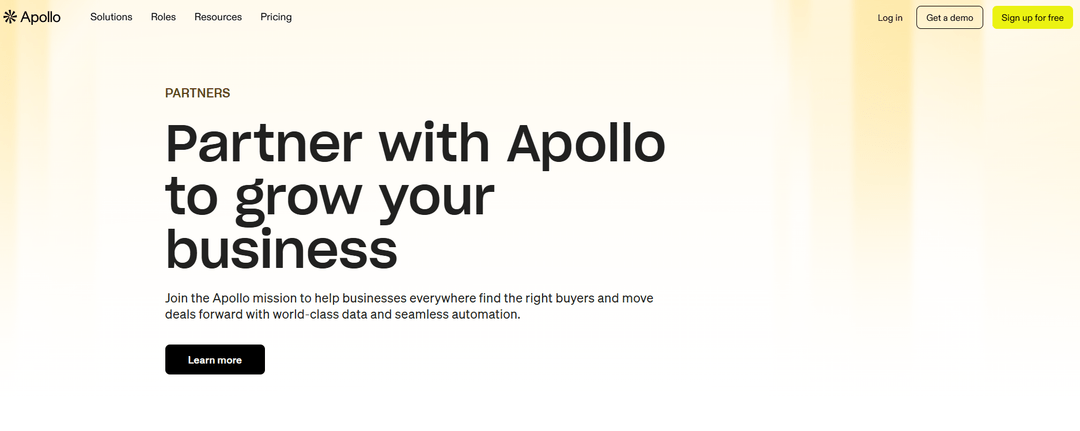
A free plan covers a small monthly quota, and paid seats start around $49 per user a month on annual billing, which stays reasonable for a team of three.
Breadth is the argument here, since almost nothing else gives you a database and a sender for that price. Data accuracy varies more than the marketing suggests and the intent layer stays coarse next to a tool built around signals, so you'll still be picking targets from filters rather than from behaviour.
4. RB2B
RB2B solves a different problem: it puts a pixel on your site and names the individual who visited, where the rest stop at the company. It only matters if you already have traffic worth identifying.
- 🔔Person level identification: a name and a profile rather than a company logo.
- 💬Real time alerts: visitor notifications land in a Slack channel as they happen.
- 🧭Page filters: spend credits on the pricing page rather than the blog.
- 🔧Integrations: push identified visitors into a CRM or a sequencer.
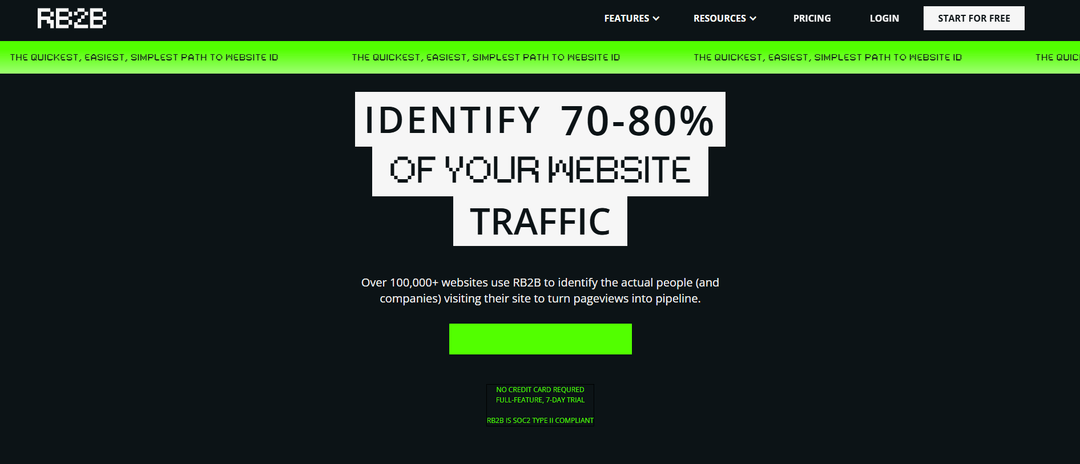
The free plan gives 150 monthly resolutions at company level, Starter costs $79 a month for 300 resolutions, and Pro at $149 adds business emails with 600 resolutions.
When your site gets real US traffic, few signals beat someone reading your pricing page twice. Two limits decide whether it fits. Identification covers US visitors only, and a site with a few hundred monthly visitors returns a handful of names that won't carry a pipeline.
5. PhantomBuster
PhantomBuster is a catalogue of automations you wire together yourself, where each Phantom handles a single job: pulling a list out of a search, enriching a batch of profiles, or pushing the result into whatever comes next. Nothing here runs a campaign for you, it prepares the material one step at a time.
- 🔍Scraping: turn a search, a group or an event into a clean export.
- 🧠Enrichment: add emails and firmographics to a raw list.
- 🔧Flows: chain Phantoms so one feeds the next on a schedule.
- 📈API access: plug the output into something you already built.
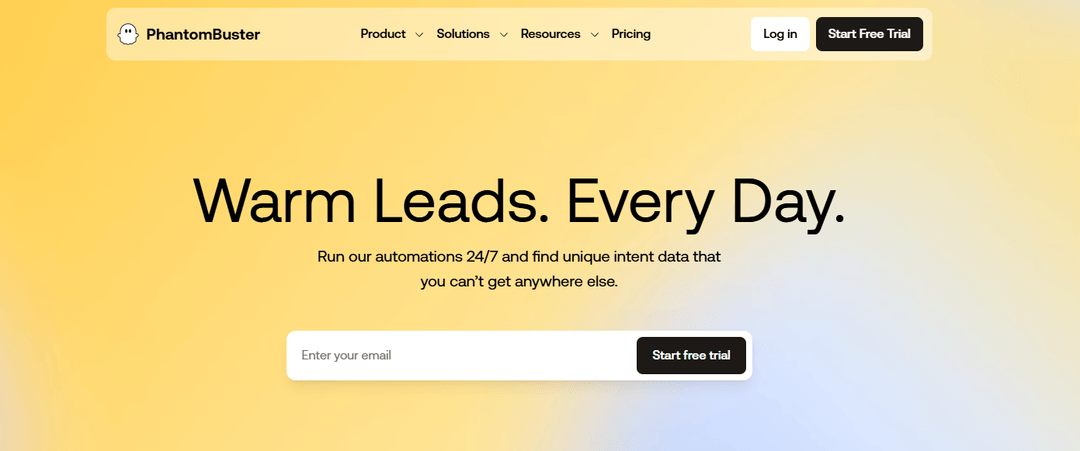
Plans open around $69 a month and are metered in execution time, so a heavy scraping month costs more than a quiet one.
If you can describe a workflow in a sentence you can usually assemble it here in an afternoon, and that flexibility is not a marketing claim. All of it is plumbing though, and in a five person company the person who enjoys maintaining plumbing is also the person carrying a quota.
6. Sales Navigator
Sales Navigator is the paid search layer inside the professional network itself, with filters, saved searches and alerts on the accounts you follow. Almost every tool in this category ends up feeding from the searches you build here.
- 🔍Advanced filters: narrow by role, seniority, headcount growth and recent changes.
- 🔖Saved leads and accounts: keep a watchlist and get notified when something moves.
- 📝Direct messages: a monthly allowance to contact people outside your network.
- 🧭Account alerts: job changes and company news on the accounts you track.

A seat costs around $100 a month, which is real money for a small team, and every extra rep pays the same.
As a source of truth on who works where, nothing else comes close, and its alerts land early. Everything after that is manual: no scoring, no sequences, no way to act on twenty alerts without twenty copy pastes, which is exactly the gap the other tools on this page were built to fill.
7. 6sense
6sense is enterprise account based marketing software that predicts which accounts are in a buying cycle, using web activity, third party intent and its own models. We kept it here for coverage, and it's the wrong size for most people reading this.
- 📊Account level intent: a buying stage per account rather than a signal per person.
- 🎯Predictive scoring: models trained on your closed won history.
- 🧩Advertising and orchestration: ads, sales alerts and CRM plays in one platform.
- 🤝Dedicated onboarding: an assigned team, because nobody self serves this.
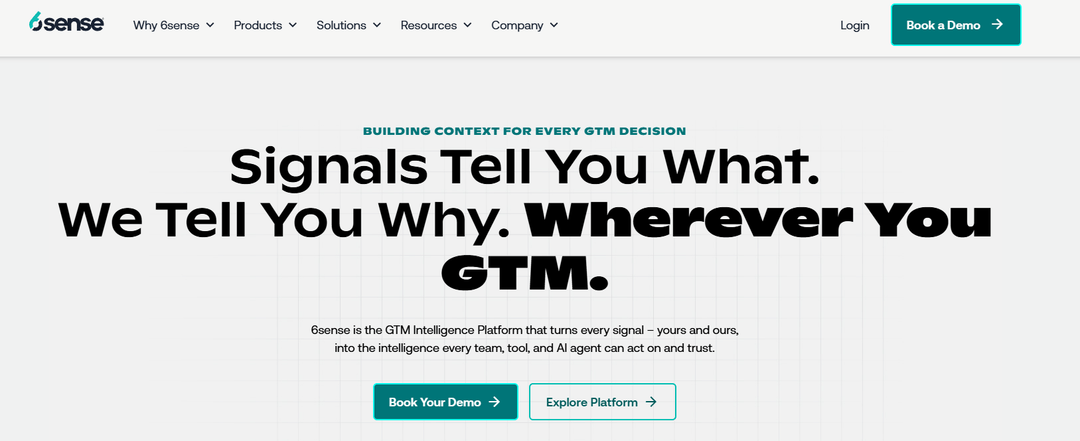
Pricing is quote only, negotiated annually, and public buyer data puts serious deployments well into five figures a year.
When you sell six figure contracts into committees of eight people, that money buys real coordination between marketing and sales. Selling to SMBs with a team of three, you'd be paying for a governance layer and a contract cycle your deal sizes can't justify.
Seven tools, one question none of them answer
Most of them tell you something happened. Gojiberry checks whether it fits your ICP and sends the first message while the signal is still warm.
Start freeWhat is Trigify?
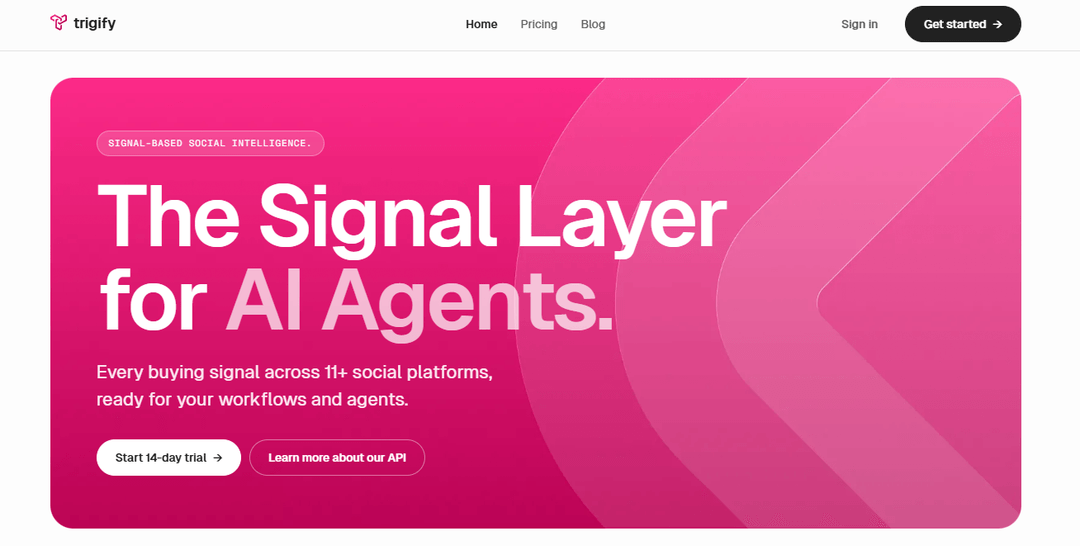
Trigify is a signal intelligence tool. It listens to activity across social platforms and surfaces the people behind it, so a comment or a job change becomes a named prospect with the original post attached. The product's whole promise is timing: reaching someone in the week they showed interest rather than the quarter you happened to build a list.
What can you do with Trigify?
- 🔍Monitor profiles and posts: track who engages with specific accounts or content and get the person behind the engagement.
- 🔖Run keyword listening: follow topics across several platforms and collect the people talking about them.
- 🔔Catch job changes: get told when someone in your list moves, which is one of the strongest buying windows there is.
- 🔧Push signals out: workflows, an API and a CRM sync move the data into the rest of your stack.
- 📊Keep a search history: look back at what a saved search returned, with retention depending on your plan.
The pros and cons of Trigify
- Signal coverage across several platforms
- Every signal resolves to a named person with its source
- An entry plan at $40 that a solo founder can afford
- API and workflow access for teams who build their own stack
- It flags activity, it doesn't check the person fits your ICP
- No outreach: the message is still yours to write and send
- Credit billing makes the monthly cost hard to forecast
- Alert volume needs disciplined filtering to stay useful
How much does Trigify cost?
Three self serve plans, all sharing one credit system, with a 14 day trial on each. Starter runs $40 a month with 50 tracked profiles, 25 listening searches, 4,000 credits and a 7 day search history. Max costs $199 a month and lifts that to 5,000 profiles, unlimited searches, 40,000 credits and a 12 month history. Enterprise is priced on a call. Overages are billed at $0.012 per credit, which is where a quiet month and a busy one stop resembling each other.
What do Trigify users think?
Two themes come up consistently in public reviews. The praise goes to signal breadth and to the fact that each alert carries the post that triggered it, which makes the first message easy to write. The complaints cluster around volume and calibration: without tight filters the feed produces far more alerts than anyone acts on, and teams describe a few weeks of tuning before reps trust the queue. The second recurring point is the gap after the signal, since acting on it means another tool and another subscription.

More High-Intent Leads = Your New Growth Engine.
Start Now and Get New High Intent Leads Delivered Straight to Slack or Your Inbox.