
10 best 11x alternatives to fill your pipeline in 2026

30-second quiz
Which 11x alternative fits your team?
No email required.
11x sells digital workers: Alice runs outbound end to end, Julian handles the calls. It's demo-gated, starts at $36,000 a year on 11x's own Growth plan, and standard contracts run twelve months, which rules it out for most teams of two to ten.
Below are ten tools that don't work that way. Seven are agents that run outbound for you. Three are pieces you bolt on yourself, and they're here because on a small team they often solve the problem for less.
Most AI SDRs send more cold email to the same cold list. Gojiberry changes the list: it surfaces the people already showing intent.
Start finding prospects automatically for freeTable of contents
The 10 best 11x alternatives
For a crew of two to ten, the short answer is Gojiberry if your reply rate is the problem. Artisan if you want the 11x model at a lower entry point, and AiSDR if you need a published price you can budget against today.
How we put this list together
Method and disclosure
Every tool here was assessed against one profile: a B2B sales team of two to ten people, working roughly 400 prospects a month, with no ops hire and no procurement process. We checked each vendor's public pricing page in July 2026, ran the products that offer self-serve access, read what users report publicly, and looked at how each one decides who to contact rather than only how it sends.
Where a vendor doesn't publish a number, we've written quote-based and given the third-party reported range with its origin, rather than guessing. We pay for our own tools, no vendor reviewed this article before publication, and Gojiberry is our product, so read that entry as informed rather than neutral.
The 10 alternatives in detail
The order runs from the closest replacements for 11x down to the pieces you assemble yourself. Gojiberry is first because it's ours and because targeting is the objection we hear most often. Every price here was checked against the vendor's own page in July 2026.
1. Gojiberry
Gojiberry is an AI-powered multichannel prospecting platform. It tracks more than 30 buying intent signals across socials and the web, surfaces the leads who are searching right now, and triggers personalized outreach across several channels. Built for a crew of two to ten with no ops hire behind them.
Four moving parts, and you set the rules for each:
- 🔔Signal tracking: funding rounds, job changes, hiring bursts and stack moves are watched across socials and the open web. You pick which of them count for your offer.
- 🎯ICP filtering: an account that fires a signal is checked against your criteria before a rep opens it. The queue stays short.
- 📝Copy from the trigger: the opening line references the event that just happened rather than the prospect's job title, which is the difference between a message and a mail merge.
- 🔁Multichannel sequences: email and social follow-ups run from the same setup. No second subscription to send what the first one found.
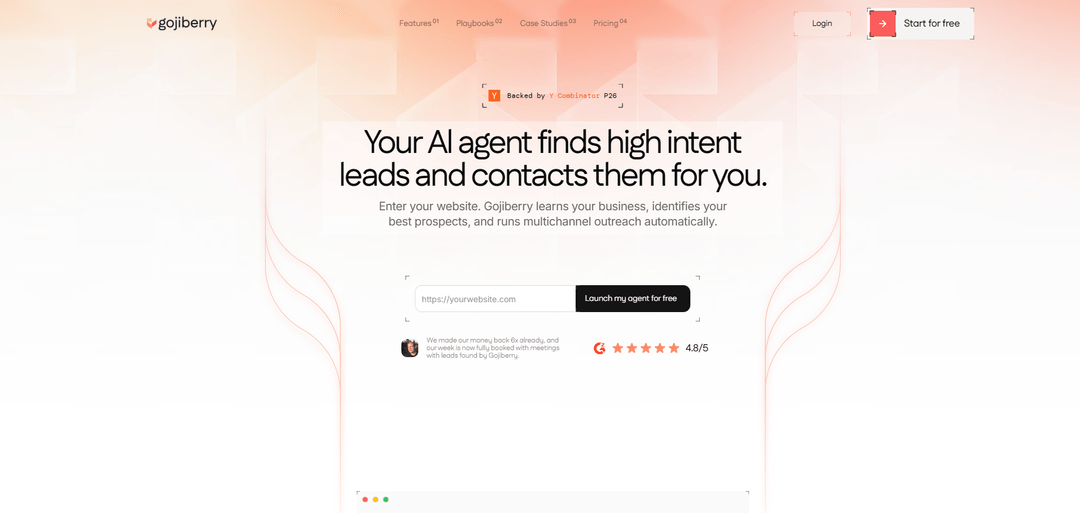
There's a free plan, then $99 a month with 2 social senders included. It's priced per workspace, so a second and third rep don't change the invoice, and there's no annual commitment.
It changes who you contact rather than how fast, which is the one thing more automation can't fix. What it isn't is a contact database, and a narrow ICP of a few hundred companies won't produce enough signal to fill a week. Wispra sources 60% of its weekly demos this way, per the Wispra case study.
2. Artisan (Ava)
Artisan's agent, Ava, is the closest like-for-like replacement for 11x. She builds the list from Artisan's own B2B database, writes the sequence, sends it and handles the first replies. For a team that wants the 11x model at a lower entry point, this is the first tool to look at.
- 🔍List building: Ava assembles the target list from Artisan's own B2B database. No separate data subscription to feed her.
- 📧Email and social sequences: she writes the sequence, sends it and paces the follow-ups without a rep opening the tool every morning.
- 💬Reply handling: first responses are drafted or sent outright depending on the setting you pick, so you can keep approval rights while you learn to trust it.
- 🧪Deliverability tooling: warmup and inbox health are managed inside the product. A fresh domain won't take your first campaign down with it.
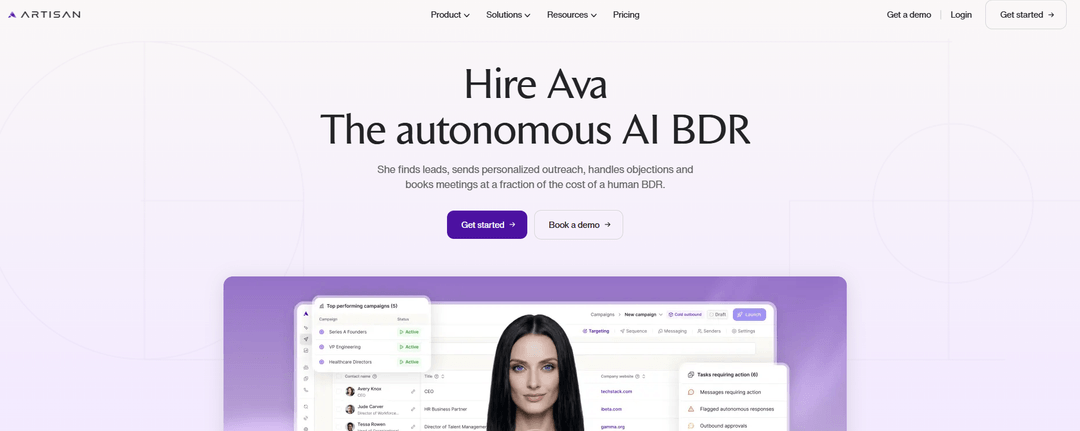
Quote-based. Artisan has a pricing page, and the final number goes through a sales conversation. Third-party 2026 breakdowns place self-serve entry plans in the $280 to $660 a month range, with volume plans running from roughly $2,000 a month upward as contacted lead volume grows.
The most complete agent here that a small team can plausibly afford. What you don't get is a number you can budget from, and Ava is still working a cold list, so weak targeting produces weak results faster than before.
3. AiSDR
AiSDR is one of the few tools in this category that publishes what it costs. It writes and sends personalized outreach, works from your CRM data or its own lead sourcing, and prices by AI message volume rather than by seat.
- 📤AI-written sequences: messages are personalized from your CRM fields and public company data, so the copy references something real rather than a merge tag.
- 👥Unlimited seats: the whole team works from a single plan. Adding a third or fourth rep costs nothing extra.
- 📅Quarterly billing: no twelve-month commitment to sign before you've seen a single reply.
- 🔄HubSpot and Salesforce sync: the connection runs both ways, so replies and booked meetings land where your team already works.
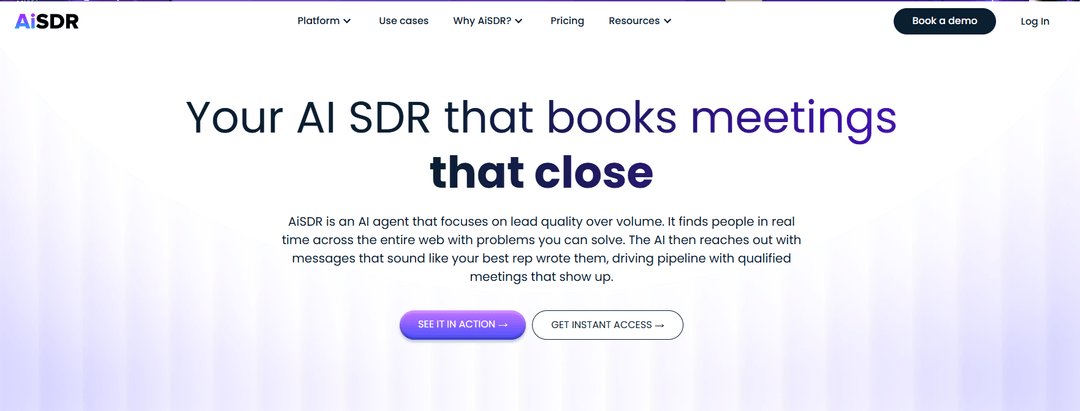
Published pricing: $900 a month on the entry tier for around 1,200 AI messages, and $2,500 a month for roughly 4,500. Annual billing takes about 20% off. Leads are bundled into the message tier rather than sold separately.
You can budget for it without booking a demo. In a category where almost nobody publishes a number, that counts. The catch is the floor: $900 a month is a lot for three people, and paying by message means the invoice tracks how much you send instead of how much you book.
4. Regie.ai
Regie.ai sits closer to sales engagement than to autonomous prospecting. Its agents handle the low-priority parts of the list while human reps work the accounts that matter, and its content engine keeps every message consistent with your positioning.
Regie splits the list between agents and people:
- 🎨Content engine: sequences and snippets are generated against your own messaging rules, which keeps five reps sounding like one company.
- 🤖Auto-pilot agents: the agents work the long tail while your people spend their hours on the accounts that justify a human.
- 📊Prioritization: scoring decides which accounts get escalated to a rep and which stay with the agent. You set where that line falls.
- 📞Dialer add-on: a phone layer is available as a separate per-user line.
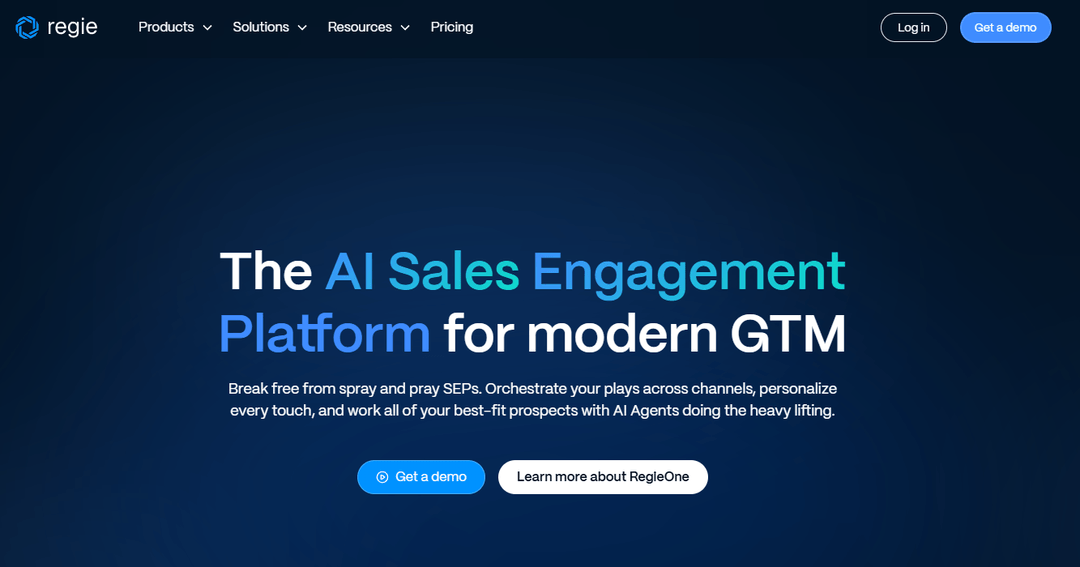
Published per-seat tiers: AI SEP at $180 per user per month on annual contracts with a 10-seat minimum, and Force Multiplier at $499 per user per month with a 5-seat minimum. The full RegieOne platform is quote-based.
That 10-seat minimum ends the conversation for most of the teams this article is written for. Above that headcount it earns its place: the copy engine is the most disciplined here, and keeping a growing team on message is a problem it solves properly.
5. Agent Frank (Salesforge)
Agent Frank is Salesforge's AI SDR, and it's the cheapest autonomous option with a published price. It runs in auto-pilot or co-pilot mode, so you can keep approval rights over every message while you learn to trust it.
Frank runs in two modes, and the second one is why small teams start here:
- 🔀Two modes: auto-pilot sends on its own, co-pilot queues every message for your approval, and you can move between them as confidence builds.
- 🌍More than 20 languages: if your ICP spans several European markets, Frank writes in each of them.
- 📚Built-in database: contact sourcing comes with the plan. No data invoice stacked on top of the agent.
- 📥Own mailbox infrastructure: Mailforge and Warmforge sit underneath at extra cost and handle provisioning and warmup for the domains you send from.
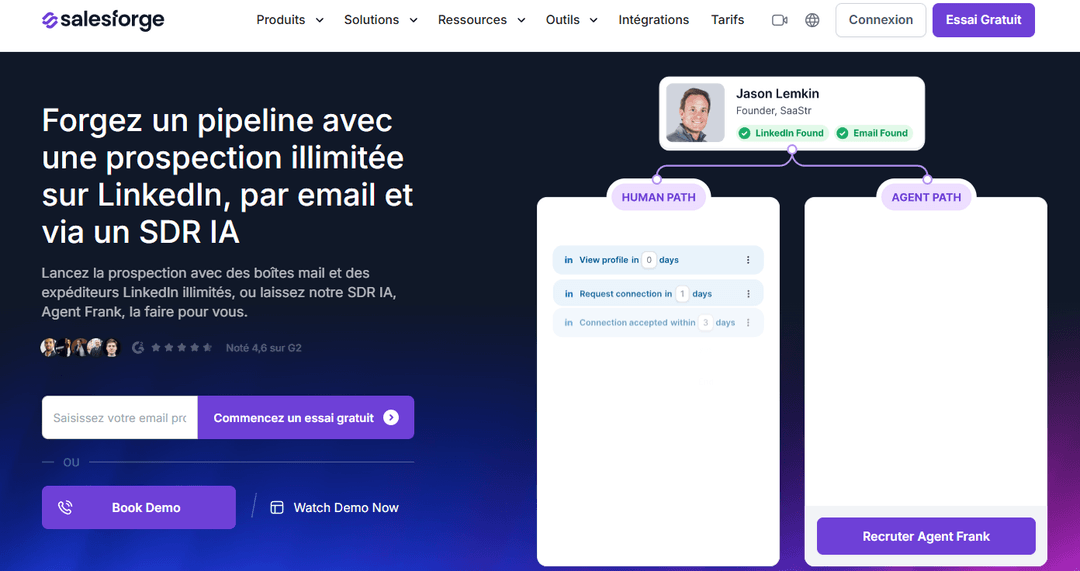
From $499 a month billed annually, covering roughly 1,000 active contacts and 6,000 to 7,500 emails a month. Email infrastructure is a separate subscription starting around $33 a month, and the Salesforge outreach platform itself runs $40 to $80 per month on annual billing.
Co-pilot mode is the honest way to test an AI SDR without handing over your domain reputation on day one. Frank targets from filters rather than signals, so he can't tell a company that just raised from one in a hiring freeze. Same message, same week, two different sets of odds.
6. Apollo
Apollo isn't an AI SDR, and it belongs here because it solves the same problem from the other end. You get a 275M+ contact database and the sequencing to work it on one invoice, at a price a small team can absorb.
- 🔎Database search: you build lists from firmographic and technographic filters rather than one profile at a time, which changes how a rep spends a morning.
- 📨Sequencing: email, calls and tasks run from the same place the contact was found. Nothing gets exported into a second tool.
- 📈Buying intent filters: available from the Basic tier. They're a coarse version of what a dedicated signal platform does, and they beat filtering on headcount alone.
- 🎧Dialer: the higher tiers include calling with recording and transcription.
Free plan, then $49 per user per month on annual billing for Basic, $79 for Professional and $119 for Organization. Monthly billing pushes those to roughly $59, $99 and $149, and credits are metered separately.
Cheapest route to data and sending under one subscription, with no sales call to see a price. Then the credit meter starts. And a rep still runs the whole motion by hand, which is the part 11x was meant to remove. If Apollo is where you land, we put it against eleven others in our Apollo alternatives comparison.
7. Reply.io
Reply.io is a multichannel sales engagement platform with an optional AI agent bolted on. Email, calls, SMS and social touches live in one sequence, and warmup is included rather than sold as an extra.
- 🧵Four channels in one flow: email, calls, SMS and social touches share a single sequence, with branches that fire the moment someone answers.
- 🔥Included warmup: the deliverability tooling comes with the platform rather than as an upsell.
- 🤖Optional AI agent: you can point it at a slice of the list and test autonomous outreach without committing your whole motion to it.
- 🔗CRM sync: two-way with the usual suspects, plus an API that holds up if you want to build something around the platform.
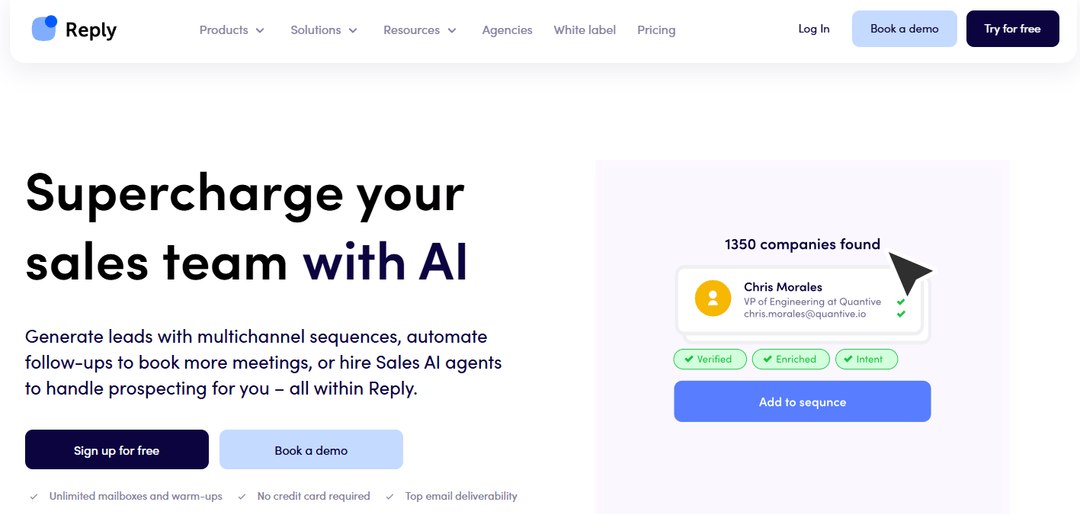
The platform starts at $59 per user per month. The AI agent is a separate line, and third-party 2026 breakdowns report entry around $500 a month for roughly 1,000 active contacts, scaling with volume from there.
Four channels without stitching three tools together is worth something on its own. Add the agent and the two prices stack: three reps clear $600 a month before a dollar of data spend.
8. Clay
Clay is the substrate a lot of these products are built on. Rather than trusting one data vendor, it waterfalls a request across more than a hundred of them, then lets you build exactly the targeting logic you want on top.
The mechanics are worth understanding before you buy:
- 🧩Waterfall enrichment: providers run in the order you set, cheapest first, and the expensive ones only get called on the rows everything else missed.
- 🔬Research agent: Claygent reads a company's website and recent news, then drafts an opening line for every row of your table.
- 📁Any input: a CSV, a scrape or a CRM view all become the same working table.
- 🔗Push to your sender: finished rows go straight into your sequencing tool, so the enrichment work doesn't die quietly in a spreadsheet.
After the March 2026 pricing change: Launch at $185 a month covering 2,500 data credits and 15,000 actions, and Growth at $495 a month. Data purchases and workflow actions are metered on separate credit pools, so budget for both.
Nothing else here lets you define targeting this precisely, and the cost per enriched contact drops sharply at volume. It sends nothing. And it rewards teams with someone who enjoys building process. Everyone else stalls at the second table.
9. Instantly
Instantly solves the step after targeting: getting a lot of email out without wrecking your domain. It's not an AI SDR and it doesn't pretend to be.
- 📬Unlimited mailboxes: sending rotates across as many addresses and domains as you connect, so no single inbox carries enough volume to get flagged.
- 🔥Unlimited warmup: included on every plan. A new domain needs two to three weeks of it before it can carry real volume.
- 🧪Split testing: variants run against each other and the winner takes the rest of the send.
- 📊Per-mailbox analytics: reply and bounce rates are tracked per address, so you catch a domain going bad before it drags the rest down with it.
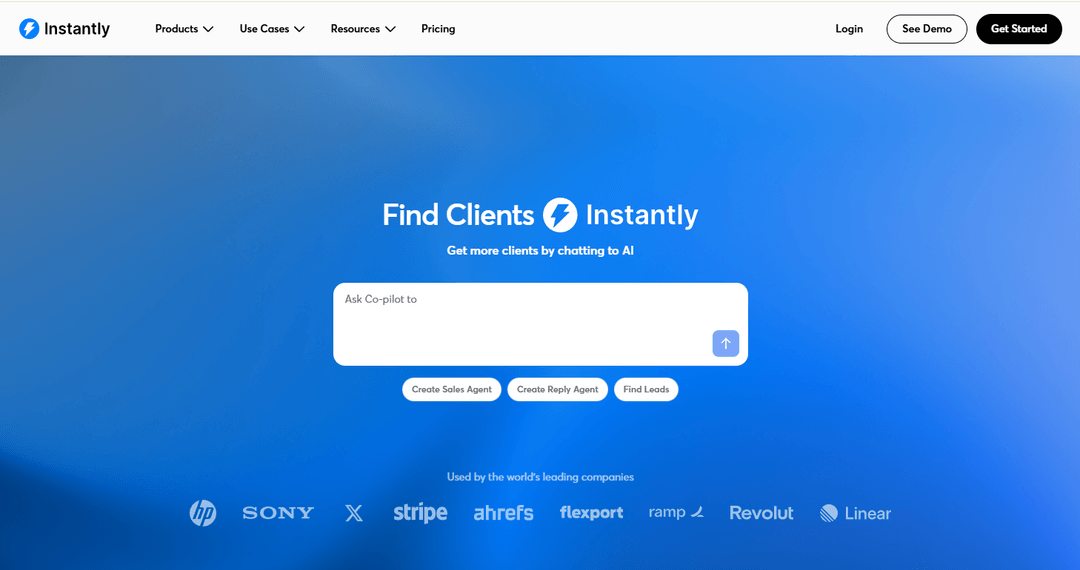
Outreach plans start at about $37 a month on annual billing for the whole team, with no per-seat charge. The lead database is a separate add-on at roughly $42 a month if you want data alongside the sending.
Nothing on this list sends more email for less money. Nothing on this list does less to tell you who deserves the email, either, which is the problem most people leaving 11x came to solve.
10. Amplemarket
Amplemarket bundles contact data, multichannel outreach and an AI copilot into one platform. It's the most complete option here and the one aimed furthest up-market, which shows in both the feature set and the contract.
- 📦Built-in data: contacts and company data come with the plan rather than from a separate vendor, and that bundling is most of what you're paying for.
- 🌐Multichannel: email, social and phone touches sit in the same sequence, with the platform handling the pacing between them.
- 🔒Deliverability suite: duplicate detection and inbox health monitoring stop two of your reps writing to the same person.
- 💡AI copilot: drafting and account prioritization happen alongside the rep rather than instead of them.
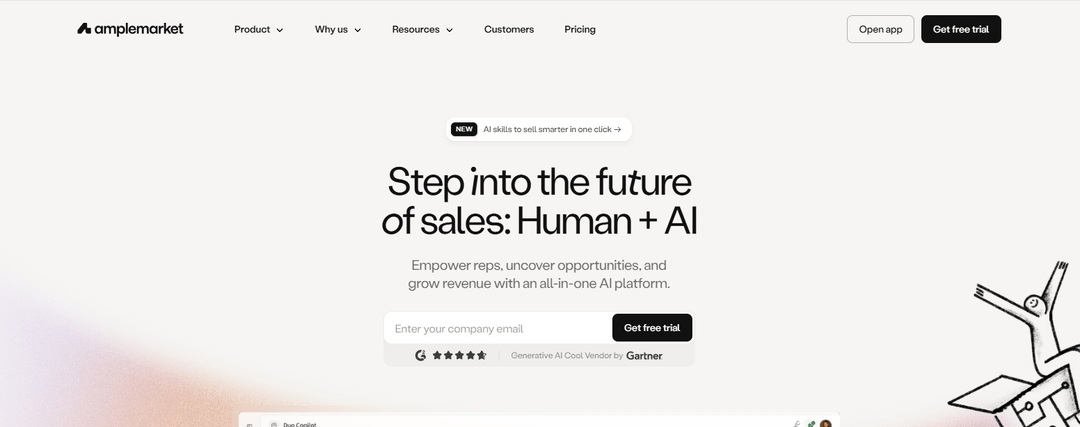
Startup is $600 a month on annual billing, covering 2 users and 30,000 contacts. Growth and Elite are quote-based, and every plan requires an annual commitment.
The deepest all-in-one here, and the one furthest from the reader of this article. An annual commitment and a $600 floor is the same objection that sends people past 11x in the first place.
Your best account moved this week. You missed it.
Gojiberry tracks 30+ buying intent signals across socials and the web, surfaces the leads searching right now, and runs the personalized outreach for you. Free to start, $99 a month after that.
Run it on your ICPWhat is 11x?
11x is an AI SDR platform built around what it calls digital workers: named agents sold as a substitute for sales development headcount rather than as software a rep operates. Alice is the outbound agent, running prospecting, sequencing and reply handling across email and social channels. Julian is the phone agent, handling inbound and outbound calls.
The positioning is the product. 11x doesn't pitch a better sequencer. It pitches the argument that you don't need to hire the next SDR, and that framing is why it's priced and sold like a headcount decision, with a demo, a scoping conversation and an annual contract rather than a signup form.
What can you do with 11x?
- 🔍Build the target list: Alice sources contacts against your ICP definition from third-party data providers.
- 📧Run outbound end to end: sequences are written, sent and followed up without a rep in the loop.
- 💬Handle first replies: the agent responds to objections and pushes toward a booked meeting.
- 📞Add a phone channel: Julian handles calls as a separate digital worker, priced on top.
- 🔄Sync to your CRM: activity and booked meetings flow back into your system of record.
The pros and cons of 11x
What works
- One agent covers prospecting, writing, sending and first replies, which is more scope than most tools here
- Volume and consistency a two-person team can't match by hand
- Multichannel out of the box, including a phone agent as a separate worker
- A named contact and a real implementation process rather than a help center
- The category leader on brand awareness, so internal buy-in is easier to get
What doesn't
- No self-serve pricing and no free trial, so evaluating it costs you a sales cycle
- Annual commitments are standard, and reviewers report opt-out windows that are narrower in practice
- The published floor of $36,000 a year sits above most small-team budgets
- Results track list quality, and the agent has no buying-signal layer to prioritize with
- Reviewers describe the generated copy as thin once you look past the first line
How much does 11x cost?
11x publishes one number and hides the rest. Its own pricing page lists Alice from $36,000 a year on the Growth plan, with Pro and Enterprise quote-based. Third-party 2026 pricing breakdowns converge on roughly $5,000 a month with a twelve-month commitment, and implementation fees that push a typical first year to somewhere between $50,000 and $60,000.
For a small team that's the whole conversation. $36,000 a year is one junior salesperson, and it arrives as a single annual line item rather than a monthly subscription you can stop. Adding Julian for calls is a second digital worker, priced on top of the first.
What do 11x users think?
Public feedback splits along a consistent line. Teams with the volume to feed it report real output. The recurring complaints are contract flexibility, copy that reads generic once you get past the opening line, and setup work that takes longer than the autonomy story implies.
There's also a documented episode worth knowing about. In March 2025, TechCrunch reported that customer logos shown on 11x's site included companies that said they were not customers, and cited former employees describing heavy early churn. 11x's founder disputed the article's conclusions publicly and said the main error was leaving logos up too long. The takeaway for a buyer is a habit rather than a verdict: ask any vendor in this category for named references at your company size before you sign. That applies to us too.
Why do people look for an 11x alternative?
Four reasons come up repeatedly, and they're structural rather than about bugs.
The contract shape, not the price tag
An annual commitment with no self-serve tier is a headcount decision rather than a software purchase. Most small teams can't validate a channel and sign a year of budget in the same quarter.
The gap between autonomous and hands-off
The agent still needs your ICP defined precisely, your offer articulated, your domains warmed and your replies reviewed. Reviewers consistently report more setup than the digital worker framing suggests.
Results follow the list
An AI SDR multiplies what your targeting already produces. Feed it a broad, cold list and you get the same reply rate at higher volume. That reads as a product failure and is a targeting failure.
More cold email isn't the fix
The honest version of the objection. If nobody replies, sending three times as much of the same message doesn't solve it. Changing who receives it does.
Which 11x alternative is right for you?
Pick by bottleneck rather than by feature count. The wrong tool bought for a good reason still costs you a quarter.
- 🎯You want the qualifying done for you: Gojiberry. For a small crew whose reply rate is the problem rather than their send volume.
- 🚀You want the 11x model at a lower entry point: Artisan. The closest like-for-like AI BDR, database included.
- 💰Budget is the constraint: AiSDR. Published pricing, quarterly billing, unlimited seats.
- 🧩You want to build the targeting yourself: Clay, on the condition that someone on the team enjoys the process work.
- 📚You want data and sending on one invoice: Apollo. Cheapest consolidation, with a credit meter to watch.
- 📬You need send capacity and nothing else: Instantly. Unlimited mailboxes and warmup for about $37 a month.
Run a two-week parallel test before you commit to anything annual. Two people, the same ICP, the same offer, one measurable goal. A demo environment is always cleaner than the account you'll be given.
If your shortlist has drifted away from agents and toward the data layer, we've run that comparison separately in the Lusha alternatives guide, and the social prospecting side in the LeadIn alternatives one.
Fix the list first. Gojiberry surfaces the accounts showing intent this week, then writes to them across channels.
Start free, no contractGojiberry vs 11x: which one brings you leads?
These two tools automate different halves of the same job, which is why a feature count would mislead you. 11x automates the sending. Gojiberry changes the list.
11x takes the ICP you give it and works through the resulting list faster than a person could. That's a gain worth paying for when your list is good and your constraint is hours in the day. Gojiberry starts a step earlier. It watches for the events that make someone worth writing to this week, checks those accounts against your ICP, and only then writes. If you're contacting a thousand cold names to book eight meetings, three thousand names won't fix it.
Four teams that made that shift, with the numbers they reported:
GTE Localize
100+ meetings booked after moving from email outbound to intent-based outreach.
Read the case studyBaur Software
Network doubled by scaling authentic outreach instead of raw volume.
Read the case studyThe cost comparison is simpler than the feature one. 11x starts at $36,000 a year on an annual contract. Gojiberry is free to start and $99 a month after that, priced per workspace with 2 social senders included, with no commitment to sign. At that size, the gap isn't a discount. It's the difference between testing a channel and betting a year of budget on it.
Where Gojiberry came from
Coco.ai was the training ground
Roman was running this motion by hand long before there was a product to sell. Prospecting on socials for Coco.ai, he kept finding the same thing: the messages that worked weren't better written, they arrived at a better moment. Someone had changed jobs, or raised, or started hiring for the team he sold to. He was checking that manually, one tab at a time.
The ceiling showed up fast: one person can track about thirty accounts properly before the admin eats the week. Gojiberry exists because the founders hit that wall themselves at Coco.ai, which is why the product assumes a small crew rather than a sales floor with a RevOps function behind it.
Your questions about 11x alternatives
What's the best 11x alternative for a small team?
Gojiberry, for a crew of two to ten. Not because it does more than 11x, but because it does a different job. 11x works the list you hand it. Gojiberry decides what goes on the list in the first place.
It tracks more than 30 buying intent signals across socials and the web, surfaces the people already searching, and runs the personalized outreach from there. It starts free, costs $99 a month after that, and there's no annual commitment to sign. GTE Localize booked 100+ meetings after moving from email volume to intent-based outreach, and the case study walks through what changed.
Which 11x alternative is the cheapest?
Instantly, at around $37 a month on annual billing, if all you need is send capacity. Apollo's free plan costs nothing and its Basic tier is $49 per user per month, which buys a database and sequencing together.
Among the tools that behave like an AI SDR rather than a sending platform, Agent Frank is the lowest published entry at $499 a month. AiSDR is the cheapest with a fully public price page, at $900. Cheap and autonomous rarely appear in the same row of that table.
How do I switch from 11x to another tool?
Check the contract first. Annual commitments are standard in this category, and reviewers report that opt-out windows are narrower in practice than they sound in the sales call. Find your renewal date before you evaluate anything.
Then run the new tool in parallel for two to four weeks instead of cutting over. Export your sequences, your reply data and your do-not-contact list while you still have access. Keep the same ICP and the same offer during the test, or you won't know which change moved the number.
Do AI SDRs book meetings?
Yes, with a condition attached. An AI SDR writes and sends faster than a person, so it multiplies whatever your list and your offer already produce. On a well-targeted list that's a gain worth paying for. On a broad, cold list it produces more of the same silence, sooner.
So work out where your reply rate problem sits before you compare agents. If it comes from how little you send, an agent fixes it. If it comes from who you're sending to, an agent makes it louder.
Can an AI SDR replace a human SDR?
Not in one piece. Prospecting, drafting and follow-up sequencing are the parts that automate well today. Reply handling, discovery, and anything requiring judgment about a specific account still need a person.
On a small team the useful question isn't replacement anyway. It's whether the tool gives one existing person back a day a week, and whether that day turns into pipeline.
What should I check before signing an AI SDR contract?
Four things: the contract length and the exact opt-out terms, what the price covers at your contact volume rather than at the entry tier, whether implementation is billed separately, and where the data comes from.
Then ask for named references at your company size. In March 2025 TechCrunch reported that several logos on 11x's site belonged to companies that said they were not customers. Verify what a vendor claims about its customers before you sign, for anyone in this category, us included.
Stop automating the cold list. Change it.
Gojiberry tracks 30+ buying intent signals across socials and the web, surfaces the leads searching right now, and runs personalized multichannel outreach. Free to start, $99 a month after that, no annual contract.
Start freeBook a 15-minute demo
More High-Intent Leads = Your New Growth Engine.
Start Now and Get New High Intent Leads Delivered Straight to Slack or Your Inbox.