
Lusha review 2026: our verdict after our test

Lusha sells one thing well. You land on a profile, you click, and it hands back a work email and a direct dial. That part holds up. What decides whether you keep paying is everything that happens after the click, and that's where most reviews of this tool go quiet.
We read Lusha's pricing page on September 2, 2026, pulled the credit rules straight from it, and worked out what one usable contact costs a three-person team once the meter is included. Short version: it's a good lookup tool whose phone reveal costs ten times what an email does, and it stops at the point where outreach starts. If you sell outside North America, or if a second tool sends your messages, that math gets hard to defend.
Quiz · 2 questions
Should you buy Lusha?
No email required.
Question 1 / 2
Where do your prospects sit?
Question 2 / 2
Who sends the outreach?
📞
Your result
Buy Lusha, this is its home ground
US direct dials worked by hand is the one shape Lusha was built for. Budget for ten credits a number and it holds up. The day that list needs to reach past North America, come to us instead.
See the other half🔁
Your result
You're paying two invoices for one job
One subscription finds the contact, another sends the message, and neither one tells you who was worth contacting this week. We watch the signal and send the first message ourselves, on one bill.
Start free🌍
Your result
Europe is where the database thins out
Coverage drops off outside North America, and every empty row still costs you a minute of attention. We start from what changed at a company, so the list gets built out of businesses that moved recently.
Try the other route🎯
Your result
Two tools, and still nothing on timing
Outside the US you're paying for coverage you don't get, then paying again to send to it. The question your stack never answers is which twenty accounts deserve a message on Monday.
Get leads without the lookupTable of contents
- What does Lusha replace in your stack?
- How accurate is Lusha's data?
- Will you run out of credits by the 12th?
- What is the browser extension good at?
- What starts to grate by month three?
- How do you cancel Lusha?
- Who is Lusha for?
- What are the 5 best alternatives to Lusha?
- Gojiberry vs Lusha, where do they split?
- What people ask before they pay
What does Lusha replace in your stack?
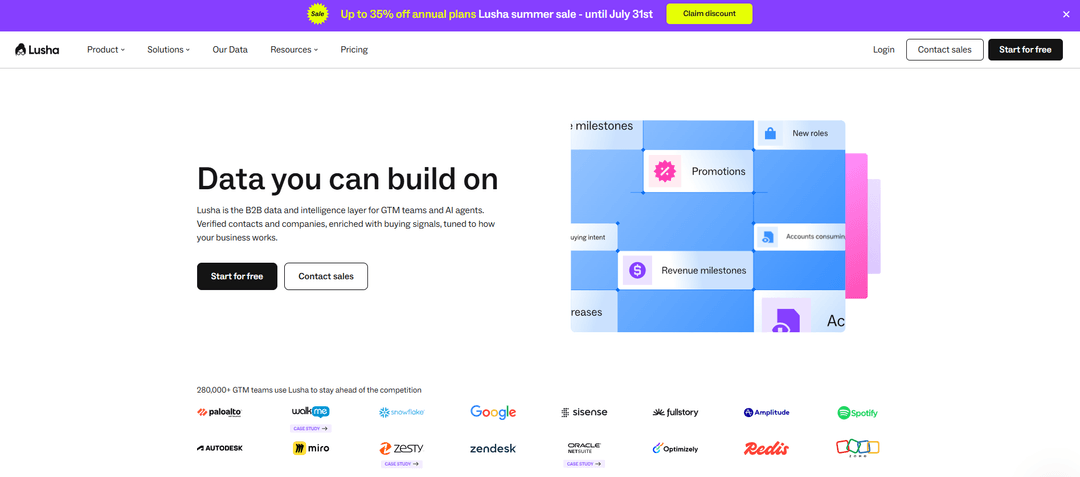
Lusha is a B2B contact database with a browser extension bolted to the front of it. Land on a profile or a company site, the panel pops out, and it returns a verified email and a direct dial. The extension is the product most people are buying, even when the invoice you're paying says platform.
Behind it sits a searchable database you can filter by title, industry, headcount and geography, plus bulk enrichment for lists you already own and connectors into the usual CRMs. Lusha has since added an email sending layer and a set of buying signals, so the pitch has drifted from data provider toward workspace. Most small teams don't touch more than a third of it. They open a profile, they reveal, they paste the result into whatever they write in. The rest of the plan is there for the day you grow into it.
How accurate is Lusha's data?
What does Lusha claim about its data?
Lusha's own materials run on high-nineties figures for email validity, and the customer quotes it publishes on its pricing page land in the same range for deliverability. Those are the vendor's numbers, measured on the vendor's sample. An accuracy claim describes the records a provider chose to hand back, and says nothing at all about the ones it couldn't find.
Why does coverage matter more than accuracy?
Two numbers decide whether a data tool earns its keep. Accuracy is how many of the returned records are correct. Coverage is the proportion of your lookups that return anything at all. A provider can be right about everything it gives you and still leave six rows out of ten empty, and a review that quotes one number without the other isn't telling you much.
A failed reveal doesn't burn a credit, so it never shows up on the invoice. It costs you the minute you spent, and it sends you shopping for a second source to fill the row. The list also starts rotting the day you build it. HubSpot puts B2B database decay at 2.1 percent a month, which compounds to roughly 22 percent over a year. Buying contacts is a subscription to a leak.
How does Lusha hold up outside the United States?
Lusha runs its business out of Boston, and the density of the database follows the market it grew up in. US direct dials are the strongest thing it sells. European records exist, and teams prospecting France, Germany or the Nordics keep reporting a thinner hit rate than they get from providers built around EMEA. If your ICP is a fifteen-person software company in Lyon, you'll hit gaps. Those gaps are less a flaw in the product than a map of where the contributor community does its work.
What haven't we measured yet?
We haven't run a controlled reveal test: same list, same seniority, same day, Lusha against three other providers, with the results verified by a third party. Nobody in the top ten results for this query has run one either, whatever their headlines suggest. Until we do, treat every accuracy percentage you read about this category, ours included, as marketing until someone shows you the sample.
Everything below comes from Lusha's own pages as they stood on September 2, 2026, and from the complaints that repeat across recent marketplace reviews. We pay for every plan we test ourselves, and no vendor read a word of this before publication.
Will you run out of credits by the 12th?
What do the plans cost, from free to $399?
Lusha publishes its prices, which already puts it ahead of most of this category. Here's the self-serve ladder as the pricing page showed it on September 2, 2026, on monthly billing.
Annual billing knocks roughly a quarter off each line and drops the whole year's credits into your account on day one, and wipes whatever you haven't spent when the year closes. Monthly billing works the other way round: unused credits roll forward and stack up to twice your limit. Lusha also runs promotions often enough that the figure in your cart can sit well under the list price, so read the table as a ceiling, never as a quote. Above five users the self-serve door closes and you talk to a sales rep.
What eats a credit?
One rule decides most of the invoice. An email reveal costs one credit. A phone number costs ten. Reveal both on the same person and you've spent eleven credits on a single row. The phone price used to be five, and doubling it halved the dialing capacity of every plan overnight for the teams that dial. Searches, exports, enrichment runs and the AI features all draw down the same pool, so a rep who spends an afternoon exploring the database can burn a week of allowance without revealing much.
What does a usable contact cost once you count credits?
Take a team of three doing what small sales teams do, which is some email and some calling. Pro gives you 7,200 credits a year, so 600 a month, shared across two included seats, and your third rep doesn't have one. Reveal email and phone on every prospect and those 600 credits buy 54 complete contacts a month for the entire team. Go email-only and the same pool covers 600 rows. Your plan is decided by how much you dial, not by how many people you employ.
Run the math for a team of three. Pro at $69.90 a month is $839 a year. At eleven credits a fully revealed contact, that's 648 complete contacts across twelve months, or about $1.30 each before anyone writes a word to them. Then add the sender, because Lusha's outreach layer is email only and your team also calls.
The line that appears on neither invoice is the one that decides your quarter: how many of those 648 people had any reason to reply. That's the number Mindflow went after instead of volume, and its outbound reply rate rose 31 percent. Read the Mindflow case study.
How far does the free plan get you?
Forty credits a month on a single seat. That's forty emails, or four phone numbers, or some blend of two. It's enough to find out whether the database knows your market and nowhere near enough for anything else, which is a reasonable place for a free plan to sit. Spend it on twenty names from your own target list before you spend anything else. If half of them come back empty, no paid plan is going to fix that.
What is the browser extension good at?
How long does setup take?
Ten minutes, and that estimate includes reading the confirmation email. You install the extension, you sign in, you open a profile, and the panel is already showing you a reveal button. There's no data model to configure, no mapping exercise, no onboarding call to schedule before you can see whether the thing works on your market. For a two-person team with no ops function, that speed is worth more than a feature list.
Do they publish their prices?
They do, and in this category that's unusual enough to count as a feature. The two biggest names above Lusha both route you through a sales conversation before a number appears, which turns a twenty-minute evaluation into a two-week one. Lusha puts the plans, the credit costs and the free tier on a page you can read at midnight without handing over your email address. The rollover and renewal rules sit on that same page, written in plain sentences.
Do the CRM integrations hold up?
The documented connector list covers Salesforce, HubSpot, Pipedrive, Zoho, Outreach, Salesloft, Bullhorn and Microsoft Dynamics, and pushing a revealed contact into a CRM works the way you'd expect. The part that trips teams up is the direction of sync. Full two-way sync sits on the top plan, so on Starter or Pro you're pushing records out of Lusha rather than keeping two systems agreeing with each other. That distinction rarely shows up until the second month, when someone asks why a title updated in the CRM didn't come back the other way.
What starts to grate by month three?
Does the credit math break when you scale?
It bends before it breaks. Three reps dialing fifty numbers a week burn 6,000 credits between them every month, which is ten times what Pro hands out and close to double what Premium averages. The upgrade path from $69.90 to $399.90 is a cliff where a step should be, and no tier sits comfortably in between for four people who happen to like the phone.
Turnover quietly makes it worse. The US Bureau of Labor Statistics puts median job tenure at 3.9 years, with 22 percent of employees in their role under a year. Every one of those moves is a record you already paid for that's now pointing at the wrong company. On a credit model you pay again to find out where they went.
Do unused credits survive the year?
On an annual plan, no. You get the full allocation up front and whatever you haven't spent is reset when the cycle ends. Monthly plans are friendlier here, since unused credits roll over and accumulate to twice your limit. The combination catches people out: buyers take the annual discount for the saving, then discover in month eleven that they're sitting on 9,000 credits with three weeks to spend them. The cheaper plan and the more flexible plan are two different plans.
Which features sit on the top plan?
Single sign-on is Scale only. So is the ability to cap credit usage per user, which is the control a manager wants precisely because one enthusiastic rep can drain a shared pool in a fortnight. Full two-way CRM sync sits up there too. None of it matters at three people. It matters a great deal at twelve, and you can't get there without a sales conversation and an annual commitment.
Where does Lusha stop?
It finds people. The sending layer it added is email only, so any team working phone plus socials plus email is still buying at least one more subscription. The wider gap sits earlier than that. A database can tell you who exists. It can't tell you who moved this week. Without that, the default play becomes volume, and volume is the shortest road to the 0.3 percent spam complaint threshold that Google has held bulk senders to since February 2024.
Gojiberry is an AI-powered multichannel prospecting platform. It tracks more than 30 buying intent signals across socials and the web, surfaces the leads that are actively looking right now, and triggers personalized outreach across several channels. Where Lusha hands you a contact and stops, Gojiberry does both.
What are the 5 best alternatives to Lusha?
Five tools, and they don't all do the same job. One replaces the lookup with a timing signal. Two are databases with deeper European coverage than Lusha's. Two are platforms that swallow the whole motion, at wildly different prices. Gojiberry goes first because it's ours, and it gets the same word count and the same treatment as the rest, limits included.
Gojiberry
Gojiberry watches more than 30 buying intent signals across socials and the web, surfaces the accounts that are moving right now, and runs personalized outreach across several channels from the same screen. It starts one step earlier than a database: rather than asking who works at a company, it asks which companies changed something this month.
- 🔔Intent signals: More than 30 triggers, from hiring moves to funding news to a shift in the tooling a company advertises for.
- 🎯Pre-filtered accounts: Lists arrive sorted by what moved, so nobody spends Monday deciding who to open.
- 📨Multichannel sending: Email and socials run from the same place as the signal that triggered them.
- 💰Flat team pricing: One monthly price covering everyone, with 2 social senders included. No per-seat line and no credit meter.
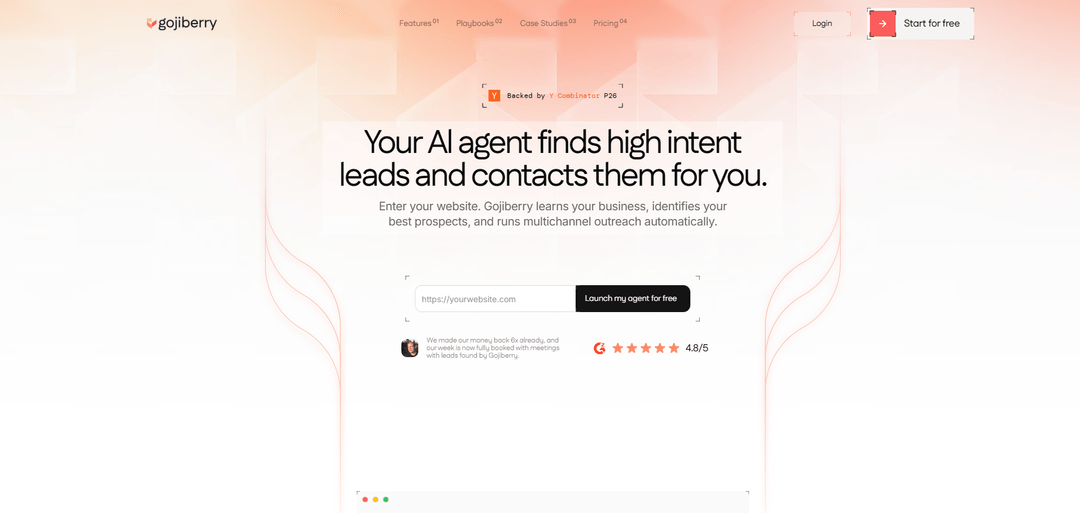
Pricing is a flat monthly rate for the whole team instead of a per-seat fee. Nothing on the bill changes when your third rep joins.
What we don't hand you is a directory. Point Gojiberry at a named list of 5,000 companies you want emailed by Thursday and you'll find us a poor fit. We earn our place when the question is which twenty accounts deserve a message this week.
See which accounts moved this week
Connect your market, let the signals run for a week, and judge us on the list that's waiting afterward.
Start on your marketCognism
Cognism sells European phone data with a compliance story attached, and it's the name that comes up every time a Lusha user says the Nordics came back empty. Its premium tier is built around mobiles a human has picked up and confirmed, which is a slower and more expensive way to build a database and a noticeably better one to dial from.
- 📞Verified mobiles: A human-checked tier of numbers sits above the standard database.
- 🌐EMEA depth: Coverage across Europe is the reason most buyers move here from a US-first provider.
- 🔒Do-not-call screening: Numbers are checked against European do-not-call registers before they reach you.
- 📊Platform seats: Sold as a platform license with seats, and not as a credit wallet.
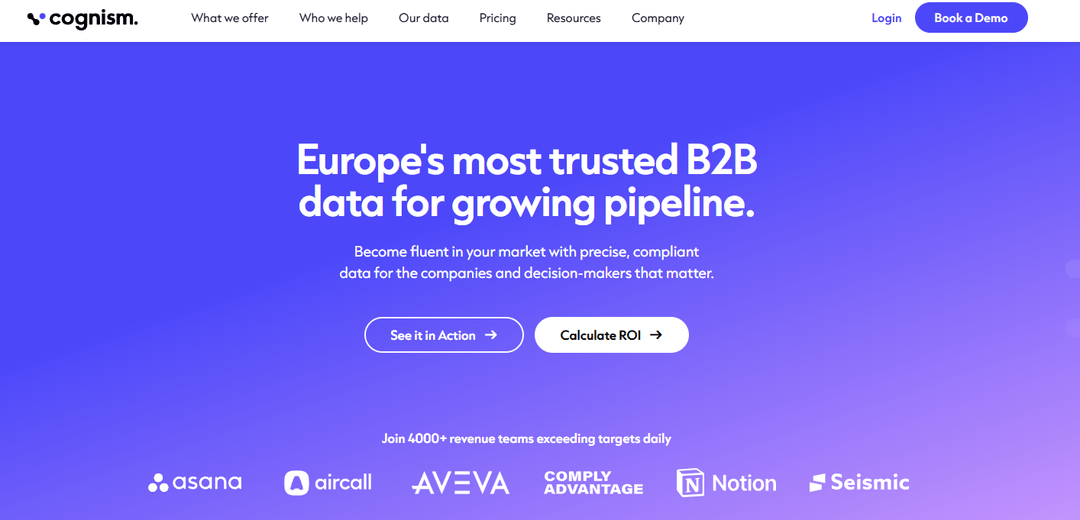
There's no public price. Cognism quotes after a discovery call, on an annual contract, and the entry points buyers report publicly sit in five figures. Budget for a procurement conversation, not a credit card.
The contract ends the conversation for most teams of two to ten. For the ones it doesn't end, nothing else here comes as close on a European mobile that rings.
Kaspr
Kaspr is the extension-first, Europe-first version of what Lusha does, and it's owned by Cognism, which is where the data depth comes from. You install it, you hit reveal, and the whole experience stays deliberately narrower than a platform.
- 🔎Reveal in place: One panel, one click, and no separate workspace to learn.
- 🌏European focus: Built around European records first, which is exactly where Lusha gets thin.
- 📅Daily free credits: The free tier refreshes a small allowance every day rather than monthly.
- 🔗CRM push: Revealed contacts drop into the usual CRMs without a middleware step.
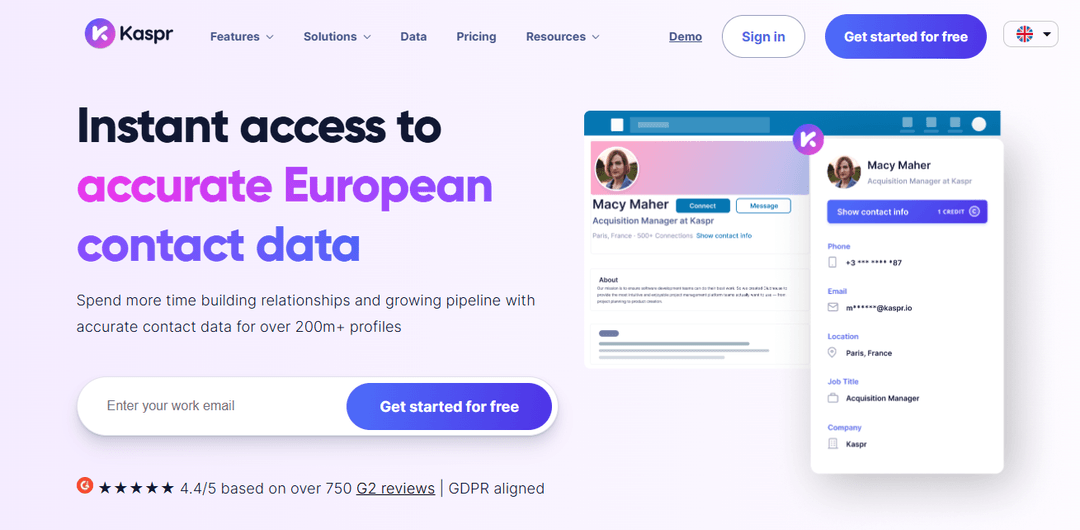
There's a genuinely usable free tier, and paid plans run in the tens of euros per user per month. For a French or German team doing under 300 reveals a month, it's the cheapest sensible swap.
It does the one thing Lusha does, closer to home and for less money, at the cost of a database that stops at Europe's edge.
Apollo
Apollo bundles a very large contact database with a sequencer, a dialer and a light CRM, and sells the combination for less than most people pay for the database alone. The pitch is consolidation, and it's the price that makes it land.
- 📚Large database: Hundreds of millions of contacts with filters deep enough to build a real segment.
- 🔁Sequences included: Email cadences run inside the same product that found the contact.
- 🤖AI drafting: Message drafting and scoring sit alongside the list rather than in another tab.
- 🧩CRM sync: Two-way sync with the major CRMs on the paid tiers.
There's a free tier that does more than most, and paid plans start around $49 per user per month. At three seats it costs roughly what Lusha's Pro plan costs and covers considerably more ground.
Nothing here does more for the money. Then you open it. Setup is a project, and a two-person team can lose a month configuring the thing they bought to save time.
ZoomInfo
ZoomInfo is the enterprise end of this market, with the deepest database in the category and a go-to-market suite built around it. It is not sold to teams of three, and pretending otherwise wastes everybody's afternoon.
- 🏢Category-leading depth: The broadest company and contact coverage of anything listed here.
- 📈Intent topics: Third-party intent data layered over the database on the higher tiers.
- 🔧Heavy administration: Deep enough that somebody's job has to include owning it.
- 🤝Dedicated support: Named customer success contacts come with the contract.
Pricing is custom, annual, and negotiated. Publicly reported contracts sit well into five figures a year before add-ons. There's no self-serve door.
The seat minimum decides this one. Below ten reps with nobody owning operations, you're paying more for the contract than the pipeline it finds you is worth. Above that line, it earns its keep.
If you want the longer version of that shortlist, we've got a full ranking in our roundup of Lusha alternatives, and a deeper look at European coverage in our write-up on Cognism.
Gojiberry vs Lusha, where do they split?
These two products answer different questions, which makes a feature-by-feature scorecard slightly dishonest. Here's the split that matters to a team of three.
The line that matters sits in the first row. Everything else follows from it. We've put the two side by side in more detail in our Gojiberry vs Lusha comparison, and if you're rebuilding the whole motion rather than swapping one tool, our guide to automating prospecting covers the sequencing side.
We didn't start out building software for salespeople. Roman, one of our cofounders, spent his days prospecting on socials for Coco.ai, and he kept doing by hand the thing no tool would do for him: checking which companies had just hired, just raised, or just started advertising for a skill that implied a project. The reveal tools he paid for could tell him who worked somewhere. None of them could tell him that somewhere had changed.
So he built the checklist into a script, then the script into a product, and Coco.ai became the testing ground for it. Gojiberry exists because we got tired of paying a subscription to find people who had no reason to answer us. That's the whole origin story, and it's why the product opens on a signal where the rest of the category opens on a search box.
None of that makes Lusha a bad purchase. It makes it a purchase with a shape. If your reps dial American numbers all day and someone else worries about the message, you'll get your money's worth. If you're reading this because the credits ran out on the 12th for the third month running, the problem probably isn't the size of the allowance.
What people ask before they pay
Is Lusha worth it?
For a US-focused team of three to ten doing fewer than 500 lookups a month, yes. The extension is fast, the setup takes minutes, and the prices are published, which saves a fortnight of evaluation. It stops being worth it when your buyers are in continental Europe, when you dial heavily enough that ten credits a number hurts, or when you're already paying a second subscription to send the messages.
Is Lusha's data accurate?
Lusha publishes high-nineties accuracy figures for email, measured on its own sample. The number that decides your week is coverage, meaning the share of your lookups that return anything, and no vendor publishes that one. We haven't run a controlled test on an identical list either, so we'd rather say so than borrow someone else's percentage. Spend the free tier's 40 credits on your own target list before you commit.
Does Lusha have a free plan?
Yes. Forty credits a month for one user, with the browser extension and CRM connectors included. That's forty email reveals, or four phone numbers, since a phone costs ten credits. It's a testing budget rather than a working one, which is what a free tier should be.
Is Lusha GDPR compliant?
Lusha maintains a public trust center and holds the compliance certifications you'd expect from a vendor selling into Europe, including an opt-out route for individuals who find themselves in the database. Compliance on the vendor's side doesn't transfer to yours, though. You still need a lawful basis for contacting someone and a record of where the data came from, and that obligation follows your company rather than your supplier.
What's the best Lusha alternative?
It depends on which half of the job you want solved. Kaspr is the cheapest like-for-like swap with better European coverage, Cognism is the upgrade if you dial European mobiles and don't mind an annual contract, and Apollo consolidates data and sending into one bill. If the problem is that your list is cold rather than incomplete, Gojiberry works from buying signals instead, which is how Wispra ended up sourcing 60 percent of its weekly demos from intent. Their write-up is here.
How much does a Lusha contact cost?
On the Pro plan at $69.90 a month you get 7,200 credits a year. A verified email costs one credit and a phone number costs ten, so a fully revealed contact costs eleven. You're looking at roughly 648 complete contacts a year, or about $1.30 each, and considerably less per row if you only ever need the email.
Stop paying to find people who were never going to reply
We watch more than 30 signals of buying intent, show you the accounts that just moved, and send the first message for you. There's one flat rate for the team, with 2 social senders included.
Get your first leads free Read the case studies
More High-Intent Leads = Your New Growth Engine.
Start Now and Get New High Intent Leads Delivered Straight to Slack or Your Inbox.