
The 12 best ZoomInfo alternatives (and which one is right for you)

60-second fit finder
Which ZoomInfo alternative fits your team?
Three questions, no email required.
Question 1 / 3
What's the real gap in your prospecting right now?
Question 2 / 3
What would move the needle most this quarter?
Question 3 / 3
How's the team set up?
🎯
Your match
Gojiberry is your fit
You've got contacts but not enough conversations, so what's missing is timing. Gojiberry watches for the accounts moving in your market and writes the first message, so your reps spend the day talking instead of list-building.
💰
Your match
Apollo is your fit
For raw budget and a big database in one login, Apollo is the sensible start, and UpLead is the cleaner-data sibling. When your list is fine but replies stay thin, that timing problem is the one we solve, and you can point Gojiberry at your market for free.
🌍
Your match
Cognism is your fit
Nothing here connects European mobiles like Cognism, so if that's the wall you keep hitting, start there. Once you can reach people, the next question is which of them to call this week, and that timing layer is what Gojiberry adds on top.
🔧
Your match
Clay is your fit
You want to wire your own enrichment and you've got the person for it, so Clay is the right workbench. If you'd rather skip the build and have qualified leads land in Slack, that's the done-for-you version, and it's free to try on your market.
📞
Your match
Lusha is your fit
For one accurate number in the moment, Lusha's extension is hard to beat, so keep it for that. The bigger lever is knowing who's worth dialing before you look anyone up, and that's the part Gojiberry brings to you.
🔔
Your match
Lead411 is your fit
If you're chasing hiring and funding triggers on named accounts, Lead411's growth signals are a good match. When you'd rather have every in-market account surfaced and the first message drafted, that's Gojiberry, and you can start on your own list for free.
ZoomInfo is one of the deepest B2B contact databases on the market, and it earned that reputation fairly. The data's broad, the org charts are detailed, and the intent feeds are real. For a large sales floor with someone to run it, that depth pays off.
The trouble starts when a small team signs the same contract. It opens around $15,000 a year on rigid annual terms, the records decay whether you're working them or not, and nobody on a three-person crew has time to run a platform built for fifty reps. This guide walks through twelve alternatives that fit a smaller team, what each one replaces, what it costs, and where it falls short.
Gojiberry finds your prospects for you
A bigger database tells you who exists. Gojiberry tells you which of them started looking for what you sell this week, and writes the first message.
Get your first leads for freeTable of contents
- The 12 best ZoomInfo alternatives compared
- How we tested these tools
- The 12 best alternatives to ZoomInfo
- What is ZoomInfo?
- Why do people look for a ZoomInfo alternative?
- Which ZoomInfo alternative is right for you?
- Frequently asked questions
- Gojiberry vs ZoomInfo: which one brings you leads?
- What a small team pays over a year
- Why we built this in the first place
The 12 best ZoomInfo alternatives compared
If your list is healthy but too few people reply, the gap is timing, and Gojiberry is the pick. If the list itself is thin, you need data, so Apollo, UpLead, or Cognism earn a look first. Here's the full field, with what each one replaces and where it starts.
How we tested these tools
We built one ICP list of small B2B companies, the kind a two-to-ten-person team sells to, and ran each tool against it over three weeks in July 2026. For every product we checked the live pricing page, tried the self-serve tier where one existed, pulled sample contacts, and read recent reviews on G2 and Reddit. We pay for every plan ourselves, and no vendor read a word of this before publication, which is why Gojiberry's limits are written down like everyone else's.
One thing you won't find here: a scorecard of measured hit rates. We haven't run a controlled reveal test across twelve tools on one identical list, and an invented percentage would be worth less than this sentence admitting it. When we run it, the numbers land on this page. Support gets the same treatment: we haven't timed a first human reply from a paying account across all twelve, so we describe how each vendor sets up support rather than posting response times we didn't measure.
The 12 best alternatives to ZoomInfo
Here's the field in order, and the order runs from the closest replacements for a small team toward the pieces you bolt together yourself. Eight of these are databases you search to look people up. Two are enrichment engines you point at a list you already have. One is a finder inside a professional network. And the first one doesn't ask you to look anyone up at all, it brings the leads to you.
1. Gojiberry
Gojiberry is an AI-powered intent-based prospecting platform. It's the one tool here that brings leads to you rather than sending you off to hunt. It tracks more than 30 buying signals across socials and the web, surfaces in-market accounts, and drafts the first message. Built for crews of two to ten, not a fifty-seat floor.
- 🔔Intent tracking: more than 30 signals, from job changes to hiring posts, flag the accounts worth a message.
- 🎯ICP matching: every surfaced account is checked against your profile first, so you skip the raw dump.
- 📝First-touch drafting: the opener arrives written and tied to the signal, ready to send.
- 🤝Multichannel reach: socials and email from one workspace, with two social senders included.
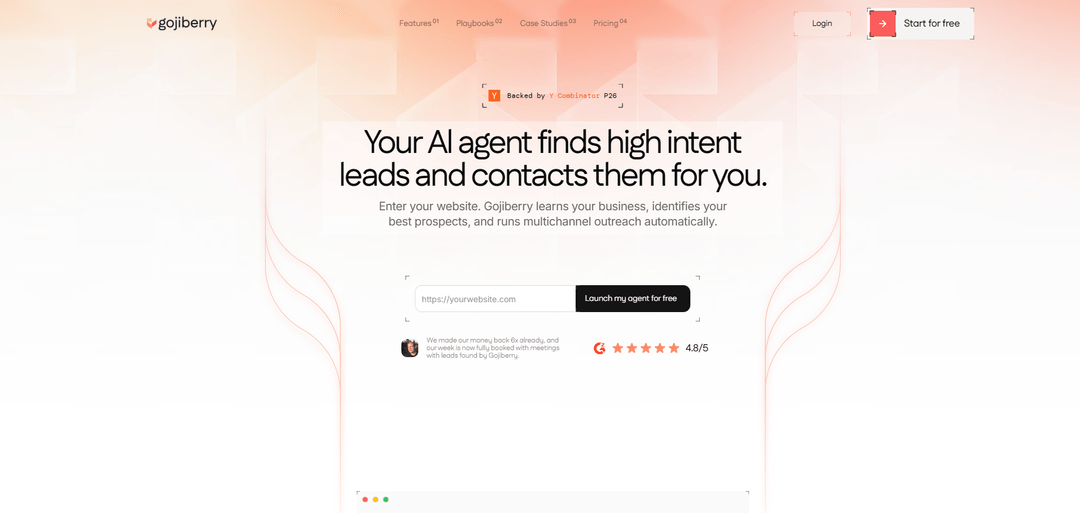
There's a free plan, then paid access is $99 a month with two social senders. No annual lock-in, no credits ticking down, and a third rep doesn't change the bill. Mindflow lifted replies 31 percent this way.
If your list is empty you need data first, and Gojiberry won't fill it for you. Point it at a real market and it does the one thing a database can't: tell you who's ready now.
2. Apollo.io
Apollo pairs a large contact database with the tools to work it, so you build a list, sequence it, and dial from one tab. For a small team shrinking the stack, that bundle's the draw. The database runs past 200 million contacts, and the free tier is usable for testing.
- 📚Contact database: 200M+ contacts with filters for title, industry, and the technology a company runs.
- 📧Sequencing: multi-step email and call cadences are built in, so a separate sender isn't part of the setup.
- 🧠AI suggestions: lookalike recommendations surface accounts close to the ones already working.
- 🔒Data caveat: reveals and mobiles run on credits, and heavy users burn through them fast.
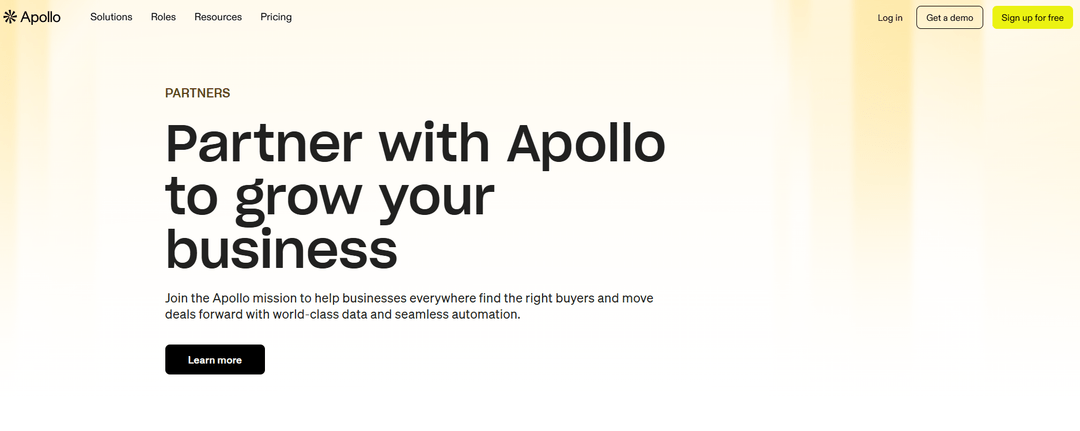
There's a free plan, then Basic runs $49 per user a month annually, Professional $79, and Organization $119 with a three-seat minimum. The sticker is half the story: the credit meter moves the invoice on active outbound.
The credit math turns ugly the moment you need mobiles at volume, and it catches most teams by month two. For email-first prospecting on a budget, nothing here fits more into one login. We go deeper in our full Apollo review.
3. Cognism
Cognism built its name on compliance and phone data, and for anyone selling into Europe that focus is the whole point. Its verified mobile coverage is the strongest here for EMEA. The database is GDPR-minded, and intent comes through a Bombora feed layered on top.
- 🌐Compliant data: GDPR and CCPA-checked records, with do-not-call screening across the US and Europe.
- 📞Phone-verified mobiles: numbers checked for connection, which lifts the live-conversation rate abroad.
- 🔄CRM enrichment: records refresh inside Salesforce and HubSpot without the manual busywork.
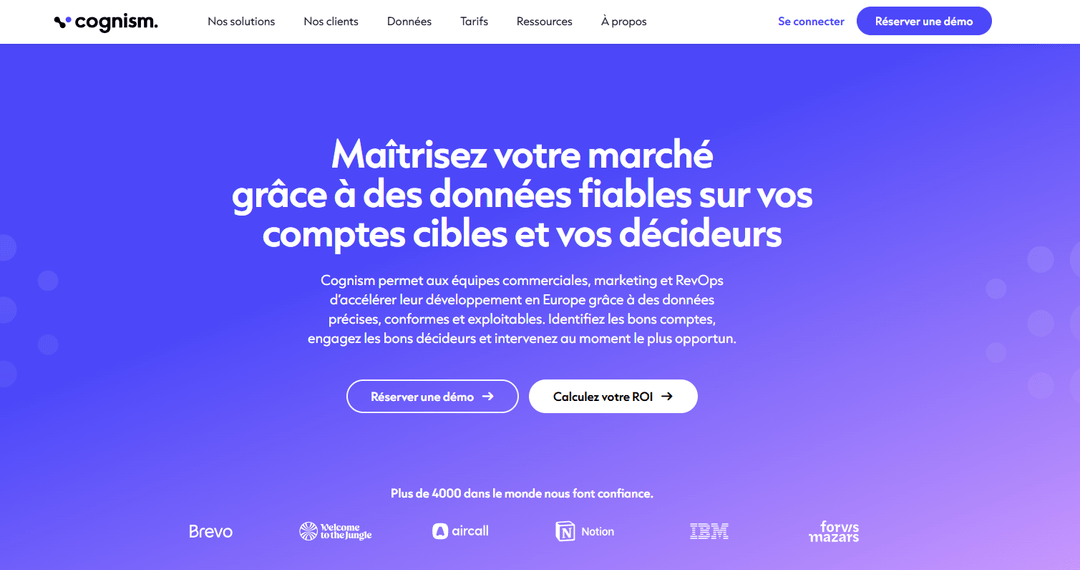
Cognism doesn't publish a price, so it's quote-based and sold as an annual package. Expect it to sit above the self-serve tools here, which is what you pay for the phone accuracy.
The contract decides this one. Below a real outbound budget with someone to negotiate it, the annual commitment costs more than a small team gets back. Above that line, no European phone data here connects like it.
4. Clay
Clay is a workbench you build on rather than a database you query. You wire dozens of data providers into a waterfall that enriches a list step by step. For a team with someone who enjoys building systems, it's the most flexible option here, and Google's overview names it among the top ZoomInfo alternatives.
- 🧩Waterfall enrichment: chain providers so one fails over to the next when a lookup misses.
- 🤖Claygent: an AI agent researches accounts and fills columns from a prompt you write.
- 🔗Integrations: 100+ sources plus webhooks, with CRM sync on the higher tier.
- 🧰Setup cost: it takes weeks to learn, so budget the ramp time.
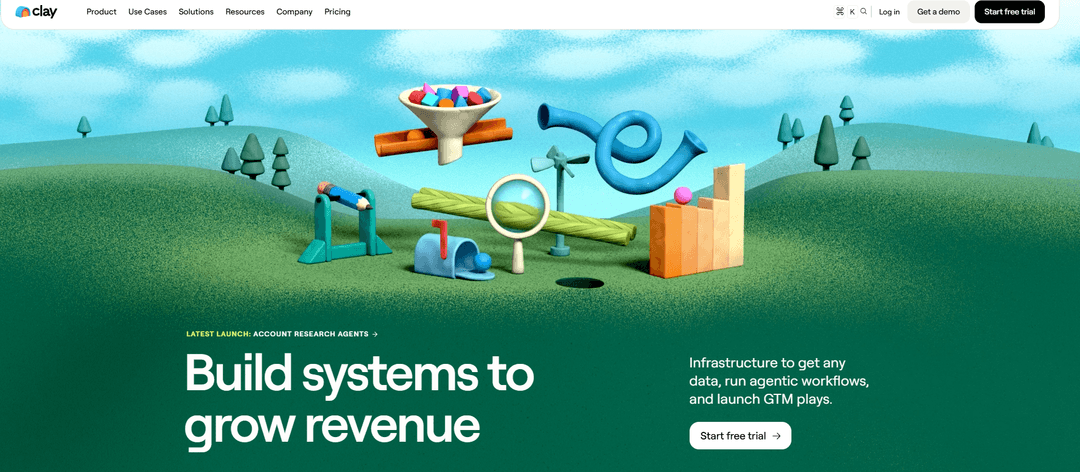
There's a free tier with 100 credits, then Clay reworked its plans in March 2026: Launch is $185 a month and Growth $495, both usage-based with unlimited seats. Credits burn per step, and failed lookups still cost you.
Nothing here bends to a custom workflow the way Clay does. Then you price the ramp: weeks to learn, credits per step, someone to own it. A lot of overhead for a small team that wants leads without a build. See also our Clay alternatives breakdown.
5. UpLead
UpLead sells verified B2B data with an accuracy guarantee, and that's the reason to pick it over cheaper bulk sources. It verifies each email in real time as you export, and refunds the credit if one bounces. A single credit returns both the email and the mobile for a contact.
- 📥Verified contacts: real-time email checks with a 95 percent accuracy guarantee and refunds on bounces.
- 🔎50+ filters: build lists by firmographics and technographics from a 160M+ database.
- 📊One-credit contacts: each reveal returns both the email and the direct dial on a single credit.
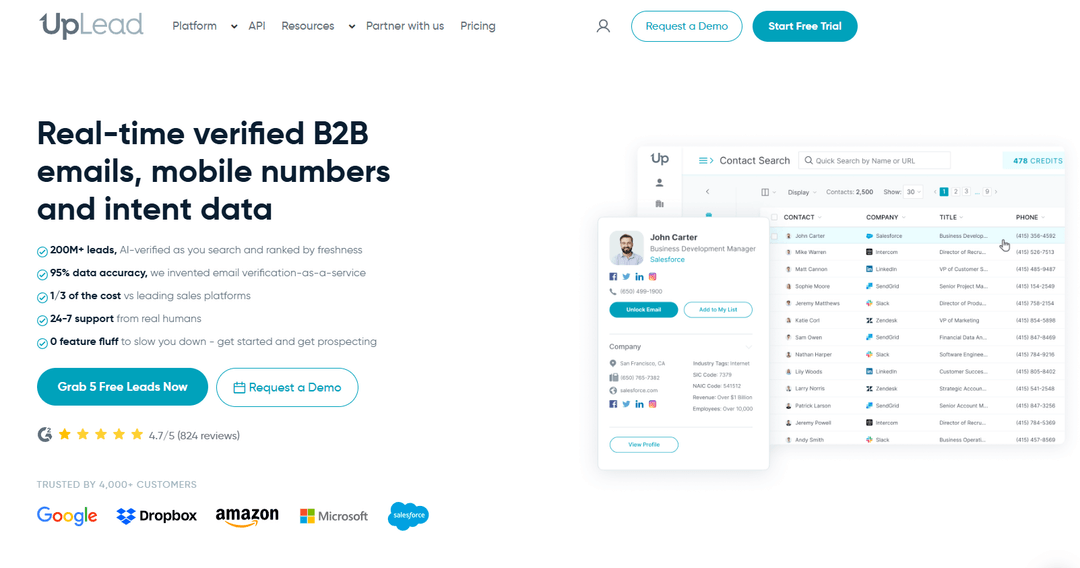
A 7-day trial gives you 5 credits, then Essentials is $74 a month on annual billing for 170 credits, and Plus is $149 for 400. Essentials and Plus are single-seat, so a team of two lands on the custom Professional plan.
It's the cleanest data here for the money, and also the tightest, since 170 credits and single-seat plans run dry on any real outbound week.
6. Lusha
Lusha's the fast, simple lookup most reps reach for first. Its browser extension pulls a verified direct dial or email in a click while you prospect. It does one thing well, person-level contact data on demand, and it syncs straight into Salesforce and HubSpot.
- 🔍Extension lookups: grab a number or email from a profile or company site without leaving the page.
- 📤CRM sync: push new contacts into Salesforce or HubSpot with no manual entry.
- 🧮Credit model: a phone reveal now costs ten credits, and unused credits don't roll over.
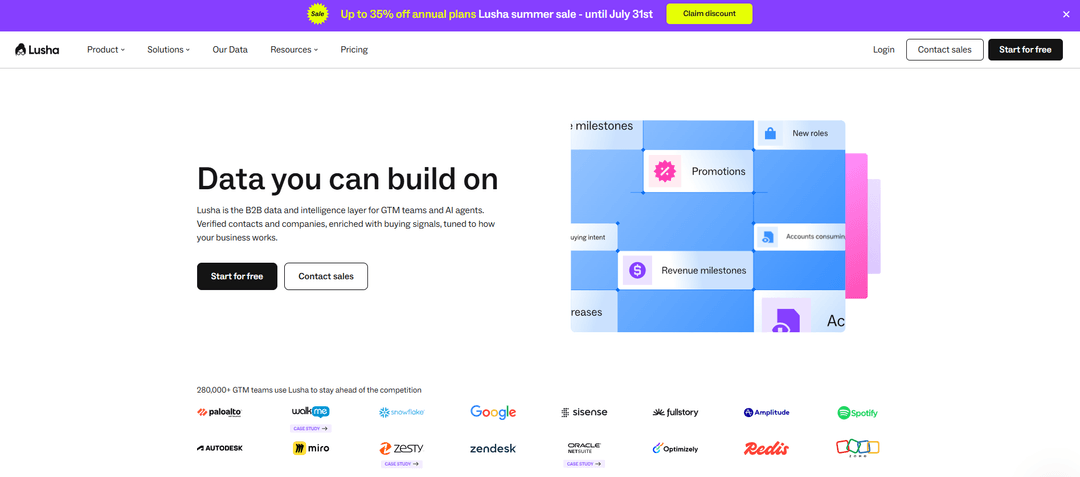
There's a free plan with a small monthly allowance, then Pro starts around $29 per user a month on annual billing and climbs on a credit slider. Watch the phone-credit math, since numbers eat ten credits each.
The sticker reads $29 a month. The number that matters is per phone reveal, at ten credits each, which turns a Pro plan into a few dozen dials before the meter's empty. More options in our Lusha alternatives guide.
7. Lead411
Lead411 pairs a contact database with growth triggers, and it's the one here that flags company events worth a call. Hiring sprees, funding rounds, and leadership changes surface right in the search. Its Chrome extension pulls verified emails and direct dials while you prospect.
- 🔥Growth triggers: hiring, funding, and new-office signals mark the accounts moving right now.
- 💰Unlimited views: view contact records without a per-view cap, with exports metered by plan.
- 📈Bombora intent: layer buyer-intent topics on top to catch accounts researching your category.
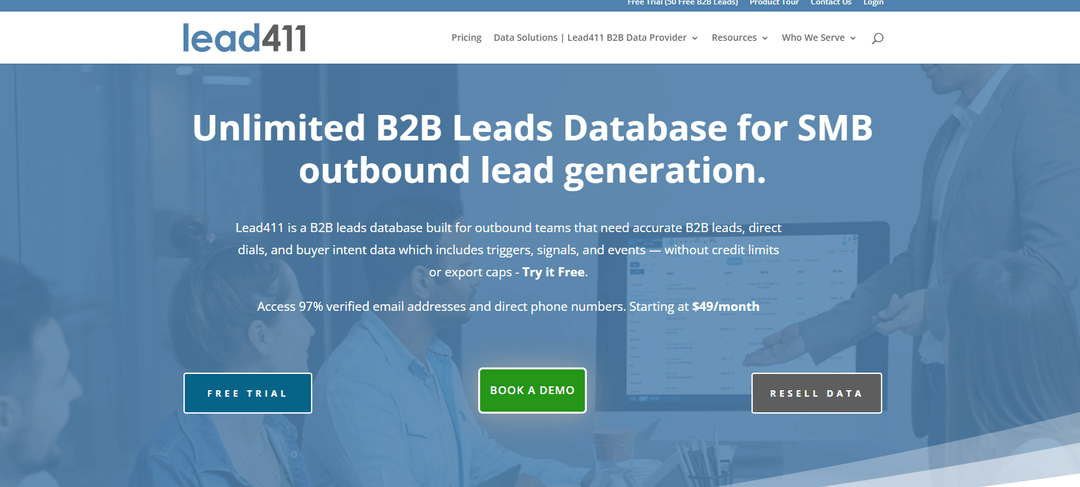
A 7-day trial gives you 50 exports, then Spark is $75 per user a month on annual billing for 200 exports, with Bombora intent sitting on the Ignite tier at roughly $3,000 a year. Exports are capped per plan, so heavy list-building climbs the tiers fast.
If hiring and funding triggers are how you time outreach, Lead411 is a fair-value way to get them. If you only want contacts, the export caps and the intent add-on price make it a slow build.
8. RocketReach
RocketReach leads on database size, with more than 700 million profiles in its system. For teams that need a wide net on a small budget, that reach is the appeal. The interface is simple, and the Chrome extension pulls contact info straight from profiles and company sites.
- 🌍Huge database: 700M+ profiles, often surfacing contacts narrower tools miss.
- 🔀Simple search: advanced filters with no long onboarding to get started.
- 🧭Direct dials: phone numbers and emails pulled from profiles and company pages.
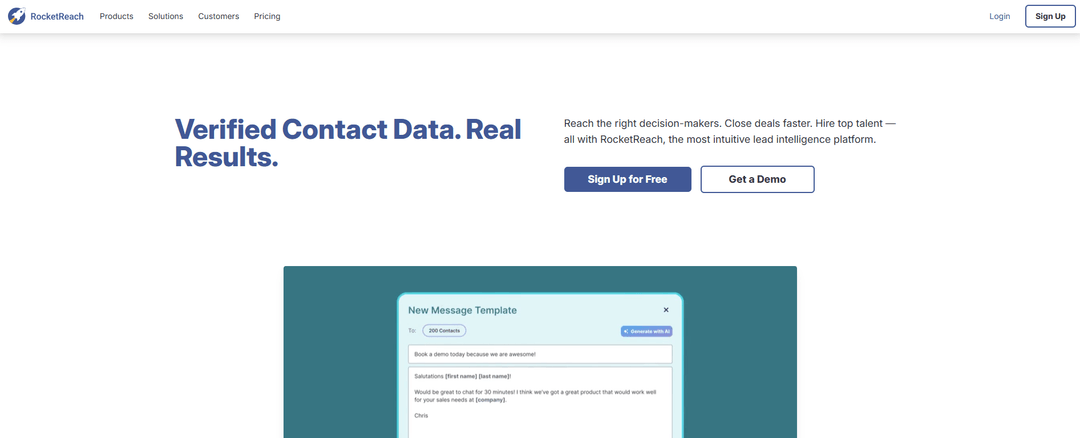
There's a free tier with 5 lookups, then Essentials starts near $33 a month on annual billing for email-only lookups, with phone numbers on Pro from around $75. Team plans are per seat and annual, so a five-rep crew climbs quickly.
Accuracy sits around the mid-80s, so plan a verification pass on what you pull. For sheer reach on a small budget, though, few databases here run wider.
9. Seamless.AI
Seamless.AI is a real-time search engine for B2B contacts, built for speed. Its extension finds and saves leads straight from a profile, and the AI validates data as it goes. If you need to build a large list quickly, it moves fast, though data quality can vary.
- 🚀Real-time search: the AI scans the web live, so records aim to be fresh at the moment you pull them.
- 💬AI writer: drafts outreach copy as a starting point while you build a list.
- 🔒Credit model: one credit per contact, and quality varies enough that a verification step helps.
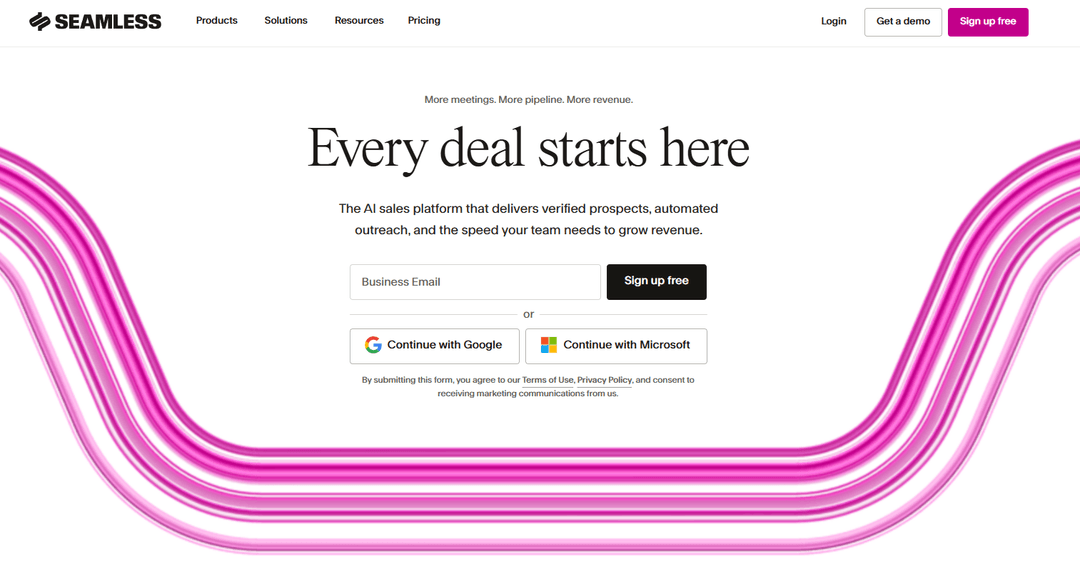
There's a free plan with a lifetime credit allowance, then Pro and Enterprise are quote-based and Pro carries a five-seat minimum. Pricing isn't published, so a real number takes a sales call.
The seat minimum ends it for most small teams. Pro is quote-only and needs five seats, which prices out a crew of two or three before the demo. Clear that bar and the real-time search is quick.
10. SalesIntel
SalesIntel takes a human-first approach to data, re-verifying its dataset on a rolling cycle. Its research-on-demand service will go find a contact you can't, usually within hours. That focus on accuracy makes it a premium pick for teams that can't afford bounces.
- 🔬Human-verified data: records re-checked by researchers on a rolling schedule to cut bounce rates.
- 🤝Research on demand: can't find a contact? the team sources it for you, often within hours.
- 🎧Firmographic depth: technographic and intent data alongside the verified contacts.
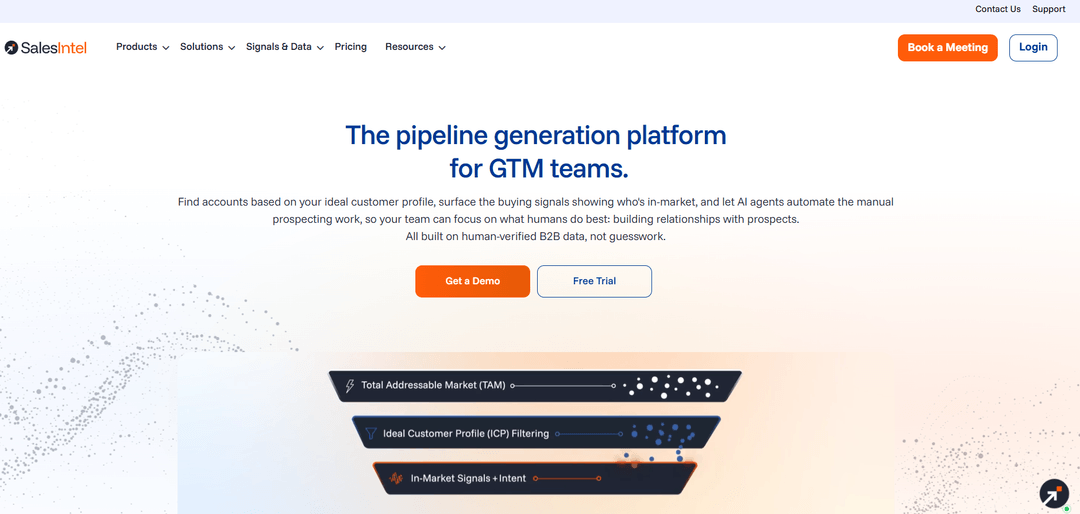
SalesIntel doesn't publish pricing, so it's quote-based and sold on an annual contract aimed at mid-market and up. You'll talk to sales to see a number.
Few tools here verify data by hand the way SalesIntel does. Then you see the model: mid-market and up, quote-based, an annual commitment. A big swing for a team counting hundreds of prospects a month.
11. HubSpot Breeze Intelligence
Breeze Intelligence is what Clearbit became after HubSpot bought it. It's an enrichment engine that lives inside HubSpot, appending firmographic and technographic data to your CRM records. If you're already on HubSpot, it fills in company size, industry, and roles without manual research.
- 🧩CRM enrichment: auto-fills contact and company records inside HubSpot from a domain or email.
- 🔄Visitor reveal: identifies anonymous website visitors and shortens forms with known fields.
- 🏢HubSpot-native: no separate login, since it runs as an add-on inside the platform.
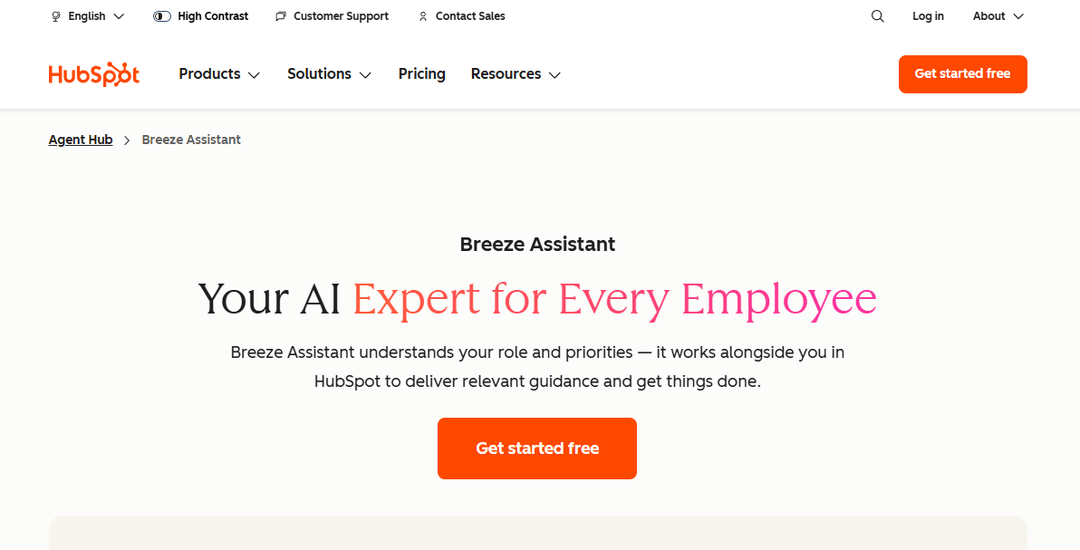
There's no standalone product and no free tier anymore. Credits start at $45 a month for 100, but a paid HubSpot subscription sits underneath, so the real floor is around $75 a month, and buyer intent needs a Professional plan.
The add-on reads $45 a month. The real floor is the HubSpot plan underneath it, which turns a small enrichment line into a platform bill, and buyer intent needs Professional on top.
12. LinkedIn Sales Navigator
Sales Navigator is the paid prospecting layer inside the professional network most of your buyers already use. It's a finder rather than a data provider: it surfaces and saves the right people, but hands you no email or phone directly. Advanced search and real-time alerts make it strong for spotting who to work.
- 👥Advanced search: filter by seniority, company size, and profile keywords to pin down decision-makers, and our Sales Navigator filters generator builds those searches for you.
- 📅Real-time alerts: a saved prospect changing jobs or getting mentioned in the news pings you for timely outreach.
- 💬InMail: a direct line to people outside your network, capped by monthly credits.
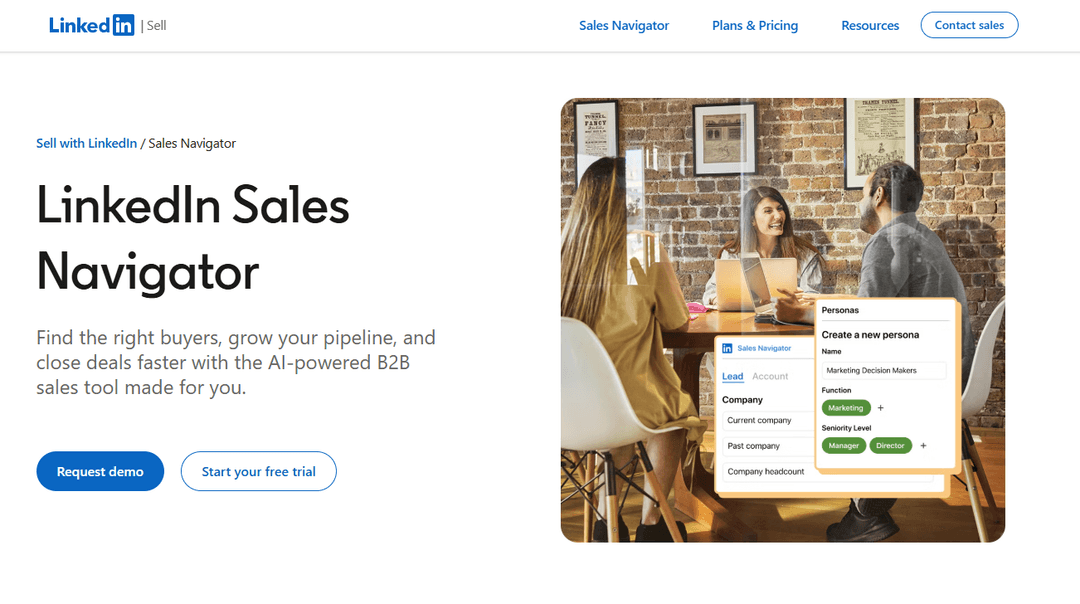
Core runs $119.99 a month per seat, about $90 on annual billing, with Advanced at $159.99 for team features. Every plan is per seat, so a ten-rep team lands in the $12,000 to $18,000 a year range, and you still need a separate tool to get the email addresses themselves.
It points you at exactly the right person, then leaves you to find their email somewhere else. That second half is the expensive one.
You shouldn't have to guess who to contact
Gojiberry watches more than 30 buying signals across socials and the web, checks each account against your ICP, and sends you the ones worth writing to.
Start free on your marketWhat is ZoomInfo?
ZoomInfo is one of the largest B2B data platforms on the market, a database of hundreds of millions of contacts wrapped in a go-to-market suite with intent feeds, org charts, and deep CRM integrations. It's the enterprise standard, and it's priced and built like one. Most of the alternatives above exist because that scale is overkill for a small team.
What can you do with ZoomInfo?
You search a deep database by firmographics, technographics, and title, then export verified contacts into your CRM or sequencer. On top of the data sit org charts that map who reports to whom, a Bombora-powered intent feed that flags accounts researching your category, website visitor identification, and workflow tools that route new records to the right rep. For a large team, it's a single source for finding, enriching, and prioritizing accounts.
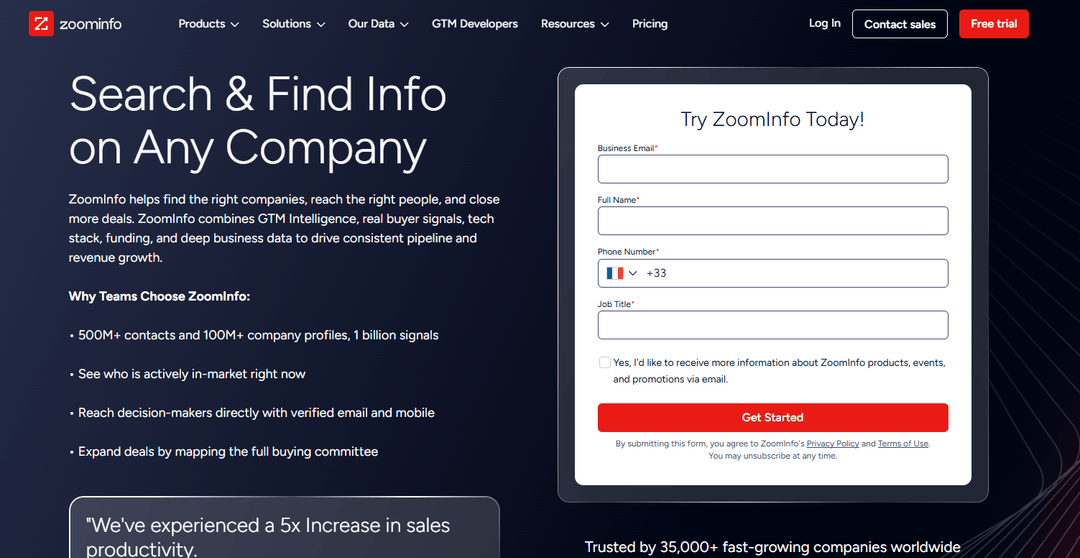
The pros and cons of ZoomInfo
- The deepest B2B database available, with the broadest coverage of contacts and companies.
- Org charts and hierarchy data that no self-serve tool here matches.
- A mature intent feed through Bombora, plus website visitor identification.
- Deep, reliable integrations with every major CRM.
- Custom annual contracts that open around $15,000, with a three-seat minimum.
- Records decay over the year, and you pay whether you work them or not.
- The platform needs an admin, which a small team rarely has spare.
- It tells you who fits your ICP, never who's in-market this month.
How much does ZoomInfo cost?
ZoomInfo publishes no pricing, so every number comes from a sales quote built around your seats, credits, and modules. Buyer-reported figures put the entry Professional plan around $14,995 a year for three seats with about 5,000 credits, Advanced near $25,000, and Elite past $40,000. Vendr's marketplace data pegs the median contract at roughly $31,875 a year.
A few things shape the real number. Contracts are annual only, with a three-seat minimum and an implementation project attached. Credits meter every contact view and export, and running out mid-year means buying more. Renewals often carry a 10 to 20 percent increase, and there's a 60 to 90 day cancellation window before auto-renewal. The opening quote is a starting point, and prepared buyers routinely negotiate a large discount off it.
What do ZoomInfo users think?
The praise is consistent: the data is deep and the coverage is broad, and for a well-staffed team it delivers. The complaints are just as consistent. Reviewers on G2 and Reddit point to the price, the rigidity of the annual contract, credit limits that bite mid-year, auto-renewal surprises, and data that ages faster than the term. The pattern is less about quality and more about fit, since enterprise tooling asks for enterprise time and budget a small team doesn't have.
Why do people look for a ZoomInfo alternative?
The contract and the entry price. This is the one everyone names first. A deal opening around $15,000 a year, locked annual, three-seat minimum, is enterprise money for a team that doesn't have an enterprise. When a third of the seats go unused and the renewal climbs, the math stops working.
Records that decay whether you use them or not. B2B data ages fast. HubSpot puts the decay rate near 2.1 percent a month, which is roughly a fifth of your database gone every year. You're paying to store contacts that are quietly going out of date, and a bigger database only means more of them to maintain.
The platform needs someone to run it. ZoomInfo is built for a sales floor with an ops function behind it, tuning filters, managing credits, keeping integrations clean. On a three-person team, that person is also the one selling, onboarding, and doing support. The tool that needs the most administration lands with the team that has the least time for it.
A database tells you who fits, never who's moving. This is the deepest reason, and the hardest to see on a demo. A database answers who matches your ICP. It can't tell you which of those accounts started hiring, switched tools, or lost the champion you'd been working, this week. People change jobs every few years, 22 percent within their first year in a role, and every one of those moves is a buying signal a static list will never surface.
Which ZoomInfo alternative is right for you?
The right tool depends on the gap in front of you. For most teams of two to ten, the gap isn't the size of the list, it's knowing which names on it are worth a message this week.
- 🔥Plenty of contacts, too few conversations: that's a timing gap, and it's the one Gojiberry is built to close. It surfaces the accounts moving in your market and drafts the opener, for $99 a month flat.
- 📬You're the whole sales team: with nobody to run a platform, Gojiberry needs no admin, no credits to watch, and no annual signature.
- 💡Budget is the wall: Apollo bundles data and sending cheaply, and UpLead is the cleaner-data sibling. Neither tells you when to reach out, so plenty of teams run Gojiberry beside them for the timing.
- 🌐European mobiles won't connect: Cognism has the phone coverage the others lack for EMEA, at enterprise contract terms.
- 🧰You want to build your own enrichment: Clay, if you've got someone who enjoys the wiring and weeks to spend on it.
- 🔍You need one number, fast: Lusha's extension is the quickest lookup while you prospect.
Whatever you shortlist, run it beside your current setup for two weeks before you let a ZoomInfo contract lapse. A parallel pilot on your real ICP tells you more than any demo, and on a monthly plan it costs one month instead of a year of the wrong tool.
Frequently asked questions
Is there anything better than ZoomInfo?
It depends on what better means for you. For raw database depth, nothing beats ZoomInfo. For a small team, a cheaper, more focused tool usually delivers more, since you stop paying for coverage and admin you can't use. If your list is thin, a data tool like Apollo or Cognism serves you well. If your list is fine but replies stay thin, an intent tool like Gojiberry does more for the money.
Who competes against ZoomInfo?
The names that come up most are Apollo, Cognism, and Clay, which Google's own overview highlights as the main three. Beyond those, UpLead, Lusha, Lead411, RocketReach, Seamless.AI, and SalesIntel all compete on contact data, while intent-first tools like Gojiberry compete on timing rather than database size. Which one is the real competitor depends on whether your gap is data or timing.
Is ZoomInfo outdated?
No. The platform is actively developed and the database is still the deepest around. What's dated for many buyers is the model: a big static list on a rigid annual contract, when the harder problem in 2026 is knowing which accounts are in-market now. For most small teams the data isn't the issue. A list can't tell you who's moving this month.
Is there a free ZoomInfo alternative?
Yes, several. Apollo, Lusha, RocketReach, and Seamless.AI all have free tiers, and Gojiberry has a free plan to start. They're built for testing rather than scale, so use the free credits to check data quality and fit on your own ICP before you pay for anything. A free tier is the cheapest way to run the two-week pilot the guide above recommends.
What's the cheapest ZoomInfo alternative for a team of three?
For pure data on a budget, Apollo's free-to-$49 range is the lowest entry, and RocketReach starts near $33 a month. But cheapest per contact doesn't equal cheapest per meeting booked. Gojiberry is $99 a month flat, and a third rep on the workspace doesn't raise the bill, so for a crew of three the per-person cost drops as you add people, which is the opposite of the per-seat data tools.
Which ZoomInfo alternative has the best European data?
Cognism, without much debate. Its phone-verified mobile coverage across EMEA is the strongest here, with GDPR and CCPA screening built in and do-not-call checks for the US and Europe. If connecting with European decision-makers by phone is the job, that's the one to trial first.
How do I get out of a ZoomInfo contract?
Carefully, and early. ZoomInfo contracts are annual and auto-renew, usually with a 60 to 90 day cancellation window before the renewal date, so the first step is finding that date and the notice deadline in your agreement. Miss it and you're locked in for another year. The safe play is to line up and validate a replacement during the notice window rather than after it, so you're never without data mid-switch. There's also a data-handling clause on exported contacts to check before you leave.
Should I replace ZoomInfo or add something next to it?
It depends on your list. If your database is thin or aging, you need data, so a replacement or a cheaper data tool is the move. If your list is already solid and the problem is that too few contacts convert, keep the data and add a timing layer beside it. Plenty of teams run a lean data source for coverage and Gojiberry on top to catch who's in-market.
Your competitors' customers are moving right now
Someone in your market just changed jobs or started following a rival. Gojiberry spots it, checks they match your ICP, and writes before anyone else does.
Get leads without the contractGojiberry vs ZoomInfo: which one brings you leads?
These two solve different problems, so the comparison isn't head to head. ZoomInfo is a database you search; Gojiberry is a signal engine that brings the right accounts to you. Here's how they line up for a small team.
The line that sums it up: ZoomInfo optimizes for coverage. Gojiberry optimizes for timing. A database points you at everyone who fits. Point enough untargeted email at a big list and you become the fastest route to Google's 0.3 percent spam-complaint threshold, which has throttled bulk senders since February 2024. Fewer messages sent to in-market accounts is how you stay under it.
100+
meetings after switching from email blasts to intent outreach, at GTE Localize.
Read the case studyWhat this costs a team of three
Put the two models next to each other over a year and the gap is less about the sticker than about how each one scales.
The metric that counts is cost per meeting booked, not cost per record. A cheaper list that books nothing costs more than a pricier signal that books three. On a three-person team, the ZoomInfo entry is roughly $15,000 before a single meeting, while Gojiberry runs $1,188 for the year with the first message written, and adding people doesn't move that line.
Why we built this in the first place
The Coco.ai origin
Before Gojiberry, our cofounder Roman ran prospecting by hand for Coco.ai. He spent his days on socials, testing what intent-based outreach could do one tab at a time, watching for the accounts that had just changed something worth a message. It worked, and it didn't scale.
The ceiling was human. One person can watch maybe thirty accounts properly before the signals blur and the timing slips. That number is why Gojiberry exists, and why its pricing assumes a team of two to ten rather than a sales floor. We built the thing that watches the accounts for you, so a small crew can act on timing without living in a browser tab.
None of that needs a data team or an annual contract. You tell Gojiberry who you sell to, and it starts surfacing the accounts worth writing to, on your own market, from day one.
Try it on your own market
Tell Gojiberry who you sell to and it starts finding qualified prospects for you. No annual contract, no credits to watch.
Start for freeSee the case studies
More High-Intent Leads = Your New Growth Engine.
Start Now and Get New High Intent Leads Delivered Straight to Slack or Your Inbox.