
12 best AnyBiz.io alternatives to find leads in 2026

30 second quiz
Which AnyBiz alternative fits your team?
One question, one answer, no email address
🎯
Your match
Gojiberry may be a better fit for your team
Gojiberry starts at 99 dollars a month for the team and runs AI agents that find companies showing buying signals, check them against your ICP and contact the prospects worth your time.
Get your first leads for freeAnyBiz sells an autonomous AI SDR. You describe what you sell, a consultant sets the campaign up, and AI agents prospect around the clock. The entry plan costs 497 dollars a month, AnyBiz bills every quarter, and that tier sends email and nothing else. So you're out 1,491 dollars before the first reply lands, and you'll pay double again for the calls and social channels the pitch promised.
This page covers twelve alternatives, what each one charges in August 2026, and the bottleneck each one clears. Eight of them run the outbound motion for you in some form. Three hand you a piece you'll bolt onto what you already have. And the first one doesn't ask you to guess who deserves the message.
Gojiberry finds your leads
AnyBiz asks for 1,491 dollars up front and sends email only on that plan. Gojiberry costs 99 dollars a month, covers socials and email, and cancels whenever you want.
Get your first leads for freeTable of contents
The 12 best AnyBiz.io alternatives
If budget's the blocker, start with Gojiberry, Instantly or Apollo. If you'd rather hand the motion to another agent, look at Artisan, 11x, AiSDR or Alta. If your lists let you down, look at Clay. If the rep closes the deal, look at Outplay or Amplemarket.
We read every price on the vendor's own page in August 2026, except where the text names a third-party source. Four of these tools charge per seat, so the figure above covers one person and you'll pay it again for every colleague.
How we tested the 12 tools
We opened every pricing page ourselves between 20 and 24 August 2026 and wrote down the tier, the billing cycle and what each tier covers. Where a vendor publishes nothing, we say so and quote the third-party figure with its source. We opened accounts wherever the product lets you, ran the setup flow to the point where a campaign would start, and noted what each one asks you to supply before it'll do anything useful. We also read the public review corpus on G2 for AnyBiz and pulled the recurring complaints rather than the star rating alone.
One thing you won't find here: a scorecard of measured reply rates across twelve tools. We haven't run a controlled campaign on an identical list through all twelve, and an invented percentage would be worth less than this sentence admitting it. When we run it, the numbers land on this page. We pay for every plan ourselves, and no vendor read a word of this before publication. Gojiberry is our product, so read the comparison table with that in mind and check the arithmetic, which we show in full.
What each tool does and who it fits
1. Gojiberry
Gojiberry finds the leads and it reaches out, at one flat price for the team. It suits a two to ten person sales team that hasn't got anyone free to watch a market by hand.
- 🔔 Buying signals: tracks more than 30 of them across socials and the web, from role changes to funding rounds and competitor engagement.
- 🎯 ICP filter: every account passes your criteria before anyone hears from you.
- 🤖 Two AI agents: they contact up to 1,800 prospects a month without a rep opening a tab.
- 💬 Socials and email: both channels ship with the entry plan.
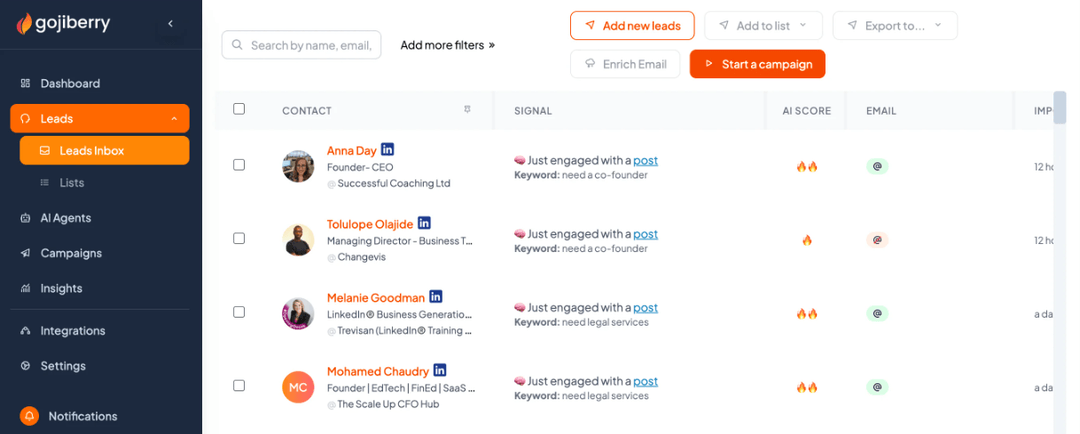
Pro costs 99 dollars a month for the whole team rather than per seat, and you're free to leave at the end of any month. Agencies and teams above five people move to a custom plan. Wispra now sources 60 percent of its weekly demos from that signal feed.
It collapses the finding and the writing into one flat bill, at the price of no phone channel and nobody sitting down to build your first campaign with you.
2. Artisan (Ava)
Artisan sells Ava, an autonomous AI SDR. Philosophically it sits closest to AnyBiz, and you hand the whole motion over, then check the calendar.
- 📝 Full cycle: Ava sources the contacts, writes the copy, sends and follows up.
- 🚀 Two channels: email and social outreach, with a dialer available on top.
- 🎧 Managed setup: an onboarding team configures the first campaigns instead of a self-serve wizard.
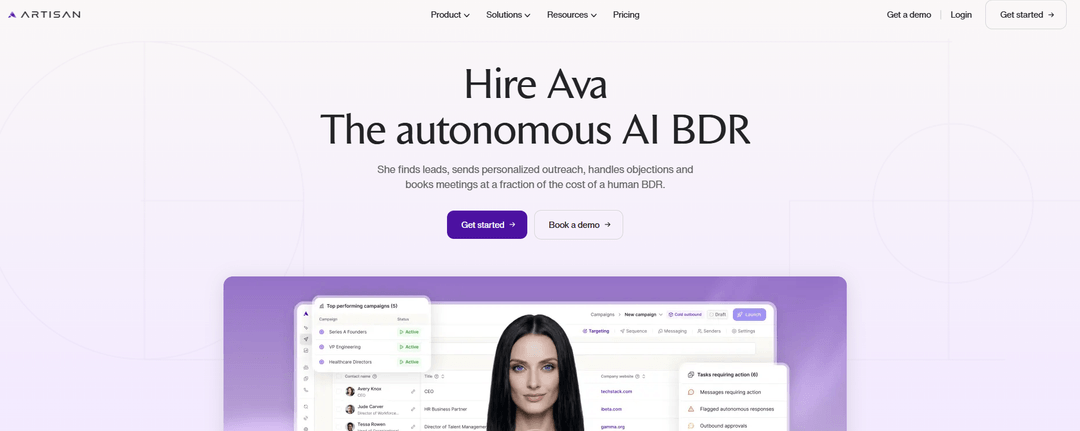
Artisan publishes no rate and quotes on a call. Outside sources place a full deployment around 50,000 dollars a year, so treat it as a range and don't budget from it.
The demo is the gate. Once you're through it, Ava runs the closest thing on this page to the AnyBiz motion, and the invoice lands in the same territory as a junior hire.
3. 11x
11x runs two agents: Alice handles outbound and Julian works the phone. Sales organizations that don't want two vendors for voice and email land here.
- 📞 Julian dials: he qualifies on the call and hands the warm ones to a rep.
- 🔎 Alice prospects: she builds the list, writes and sequences across email and social.
- 🏢 Scale-up shape: the packaging assumes an outbound process already exists.
11x won't publish a rate either. Public trackers put a deployment around 50,000 dollars a year. Read the best 11x alternatives for the wider field.
Nothing else here runs voice and email agents off the same data, and nothing else here asks a five-person team for a number it can't see in advance.
4. AiSDR
AiSDR packs search, writing, sending and warmup into one tool. It publishes every tier, which almost nobody else in this category does.
- 🧪 Per-contact research: the agent reads recent posts and company news before it writes.
- 📤 Infrastructure included: AiSDR provisions the domains and mailboxes and warms them.
- 🔧 GTM engineer: a named person tunes the campaigns on the team tiers.
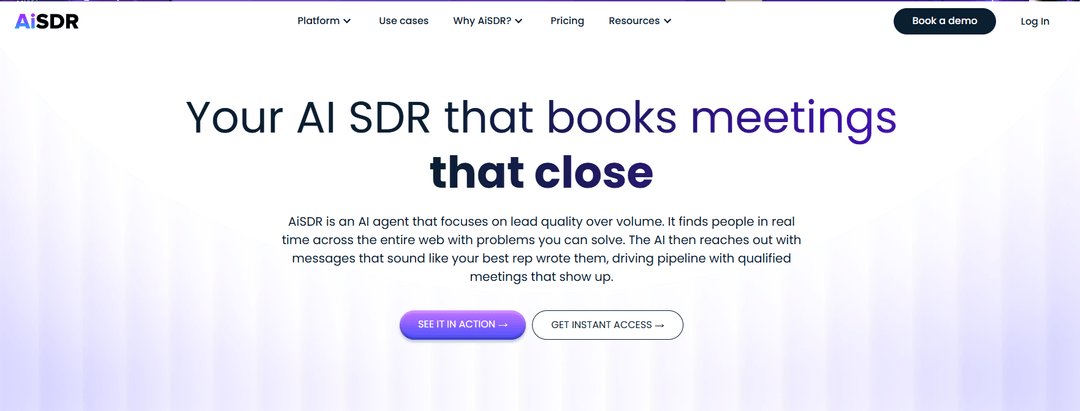
Solo costs 250 dollars a month with no contract, Explore costs 900 and Scale costs 2,500, so you're never guessing. Explore and Scale run on a quarterly contract paid in advance, and annual billing takes roughly 20 percent off.
The published price decides this one. Solo suits a founder testing the channel for a month. Above it, you're committing 2,700 dollars before the first meeting appears.
5. Alta
Alta runs three agents on one data layer: Katie for outbound, Alex for inbound and calling, Luna for RevOps. It aims at growth-stage and enterprise revenue teams, and it doesn't pretend otherwise.
- 🧩 Shared context: what one agent learns feeds the other two automatically.
- 🔀 Inbound speed: Alex answers a new lead in seconds and qualifies it before a human sees it.
- 📊 Pipeline view: Luna pulls the reporting into one place instead of four dashboards.
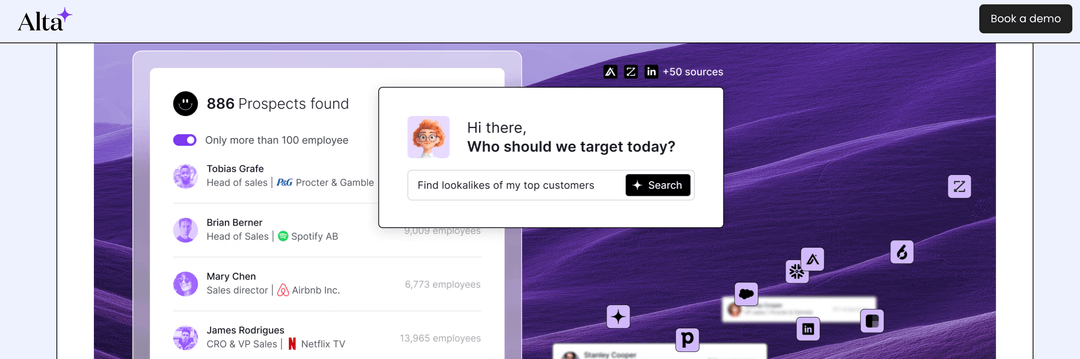
Alta publishes no rate. Its plans page won't give you one without a call, and the quote it builds rests on volume, headcount and channels, which we checked in August 2026. Our full Alta HQ review goes deeper.
Coverage is where it wins. Team size is where it loses.
6. Topo.io
Topo is a European, signal-driven outbound platform. You'll want it if your sequences should fire on a trigger rather than on a calendar.
- 🌍 European hosting: the data stays in the European Union, which shortens the procurement conversation.
- 📅 Trigger timing: hiring, funding and technology signals decide when the first touch goes out.
- 🔒 Per-seat access: each rep gets a named seat with their own sending identity.
Third-party listings quote 69 euros per seat each month, and Topo doesn't publish the figure itself. Compare the field in the best Topo.io alternatives.
European hosting shortens the procurement conversation. Then the seat count arrives. Five people pay five times the sticker, and the signal advantage doesn't hold up against that bill.
7. Amplemarket
Amplemarket sequences across channels with a human approving before anything leaves. Teams that want automation without surrendering the message stop here.
- 👥 Approval step: every AI draft waits for a rep to sign off, rewrite it or kill it.
- 🔖 Duplicate guard: the platform flags an account before two colleagues write to it in the same week.
- 🤝 List plus sending: sourcing, enrichment and sequencing live under one login.
Third-party listings report from 600 dollars a month per user, which makes it the steepest per-seat rate you'll find on this page.
It keeps a person on every message, at the price of a bill that'll triple the moment a third rep joins.
8. Apollo
Apollo puts the contact database and the sequencer on one invoice. When the budget review lands and prospecting still has to happen, this is what's left standing.
- 📚 Database access: search a large B2B contact set and verify the emails before you send.
- 💬 Sequences and dialer: email cadences and calls run from the same screen.
- 💰 Free tier: you can test the data on your own niche before a card goes in.
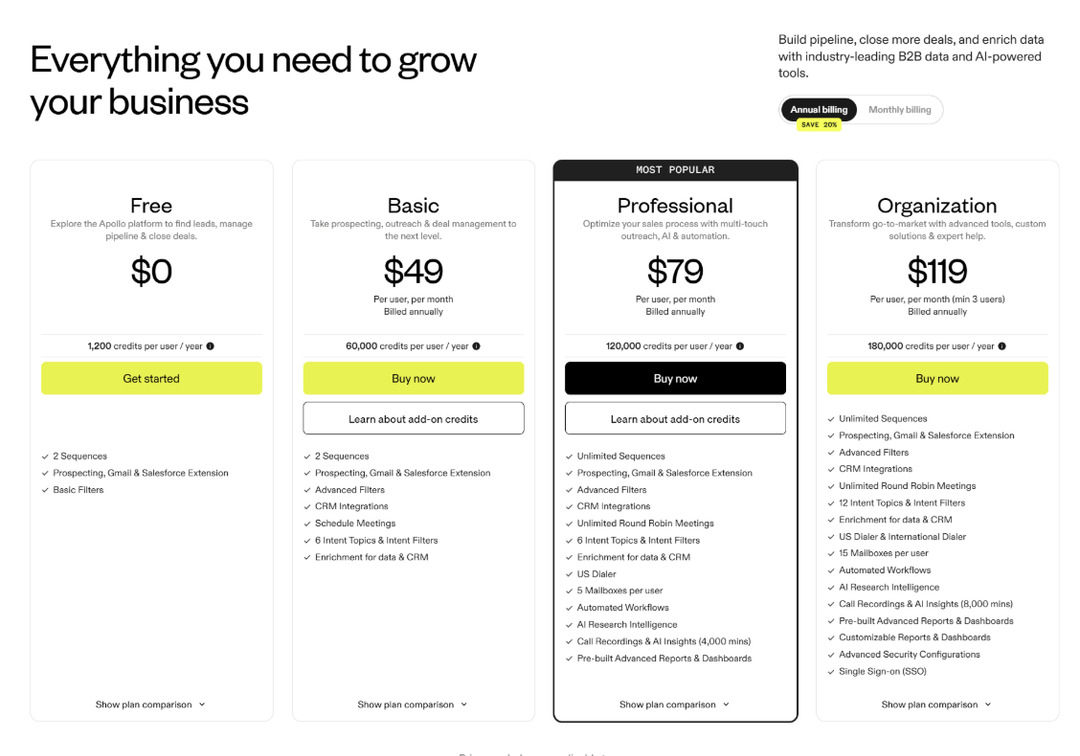
Apollo charges 49 dollars per user per month on annual billing, or 59 if you'd rather pay month to month. We broke down what Apollo really costs once credits enter the picture.
Apollo won't execute anything on its own, and the credit meter rations the data. For a team that still needs pipeline on a shrinking budget, nothing else pairs data and sending this cheaply.
9. Instantly
Instantly buys email volume at the lowest cost per send. You already own a list, and you'd like an answer from the market this month.
- 📧 Unlimited mailboxes: connect as many as you like and warm every one of them.
- 🔁 Sender rotation: no single inbox carries the daily volume on its own.
- 📈 Per-mailbox reporting: deliverability shows up by inbox rather than by campaign.
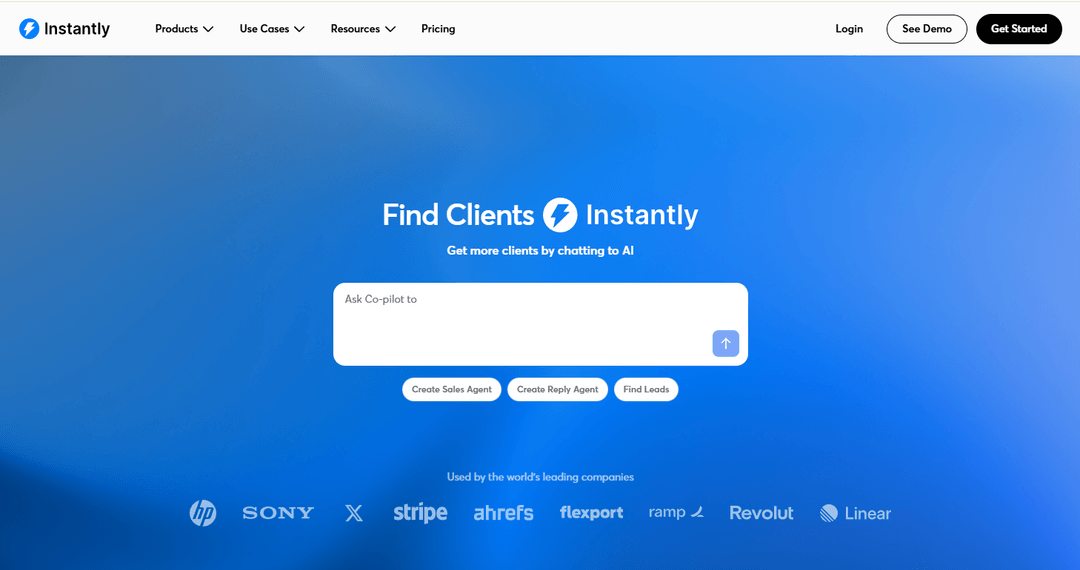
The outreach-only Growth plan costs 47 dollars a month, which is less than most teams spend on coffee. Bundles that add the lead database open at 94 dollars monthly or 85 dollars on annual billing.
Nothing here sends more email for less, and nothing here does less to tell you who deserves the message. Send that volume without targeting and you'll walk straight into the 0.3 percent spam complaint ceiling Google imposes on bulk senders.
10. Clay
Clay runs waterfall enrichment across many providers at once. Your real problem is the list rather than the sending.
- 🔬 Provider waterfall: Clay queries one source after another until a verified email or phone comes back.
- 🧮 Scoring in the table: filter and rank accounts in a spreadsheet-shaped workspace.
- 🔗 Push anywhere: the clean list lands in your sequencer or your CRM.
Launch costs 167 dollars a month on annual billing, or 185 if you won't sign for a year. Weigh the field in the best Clay alternatives.
Match rates climb where a single provider gives up. Then the credits go. And Clay hands you a clean list, not a meeting.
11. Outplay
Outplay gives reps five channels and lets them drive. It fits sales where the relationship closes the deal and volume never has.
- 🎨 Five channels: email, calls, social, SMS and website chat sit in one cadence.
- 🔄 CRM logging: every touch writes itself back without a manual step.
- 📌 Rep in control: a person decides each next move, not an agent.
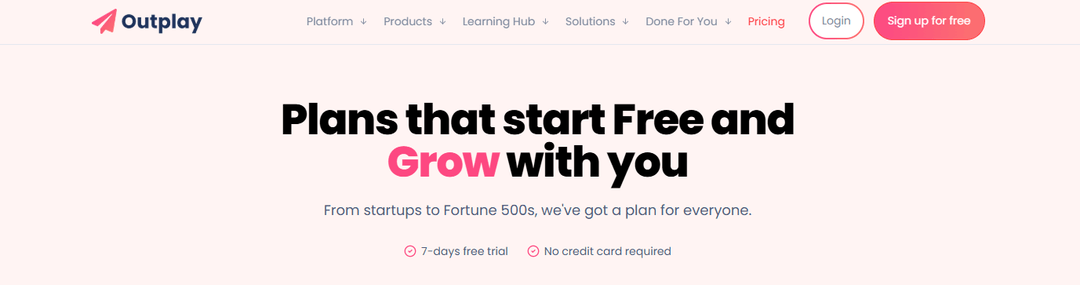
Outside sources place it at 79 dollars per seat each month, which a small team can absorb without a board discussion.
Discipline is where it helps. Capacity is where it doesn't.
12. Salesforge (Agent Frank)
Salesforge handles execution end to end, with one shared inbox and warmup built in. Agent Frank adds the autonomous layer on top, and he isn't included.
- 📥 One inbox: email and social threads merge into a single view for the whole team.
- 🔥 Warmup included: every mailbox warms itself and the platform rotates senders.
- 🧰 Frank prospects: he pulls from a built-in contact database, writes and follows up in auto-pilot or co-pilot.
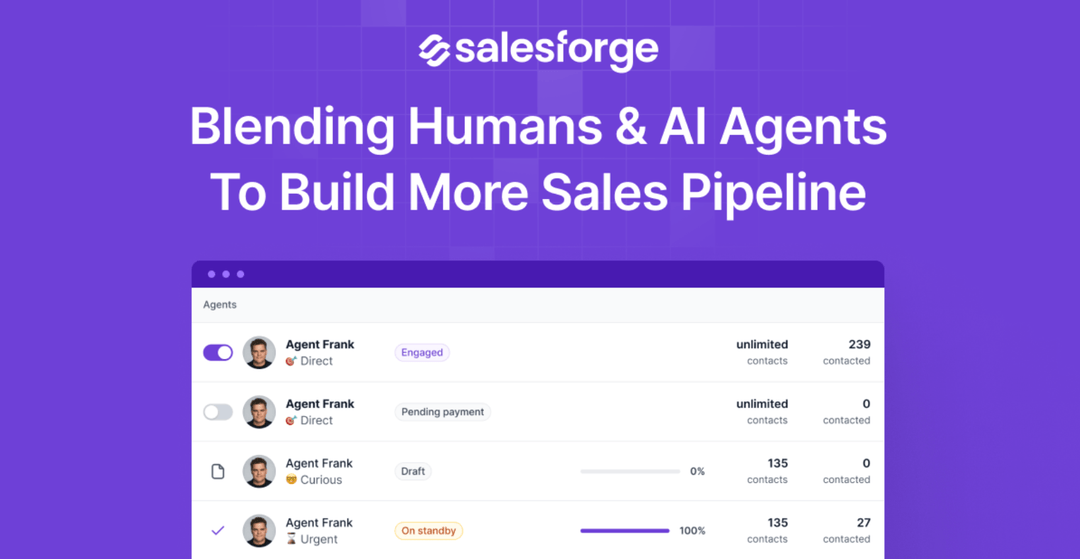
The platform costs 40 dollars a month on Pro and 80 on Growth, with unlimited users on Growth. Agent Frank costs 499 dollars a month with quarterly billing on the pricing page, and a demo gates access. Their Agent Frank page quotes 599 dollars a month, so ask which one you're on before you sign.
Agent Frank reads no buying signals, so he writes beautifully to whoever you point him at. What Salesforge does better than anyone at 40 dollars is put sending, warmup and infrastructure in one account.
Stop guessing who to contact
Gojiberry checks every account against your ICP and hands you the ones showing buying signals. No quarterly commitment, no demo to sit through.
Start free on your marketWhat is AnyBiz.io?
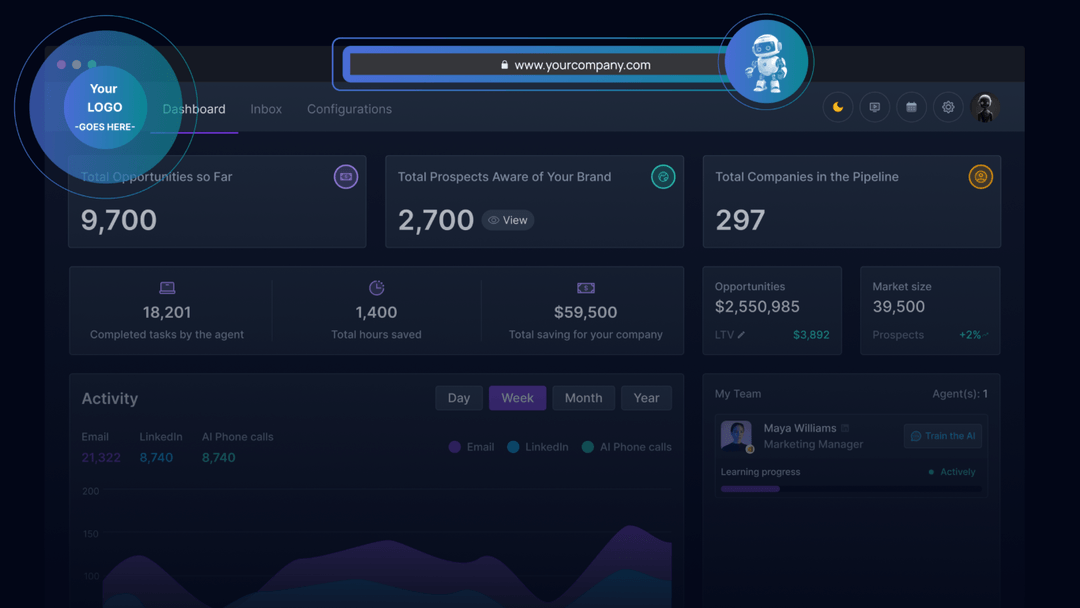
AnyBiz sells an autonomous AI SDR to B2B teams. You describe your offer and your market, a consultant configures the campaign, and AI agents prospect, write, send and book meetings while your reps don't touch a keyboard.
What can you do with AnyBiz?
- 🌐 Autonomous outreach: the agents run 24/7 and pick the channel, the timing and the message themselves.
- 📦 450 million contacts: the database ships with every plan, so you buy no list on the side.
- 📁 Sending infrastructure: AnyBiz provides the domains and mailboxes and warms them for you.
- 💡 Dedicated consultant: a human sets the first campaign up with you during onboarding.
- 🧵 Channels by tier: email on every plan, calls and social from the second tier up.
The pros and cons of AnyBiz
What works
- 🤖 The autonomous model suits a team that wants to set it up and leave it alone
- 📦 AnyBiz includes the sending infrastructure, so you buy no mailboxes or warmup separately
- 🤝 A human consultant builds the first campaign with you
- 📞 The higher tier runs phone outreach, which few competitors do
- 🎧 Reviewers rate the platform highly and single out the support
What hurts
- 🧮 Quarterly billing takes 1,491 dollars before you see a result
- 📨 The entry tier sends email and nothing else
- 🧭 No free plan and no self-serve signup exist
- 🔍 52 G2 reviewers call the price high for what they get
- 🔎 27 more report inaccurate leads or unreliable visitor identification
How much does AnyBiz cost?
Three things matter more than the sticker. First, AnyBiz bills every quarter, so you're out 1,491 dollars on Starter and 2,994 on Recommended before anything happens. Second, the entry tier covers email alone, and the multichannel promise starts at 998 dollars a month. Third, no free plan and no self-serve signup exist: every button on the pricing page books a demo.
Every plan carries the 450 million contact database, the sending infrastructure and a dedicated consultant. AnyBiz also benchmarks itself against a hire rather than against software, putting a sales employee at 3,600 dollars a month, made of 2,500 in salary, 400 in software, 300 in database and 400 in admin. That comparison tells you who AnyBiz sells to: a founder who's choosing between a first SDR and a subscription.
What does an opportunity cost you?
AnyBiz advertises 2 to 3 opportunities a month on Starter and 6 to 9 on Recommended. Divide the price by the promise and the picture flips.
Starter: 497 ÷ 3 = 166 dollars per opportunity at best, and 497 ÷ 2 = 249 dollars at worst.
Recommended: 998 ÷ 9 = 111 dollars per opportunity at best, and 998 ÷ 6 = 166 dollars at worst.
Read those two lines together. On AnyBiz's own numbers, the entry plan costs more per opportunity than the plan above it, 166 to 249 dollars against 111 to 166. The cheap tier is the expensive one. A small team that picks Starter to cap its spend pays the highest unit price on the page, and it's getting one channel for that.
What do AnyBiz users think?
AnyBiz scores 4.8 out of 5 on G2 across 343 reviews, which we checked by hand on 24 August 2026. Reviewers praise the automation, the support and the multichannel reach, and they aren't shy about it. Two complaints recur: 52 reviews call the pricing high for what the platform delivers, and 27 report inaccurate leads or unreliable visitor identification.
Why do people look for an AnyBiz.io alternative?
The quarterly commitment
You pay 1,491 dollars before you know whether the channel works. AnyBiz explains on its own site that its AI needs that window to test audiences, messages and sending times, and the reasoning holds. It still means a five-person company funds a full quarter of learning out of its own cash, and it won't see that money again if the market answers no.
The entry plan sends email only
Starter covers email. Calls and social channels start at 998 dollars a month, which doubles the bill for the multichannel promise that draws most buyers in. The tier you sign decides how many channels reach your market, so read the quote before you're off the call.
No free plan and no self-serve signup
Every button on the AnyBiz pricing page books a demo. You can't open an account on a Sunday evening, load a list and watch what happens. For a founder who wants proof before budget, that alone starts the search for something else.
Questions about data quality
Third-party reviews raise it repeatedly. On G2, 27 reviewers report inaccurate leads or unreliable visitor identification, and 52 call the price high for the output. The platform still averages 4.8 out of 5, so treat this as a caveat rather than a verdict. It helps to know that B2B data decays at roughly 2.1 percent a month, about 22.5 percent a year, whichever vendor sells you the list. Test the data on your own niche during onboarding, before you've paid for a quarter of it.
Which AnyBiz.io alternative is right for you?
You want to test before you commit
Gojiberry or Instantly
You want to keep control of the messages
Outplay or Amplemarket
Data quality is your problem
Clay or Apollo
You want another autonomous agent
Artisan, 11x or AiSDR
You want a European vendor
Topo or Gojiberry
FAQ
How much does AnyBiz.io cost?
AnyBiz charges 497 dollars a month on Starter and 998 dollars a month on Recommended, and quotes the Scale tier on request. Every plan runs on a quarterly cycle, so you pay 1,491 dollars up front on Starter and 2,994 dollars on Recommended. Over a year that comes to 5,964 dollars and 11,976 dollars. These figures come from the AnyBiz pricing page in August 2026.
Does AnyBiz have a free plan?
No. AnyBiz publishes no free tier and no self-serve signup on its pricing page. Every button routes you to a demo, and a consultant then sets the campaign up with you. If you want proof before you commit budget, start with a tool that'll let you open an account yourself, such as Gojiberry or Instantly.
Why does AnyBiz bill quarterly?
AnyBiz explains on its own site that its AI needs that window to test audiences, messages and sending times before results settle. The reasoning holds, and most autonomous AI SDRs bill the same way. The consequence for a small team stays the same: you're committing 1,491 dollars before you know whether the channel works in your market.
Does the AnyBiz entry plan include calls and social outreach?
No. Starter, at 497 dollars a month, covers email alone. Calls and social channels start on the Recommended plan at 998 dollars a month, which doubles the bill. A team that signs up for the multichannel promise and lands on Starter gets one channel, so check which tier you're quoted on before you sign.
What is the cheapest AnyBiz alternative?
Instantly opens at 47 dollars a month on its outreach-only Growth plan, and Apollo charges 49 dollars per user per month on annual billing. Both ask you to build the list and drive the campaign yourself. Gojiberry sits at 99 dollars a month for the whole team and handles the finding and the outreach, which makes it the cheapest option that'll still replace the work.
Which AnyBiz alternative works best for a team of 2 to 10?
Gojiberry. It charges one flat 99 dollars a month for the team rather than per seat, covers socials and email from the entry plan, and asks for no quarterly commitment. Artisan, 11x and Alta price for larger organizations, and Amplemarket, Outplay and Topo bill per seat, so their cost climbs with every person you add. Mindflow lifted its reply rate by 31 percent on a team that size.
Can I run Gojiberry alongside AnyBiz?
Yes. The two tools solve different halves of the problem. Gojiberry watches your market for buying signals and tells you which accounts match your ICP right now, and AnyBiz runs volume outreach across email, calls and social. Teams that keep both usually feed the signal list into the sending engine and cut the volume they're paying for.
Your buyers are moving now
Someone in your market just changed jobs or started following a competitor. Gojiberry spots it, checks they match your ICP, and writes before anyone else does.
Catch them while it's warmGojiberry vs AnyBiz.io: which one brings you leads?
Stay on the arithmetic. AnyBiz costs 5,964 dollars over a year on its entry plan and sends email only on it. Gojiberry costs 1,188 dollars over the same year and covers socials and email from the start. That's five times less for more channels.
One fair point the other way: AnyBiz assigns you a dedicated consultant and runs phone outreach on its higher tier. Gojiberry does neither. If you need a human to build the campaign for you, or if your buyers answer the phone and ignore everything else, that gap matters more than the price does.
The reason signals beat volume is timing rather than cleverness. Median job tenure in the United States sits at 3.9 years, and 22 percent of employees have held their post under a year, so somebody in your market changes seat every week. Four teams built their pipeline on that: Wispra now sources 60 percent of its weekly demos from signals, Mindflow lifted its reply rate by 31 percent, GTE Localize booked more than 100 meetings, and Baur Software doubled its network without losing the personal tone. Read all our case studies if you'd like the detail behind each figure.
Why we built Gojiberry
Before Gojiberry, our cofounders ran Coco.ai. Romàn prospected by hand on socials: he opened tabs, watched who changed jobs, who posted about the problem, who started following a competitor, and wrote to them one at a time. It worked, and that's the awkward part. It also stopped working the moment the list grew, because one person follows about thirty accounts properly and no more.
Gojiberry runs that routine on its own, across a market instead of a browser tab. That's why the product targets a team of two to ten people rather than a sales floor: it lifts the thirty-account ceiling a founder hits, and it leaves the process an enterprise already staffs alone.
Let Gojiberry find them
Tell Gojiberry who you sell to and it starts surfacing companies showing buying signals. 99 dollars a month for the team, no quarterly commitment.
Start for freeSee the results first
More High-Intent Leads = Your New Growth Engine.
Start Now and Get New High Intent Leads Delivered Straight to Slack or Your Inbox.