
13 best AI agents for lead generation in 2026

One question · 10 seconds
Where do your leads come from?
No email required.
🎯
Your answer
You want the outbound family
Nobody's arriving on their own yet, so something has to go out and find the accounts. Gojiberry finds prospects showing buying signals and matching your ICP, then contacts them for you.
🌐
Your answer
A chat agent works that traffic, and it stops there
Your visitors deserve a fast answer, and the four tools further down handle that well. They won't grow the number of visitors. Gojiberry turns your ICP into a prospecting list and identifies the companies worth contacting.
🔨
Your answer
Someone builds it, then someone maintains it
Builder platforms give you the parts, and the parts cost weeks before they return a single lead. Before you start, let Gojiberry handle the prospecting and the lead discovery for you.
Three families of tools answer to the name AI lead generation agent, and they don't solve the same problem. Outbound agents go and find people who've never heard of you, inbound and chat agents talk to the visitors already on your site, and builder platforms hand you the parts so you assemble the agent yourself. This page sorts the three families first, then compares the tools inside each one, because most of the confusion on this query comes from mixing them up.
Gojiberry finds your leads
Gojiberry runs two AI agents that watch more than 30 buying signals, check every account against your ICP, and contact the ones worth your time. 99 dollars a month for the team.
Get your first leads for freeTable of contents
- The 3 kinds of AI lead generation agents
- Which one do you need?
- Discover the 6 best outbound AI agents
- The 4 best inbound and chat AI agents
- What it takes to build your own AI agent
- What these agents do without you?
- Do AI lead generation agents work?
- How much do AI lead generation agents cost?
- FAQ
- Why we built Gojiberry
The 3 kinds of AI lead generation agents
Every tool on this page calls itself an AI agent for lead generation. That label hides the one distinction that decides your shortlist: where the lead comes from. Answer that and you’ll ignore two thirds of this page without regret.
Outbound agents find prospects who have never heard of you and reach out to them
An outbound agent starts from your ICP rather than from a list you built. It searches directories, job boards and social platforms. It enriches what it finds. It ranks accounts by how ready they look and sends the first message. You describe who you sell to, and the agent hands back names with a reason for writing today, which is what you’d otherwise build by hand on Monday morning. Nobody has to visit your site first, which makes this the only family that works from a standing start.
Inbound and chat agents talk to visitors already on your site and qualify them
An inbound agent sits on your website, your WhatsApp or your Instagram and answers questions in real time. It checks whether the person matches your criteria. Then it books the meeting or passes the thread to a human. It converts demand you've already earned. Its value tracks your traffic, so a quiet site turns the smartest chat agent into an expensive widget.
Builder platforms hand you the parts and you assemble the agent yourself
A builder platform gives you a visual canvas, model access, integrations and a scheduler. You design the workflow and connect the sources. You write the prompts. Then you keep the thing alive as APIs shift underneath it. You're buying capability rather than an outcome, and the subscription line rarely represents what it costs you.
One line routes most readers. An inbound agent has nothing to chew on until the traffic arrives, and traffic takes months of content, ads or reputation to build. If you’re starting from zero, you want an outbound agent, because it creates the conversation instead of waiting for one.
Which one do you need?
Four cases cover almost everyone. Find the line that sounds like your month.
Discover the 6 best outbound AI agents
How we checked the numbers on this page
We opened every vendor's own pricing page in August 2026 and took each figure from there, tier by tier, writing down what the meter runs on: contacts researched, leads contacted, seats, resolutions or executions. Then we read what each vendor puts in writing about commitments and add-ons, because that's where a bill moves after month two. Comparison articles on this query still quote plan names that vendors retired a year ago, so we ignored them.
One thing you won't find here: a scorecard of measured reply rates across thirteen tools. We haven't run a controlled test on an identical list, and an invented percentage would be worth less than this sentence admitting it. So there are no scores out of ten, and where the only answer is that it depends on your market, we say that instead. Gojiberry is our own product and it gets the same treatment as the rest. We pay for every plan ourselves, no vendor read a word of this before publication, and our customer results sit in case studies published one at a time.
Read the pricing model before you read the price
Five of the six tools below sell to teams that employ a RevOps function, and they price accordingly. Artisan sizes every plan on a sales call. 11x publishes one tier and quotes the two above it. B2B Rocket shows several conflicting grids at once. AiSDR and Leadspicker publish everything, and both put their real working tier well above what a small team budgets for software.
Gojiberry is the only tool here showing a flat price built for a team of 2 to 10. That says nothing about the quality of the others. It says they aim at a different buyer, and you deserve to know which buyer a product wants before you sit through its demo.
1. Gojiberry
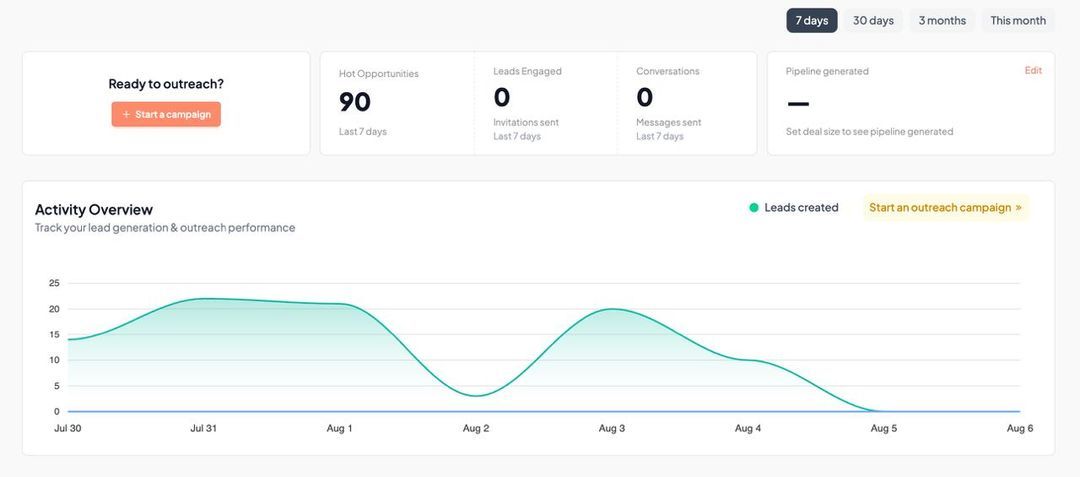
Gojiberry runs two AI agents for small B2B teams that start with no traffic and no list. The first watches more than 30 buying signals across socials and the web: job changes, funding rounds, hiring, competitor engagement. It checks every account against your ICP, so nothing lands in front of you that shouldn’t. The second writes to the accounts that clear the filter, with the signal attached as the reason for getting in touch today.
- 📡More than 30 buying signals, watched continuously rather than pulled from a static export
- 🎯ICP filtering before an account reaches your inbox
- 📧Email waterfall enrichment across 15+ providers
- 🔄Sits next to whatever you already send with
A free plan gets you started, then Pro costs 99 dollars a month for the whole team: 2 AI agents and up to 1,800 prospects contacted per month, with no commitment, so you’re free to stop in month two. Above five people, and for agencies, the plan turns custom. Teams running this motion report what it changes: Wispra now sources 60 percent of its weekly demos from intent signals.
Nothing else on this list decides who deserves the message. What we need from you is a market that leaves traces, and if your buyers don’t post, don’t hire and don’t raise in public, an intent layer finds less to work with.
2. Artisan
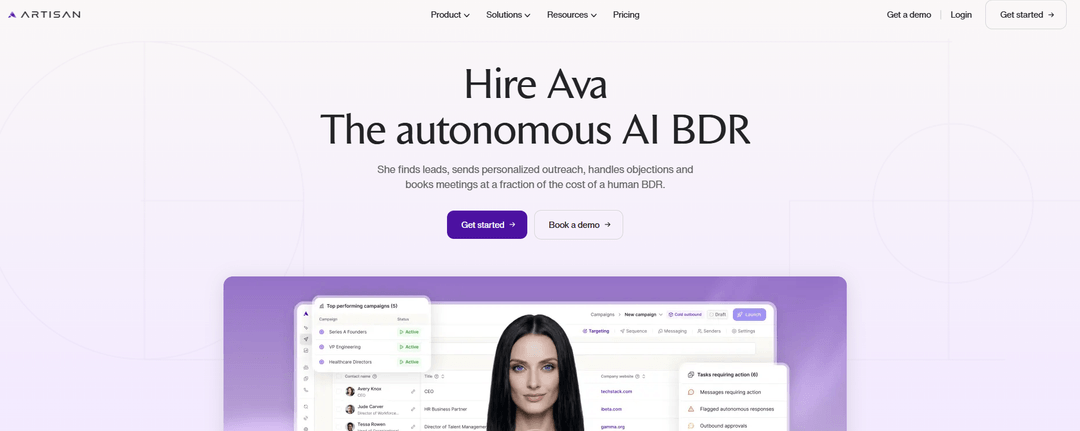
Artisan sells Ava, an AI BDR that runs the whole outbound motion for teams that would rather hand the job over than operate a tool. Ava sources from a bundled contact database, writes the sequences, answers replies and books the meeting, and an autonomy setting decides how much she sends before you’ve read it.
- 🤖Autonomous replies and meeting booking, with approval rules you set yourself
- 📚250M+ verified B2B contacts inside every plan
- 📞An AI dialer add-on that briefs your reps before each call
The pricing page shows three tiers and no figure on any of them: Team at roughly 2,500 leads contacted a month, Scale at roughly 6,000, then Enterprise, and you won’t find a number next to any of them. The vendor states that it sizes a plan on your lead volume, your mailboxes and your dialer seats.
Every plan ships with a CSM and a guided rollout, and none of them ships with a price. You can't put a line in next year's budget without booking the call first.
3. 11x
11x sells Alice, an outbound digital worker aimed at sales orgs carrying a revenue number they can’t hire against. Alice prospects, personalizes, handles replies and books meetings. The real pitch sits in the infrastructure the vendor manages for you: mailboxes, domain setup, warmup, inbox rotation and monitoring all live inside the plan rather than beside it.
- 📨Managed mailboxes with warmup, rotation and domain health monitoring
- 🔁Bi-directional CRM sync on every tier
- 💰Billing per lead rather than per send, so touchpoint count doesn't move the price
Growth starts at 3,750 dollars a month billed annually, covering up to 5 end users and 2,000 new prospects a month. The FAQ on that same page quotes 36,000 dollars a year as the entry point, so ask which number applies to you. Pro and Enterprise both go to quote. If that’s outside your range, we mapped the best 11x alternatives separately.
Bundling the mailboxes, the warmup and the rotation into one subscription removes the four line items that usually surprise people. Then you read the entry price, and 3,750 a month prices Alice against an SDR salary rather than against the software budget you’re working from.
4. AiSDR
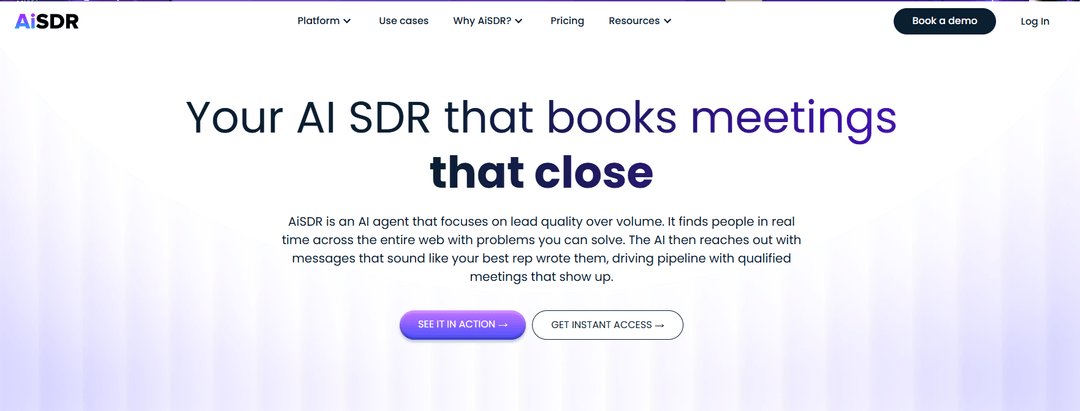
AiSDR does what almost nobody else in this category does: it publishes every tier. The agent researches each contact, writes, follows up and hands you the replies, and the meter counts AI-researched contacts rather than seats, so a team of two and a team of twenty pay the same for the same volume. Setup takes hours instead of a quarter, and you don’t meet a salesperson on the way in.
- 📋Every price published, so you can budget without a sales call
- 👥Unlimited users from the middle tier up
- 🔗Two-way HubSpot and Salesforce sync
Solo costs 250 dollars a month for 200 AI-researched contacts and one user, Explore costs 900 for 800 contacts, and Scale costs 2,500 for 2,500. Annual billing takes roughly 20 percent off each one. Only Solo runs contract free, and the two tiers above it want a quarterly commitment paid up front before you’ve sent a single email.
Publishing every tier is rare enough here to count as a feature on its own. The catch sits between the tiers, where each step up roughly triples the allowance and the invoice that’s attached to it.
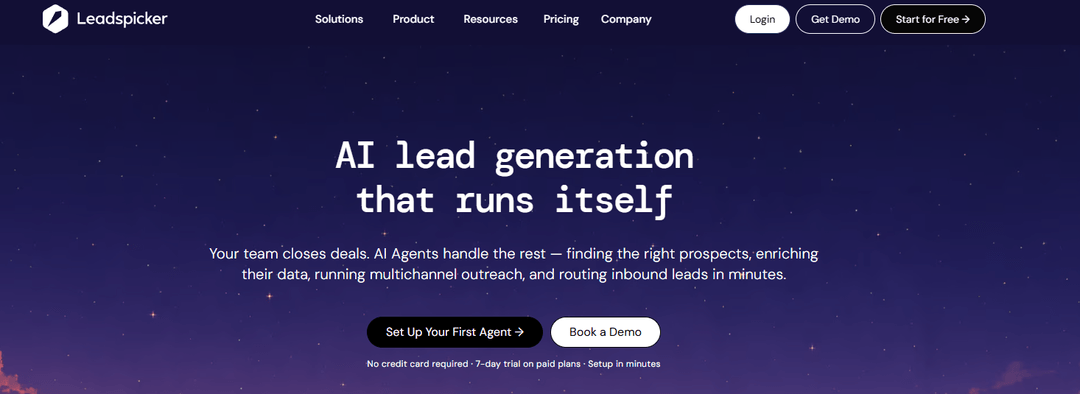
5. Leadspicker
Leadspicker puts autonomous discovery, waterfall enrichment and multichannel outreach in one platform, and it runs most social actions through its own infrastructure rather than through your account. Robots research people, watch job portals and monitor buying intent, then feed a sequence that spans email and social. Agencies read the seat structure first, because the plans count email seats and social seats separately, and they don’t move together.
- 🧭Discovery robots running against live sources rather than a frozen database
- 📈Waterfall email hunting and verification, priced per action
- 📥One unified inbox across both channels
Explorer costs 199 a month with 4,000 credits, Growth 479 with 16,000, Scale 1,599 with 80,000, then Enterprise goes to quote. Annual billing saves up to 20 percent and releases the credits up front. You start free without a card, and the vendor prices one credit at one euro cent, so you can cost an enrichment before you’ve run it.
Two meters run at once here, the plan and the credits, so you can’t forecast month one properly. What makes that survivable is the public price list: verified email at two credits, a phone number at fifty, everything else in between.
6. B2B Rocket
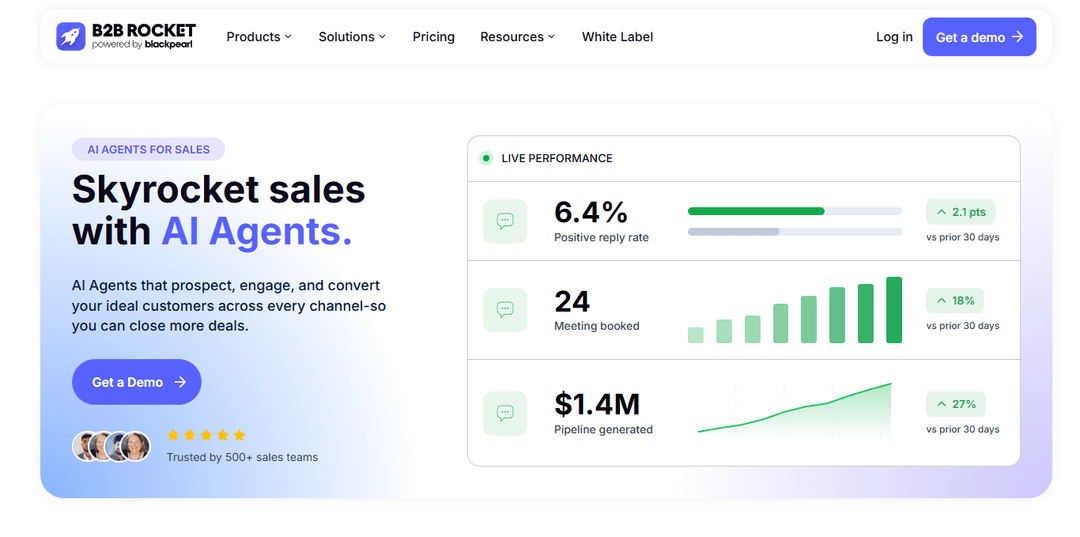
B2B Rocket bundles a large contact database, AI BDR agents, unlimited email sending, done-for-you domains and mailboxes, a unified inbox and a light CRM into one subscription. Outreach spans email, social, WhatsApp and SMS, and the agents answer replies on their own. At the top of the range it stops being software and becomes a managed service, with the vendor's GTM engineer running your campaigns.
- 📦Database, sending and inbox on one invoice
- 🛠Done-for-you domains and mailboxes, warmup included
- 💼A managed tier where the vendor's team runs the whole motion
Read this one twice, because the pricing page shows several plan sets at the same time: a self-serve ladder at 599, 999 and 1,399 dollars a month billed annually. A quarterly set at 799, 1,299 and 1,799. A cheaper Starter, Growth and Scale ladder at 59, 99 and 149. And a managed VIP tier at 8,000 dollars a month. Ask in writing which grid applies to you, because you can’t tell from the page.
The pricing page contradicts itself. Four grids, three billing rhythms, and a managed tier at 8,000 a month sitting next to a 59 dollar plan. There's a real product underneath, and working out what it costs you takes an afternoon you'd rather spend selling.
The 4 best inbound and chat AI agents
These four solve a different problem, and we'd rather say so than pretend they compete with the six above. They work the demand you already have. If people land on your site or open a chat with you every day, this is your family. If they don't, no widget on the page changes that.
Intercom
The reference for support-led conversation, now built around Fin, its AI agent that answers, resolves and hands off. Seats cost 29, 85 or 132 dollars per person per month on annual billing, and Fin bills 0.99 dollars per outcome on top, so the AI line tracks your success rather than your headcount, and a busy month doesn’t come cheap.
Tidio
Live chat built for ecommerce and small teams, with Lyro as the AI layer. A free plan exists, Starter costs 29 dollars a month and Growth 59, then the ladder jumps straight to 749 for Plus with nothing in between. Lyro arrives as a separate add-on from 39 dollars a month, so you’re budgeting two meters rather than one.
Respond.io
Built for teams whose buyers open WhatsApp, Instagram or Messenger rather than an inbox, which usually means B2C. Starter costs 79 dollars a month, Growth 159 and Advanced 279 on annual billing, and you’ll pay more month to month. Your bill moves on Monthly Active Contacts, and AI usage sits inside the Growth plan rather than beside it.
Aimdoc
The closest thing here to a revenue agent rather than a support agent: it engages B2B SaaS visitors, qualifies them against your criteria, routes them to sales and helps users activate inside the product. The vendor prices its Discover and Convert plan at 999 dollars a month, and it doesn’t publish a cheaper self-serve tier below that.
What it takes to build your own AI agent
Three platforms dominate this route. Read the subscription, then double it in your head, because you’re buying capability rather than an outcome, because the build and the upkeep cost far more than the licence. Someone designs the workflow and writes the prompts. Someone connects the sources. Someone repairs the whole thing every time an API shifts.
MindStudio
A no-code canvas for AI agents with a real free plan at 1 agent and 1,000 runs a month, then Individual at 20 dollars a month, or 16 on the annual plan, and Business on quote. The subscription buys the platform alone: model usage bills on top at provider cost, so your total tracks how hard your agents work, and you won’t see it until they’ve run.
Relevance AI
A multi-agent workforce builder with two meters, Actions for platform work and Vendor Credits for model compute. Free covers 200 Actions a month, Pro costs 19 dollars a month on annual billing and Team costs 234, or 349 month to month. Extra Actions run around 80 dollars per 1,000, and that's the line nobody models in advance.
n8n
The most flexible of the three and the cheapest to run, if you’re able to host it. The Community Edition costs nothing beyond your server, while the cloud tiers bill executions: Starter at 20 euros a month billed annually for 2,500 runs, Pro at 50 for 10,000, Business at 667 self-hosted for around 40,000, then Enterprise on quote.
Stop guessing who to contact
Gojiberry watches job changes, funding rounds, competitor engagement and more than 30 other signals, then writes to the accounts that match your ICP.
Start free on your marketWhat these agents do without you?
Five capabilities separate an AI agent from a sequencing tool with a chatbot bolted on. Check each one against the demo you're about to sit through.
Autonomous prospecting
The agent searches directories, job boards and social platforms on its own schedule and builds the list from your ICP description, so nobody rebuilds a saved search on Monday morning. Timing is what this buys you. Median job tenure in the United States sits at 3.9 years, with 22 percent of employees in post under a year, which means your market reshuffles its buying committees constantly, and somebody’s got to notice.
Data enrichment
The agent cross-references company news, funding, headcount moves and website signals. Then it fills the contact details from several providers in sequence until one returns a verified address. That work never finishes, because B2B databases decay by around 2.1 percent every month, close to a quarter of the list you’re working from each year. If you want the specialists that do only this part, we ranked the best Clay alternatives.
Intent and behavior scoring
The agent ranks accounts by how ready they look to buy rather than by how well they match a static filter. A company that just hired three people into the team you sell to sits above an identical company that hasn’t moved this quarter. Readiness beats resemblance, and this is the capability that moves reply rates rather than send volume.
Personalized multi-channel outreach
The agent writes from what the prospect did rather than from a merge field, then follows up across email and social at the cadence you set. Getting that first line right matters more than the channel count, and it’s what protects your domain: Google holds bulk senders to a spam complaint rate below 0.3 percent. We published the cold email templates that get replies for exactly this reason.
Meeting booking
The agent handles the back and forth about timing, then drops the meeting into a calendar with the context attached. Most vendors in the outbound family ship this now. Very few ship it well enough to run with nobody reading the thread first, and the ones that ship it well give you an approval step for a reason you’ll appreciate.
Do AI lead generation agents work?
Ask that question on a public forum and the top answer usually arrives as a joke. The reaction tells you something accurate about the category: plenty of teams bought an AI SDR in 2024, sent thousands of emails, booked nothing, and they haven’t forgotten.
So here's the state of the evidence. Every figure circulating on this query comes from the vendors themselves, and ours are no exception. No independent body audits reply rates in this market. Nobody runs one identical list through ten agents and publishes what came back. Treat any percentage you read here, on a competitor's page or in a review site's summary as a customer story rather than a benchmark, and ask for the sample size before you believe it.
Here are ours, published one customer at a time, with the customer named.
Wispra
Rebuilt its outbound around intent signals and now sources 60 percent of its weekly demos that way.
Mindflow
Stopped spraying its ICP, wrote only to accounts that had moved, and reached a reply rate above 30 percent.
GTE Localize
Shifted from volume email to intent-driven outreach and passed 100 meetings booked.
Baur Software
Runs the same motion on a smaller team and doubled its network without losing the personal tone.
Now the limit that decides whether any of this works for you
A signal engine reads what your market leaves behind: a job change, a funding round, a hire, a post, an interaction with a competitor. When your buyers leave those traces, the method works and the numbers above make sense.
When your buyers leave no trace online, no signal engine invents activity that isn't there. Sell to rural contractors who never post, to public bodies that announce nothing, or to a market of forty companies you already know by name, and an intent layer adds very little. Come to us instead when your market moves in public and you can't watch all of it.
How much do AI lead generation agents cost?
The three families bill on three different units, which is why comparing headline prices across them won’t tell you much. Read the middle column first.
The two lines that catch small teams out
Per resolution pricing on the inbound side punishes a good month. At 0.99 dollars per outcome, an agent that resolves 2,000 conversations adds roughly 1,980 dollars to a bill that started at a seat price of 85.
Quarterly and annual commitments hide the real entry cost on the outbound side. A 900 dollar plan paid quarterly in advance asks for 2,700 dollars before the first meeting lands. Data subscriptions sit outside most of these plans too, and we broke that pattern down in what Apollo really costs.
FAQ
Which AI agent is best for lead generation?
It depends entirely on where your leads come from, which is why this page sorts the families before it ranks anything. If you’ve already got visitors, an inbound agent converts that traffic and a chat tool serves you best.
If nobody knows you yet, only an outbound agent helps, because it finds the accounts and starts the conversation. For a team of 2 to 10 in that position, Gojiberry runs both agents on one flat price, which is why it opens our outbound list.
Can you use AI for lead generation?
Yes, and thousands of teams do it every day. AI handles the parts of prospecting that reward patience rather than judgement: watching hundreds of accounts for a change, cross-referencing several data sources, drafting a first message that reflects what’s happened at that company this month.
You still own the parts that decide deals. You set the ICP, you approve the positioning, and you take the call. An agent nobody supervises produces volume, not pipeline. GTE Localize passed 100 meetings by keeping that division clear.
What are the 7 types of AI agents?
Computer science sorts agents by how they decide, and the list hasn’t changed much in twenty years. Simple reflex agents react to a trigger. Model-based reflex agents keep an internal picture of the world. Goal-based agents plan toward an objective. Utility-based agents weigh trade-offs. Learning agents improve from feedback. Multi-agent systems split the work across specialists, and hierarchical agents put one agent in charge of others.
Sales tools borrow that vocabulary loosely. A prospecting agent usually combines a goal-based core with a learning layer, and a multi-agent setup just means one agent finds the accounts while another writes to them.
Are there free AI agents for lead generation?
Several vendors open the door for nothing. Gojiberry runs a free plan and Leadspicker lets you start without a card. Tidio keeps a permanent free tier. MindStudio gives you one agent and 1,000 runs a month, and n8n costs nothing beyond your own server if you self-host the Community Edition.
Read what free covers, though, because it doesn’t cover much. Free tiers in this category test the interface rather than the channel, and most of them run dry inside a fortnight of real use.
What is the difference between an AI agent and an AI SDR?
AI SDR describes a job. AI agent describes an architecture. Vendors say AI SDR when the product replaces a sales development rep's whole routine, from list building to booking, and they price it against a salary.
AI agent covers anything that decides and acts on its own, including a chat widget or a workflow you built yourself. Every AI SDR counts as an AI agent, and most AI agents do something far narrower than an SDR's job. Judge the capabilities rather than the label.
Do I need technical skills to run one?
For the outbound and inbound families, no. You describe your ICP, connect a mailbox and a CRM, approve the messaging, and the agent runs. Most teams launch in an afternoon.
For the builder family, yes, and more than the marketing suggests. Someone designs the workflow, writes the prompts, connects the sources and repairs it whenever an API shifts. Count that person's hours as part of the price, because they usually outweigh the subscription several times over.
Why we built Gojiberry
This started as a problem we had
Before Gojiberry, Roman prospected by hand on socials for Coco.ai. He wasn't running sequences: he did the intent research himself, one browser tab at a time. Watching who'd just changed jobs, who'd started engaging with the category, who'd said something that suggested they had the problem. Then writing to those people with a reason that was true.
It worked, which is the part worth saying out loud, because it's why the product exists. And it didn't scale. One person can follow about thirty accounts properly. Past that the method collapses, and what collapses first is the reason for writing. You stop noticing the signal, you keep the cadence, and a month later you're doing mass outreach with a first name variable in it. Gojiberry is that routine running on its own, for the size of team where nobody has a spare afternoon.
That constraint explains the shape of this page. A team of 2 to 10 doesn't need an AI employee priced against a salary, and it doesn't need a canvas to build one on either. It needs the list to arrive already sorted, on a price that stays the same when the third rep joins.
Let Gojiberry find them
Tell Gojiberry who you sell to and its agents start finding companies showing buying signals. One price for the team, no annual contract.
Start for free See what customers got