
Instantly review 2026: pricing, features and real costs

2-question quiz
What will Instantly cost you?
No email required.
Question 1 / 2
How many cold emails do you send a month?
Question 2 / 2
Do you already have a list worth emailing?
🎯
Your result
You're buying two subscriptions, not one
Sending is the cheap half. The data is the half that decides whether any of it works, and it arrives as a second bill every month. Gojiberry finds the leads first, so you stop paying twice to guess.
- 30+ buying-intent signals across socials and the web
- Leads enriched and pushed into your CRM
- Free plan, no credit card
💰
Your result
The $47 plan is enough for you
Under 5,000 sends a month with a list you maintain yourself, Growth on its own does the job and the credits meter never starts. Come find us when that list stops producing replies.
- Unlimited inboxes and warm-up on the entry tier
- Nothing here sends more email for less money
- Gojiberry sits in front of it when targeting slips
🚀
Your result
Instantly is the right buy here
Volume plus a list you own is what the product was built for, and few tools move that much email for the money. What it won't tell you is which of those contacts is in the market this week.
- Unlimited mailboxes, rotation handled for you
- Every reply lands in one shared inbox
- Gojiberry adds the timing layer on top
Instantly is one of the best cold email senders you can buy, and the $47 on its pricing page doesn't cover the product most people mean when they say Instantly. That $47 buys sending. Nothing else.
The lead database is a second subscription. Instantly sells the pair as a bundle at $94 a month, and the tier most active teams end up on costs $194. Here's what a working setup costs a team of three, and what breaks along the way.
The walkthrough below runs a first campaign from inside a live account: connecting inboxes, building the sequence, watching replies land in one shared view. It's the quickest way to see why people like the product, before we get to the invoice.
The $47 plan is email sending and nothing else
Outreach plans start at $47 a month for Growth, $97 for Hypergrowth and $358 for Light Speed on monthly billing. Annual billing takes those to $37.60, $77.60 and $286.30. They connect unlimited email accounts, warm them up, rotate sends across the pool and route replies into one inbox. They don't come with anybody to email.
The lead database is a separate product called Instantly Credits, priced the same way at $47, $97 and from $197 a month. The CRM is a third product with no price published anywhere on the pricing page. Instantly's own bundles settle the argument: Starter at $94 a month, Scale at $194, Agency at $555. All figures checked on Instantly's pricing page on September 7, 2026.
So the sticker is real, and it's half a product. A team that needs sending and data together starts at $94 a month, and lands around $144 once the volume outgrows the 5,000-email cap on Growth. That's two to three times the number that brought them to the pricing page.
Stop paying twice for a list you still have to guess at.
Get leads for freeTable of contents
- The $47 plan is email sending and nothing else
- What Instantly is built for
- What Instantly does well
- The three subscriptions you need to make it work
- We priced it out for a team of three
- Your warm-up score can lie to you
- Instantly keeps the domains it sets up for you
- What users complain about
- Who should buy Instantly and who should not
- What if the leads came to you instead
- Your questions about Instantly
How we checked this
Every price on this page comes from Instantly's own pricing, CRM and terms pages, read on September 7, 2026, plus its help center articles on Done-For-You setups and cancellation. Where a claim comes from user reports rather than the vendor, it says so and it carries a date. We invented no quotes and no statistics.
What you won't find here is a measured deliverability scorecard. We haven't run a controlled seed test on identical lists across Instantly and its competitors, and an invented inbox rate would be worth less than this sentence admitting it. When we run that test, the numbers land on this page. We pay for the tools we write about, and no vendor read a word of this before publication.
What Instantly is built for
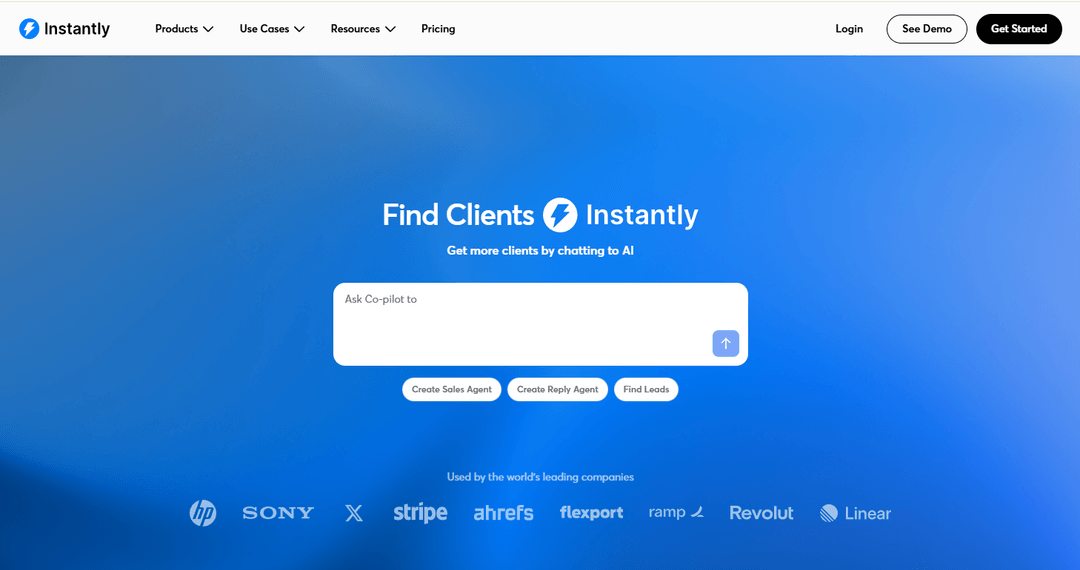
Instantly is a cold email sender built for volume. You connect as many inboxes as you want on any plan, the platform warms them up, and campaigns rotate sends across the pool so no single mailbox carries the whole load. Replies come back into one shared view, so you're not juggling fifteen browser tabs.
The pricing model follows from that. Every Outreach plan includes unlimited email accounts and unlimited seats, and you're billed by monthly send volume rather than by user: 5,000 emails on Growth, 100,000 on Hypergrowth, 500,000 on Light Speed. A three-person team and a thirty-person team pay the same on any given tier.
That design points at one kind of buyer. Agencies running campaigns for a dozen clients, and outbound teams whose bottleneck is capacity. If you send a few hundred emails a month from one mailbox, you're paying for infrastructure you'll never fill.
What Instantly does well
The pricing section below is hard on Instantly. This part is where the product earns its reviews, and it's earned them fairly.
- 🔀Inbox rotation you never configure: add accounts to a campaign and sends spread across them on their own, with per-account daily caps you can leave alone.
- 📥One inbox for every reply: the Unibox pulls responses from every connected account into a single thread list, which is the difference between fifteen tabs and one.
- 🚀Setup that takes an afternoon: connecting Google or Microsoft accounts, importing a list and launching a first sequence is same-day work for someone who has never done it.
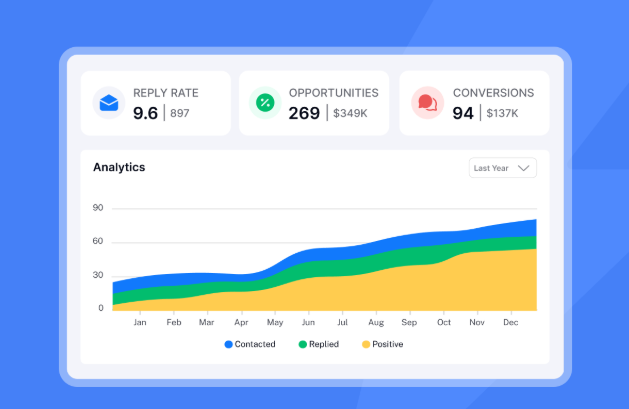
- 📊Reporting a founder can read: campaign analytics chart contacted, replied and positive over time. No dashboard build, no spreadsheet export.
Teams moving off a per-mailbox sender usually cut their tooling bill and stop babysitting accounts. The reviewers who call Instantly easy are describing something real, and that's why the price question matters so much.
The three subscriptions you need to make it work
Instantly's pricing page has tabs, and the tabs are the story. Outreach is one product. Instantly Credits, the 450 million contact lead database, is another. The CRM is a third. You subscribe to each one separately.
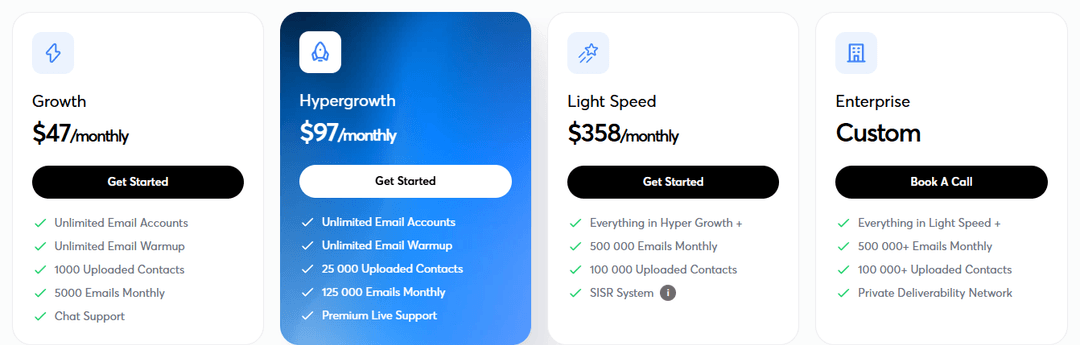
The bundle line is the one that settles it, because Instantly sets that price itself. Sending plus data at the entry level is $94 a month, not $47. At the tier most active teams land on, the bundle costs $194 while the sending tab still advertises $97. The headline number is half the price of the thing people picture when they say they're using Instantly.
Credits are the line that keeps moving. One credit reveals one contact, credits don't roll over month to month, and B2B contact data decays at roughly 2.1% a month, around 22.5% a year. So the credit line doesn't buy you a list once. It rents you one, and the rent comes due every thirty days.
The CRM has no published price at all. Its product page sells calling, SMS and a master inbox with no pricing table anywhere on it as of September 7, 2026. If you want the CRM, you'll find out what it costs inside the billing screen.
We priced it out for a team of three
Three people, roughly 6,000 cold emails a month between them, and about 1,500 fresh contacts a month pulled from the database. That's an ordinary month for a small B2B team working one European market.
Growth drops out on the first line, because 5,000 sends a month is a ceiling they'd hit in week three. So Hypergrowth at $97. Credits at the Growth tier covers 1,500 to 2,000 contacts, so $47 there. No add-ons, no CRM, no done-for-you service.
Run the math for a team of three
A team that budgeted for the advertised $47 is looking at $1,728 over twelve months, or $1,382.40 if it's paying a year up front. Both sit two and a half to three times above the sticker.
And that's before sending infrastructure. Extra domains and mailboxes are bought separately, from a registrar or from Instantly's own setup service, and what they cost depends on how many inboxes the volume needs. We're leaving that out of the table rather than putting a number on it that wouldn't hold for your setup.
Your warm-up score can lie to you
Every Outreach plan includes unlimited warm-up, and the dashboard gives each connected account a health score. Instantly's help center defines that score precisely: the share of warm-up emails that land in the inbox rather than the spam folder.
Read the definition twice, because it's narrower than it looks. Warm-up emails travel between accounts inside Instantly's own network. The platform sends them, the platform receives them, and the score measures how those synthetic messages were filed. Your campaign emails go to Gmail and Outlook mailboxes belonging to strangers who never asked to hear from you, and those get filtered on different signals: engagement, complaint rate, domain reputation, content.
So a green health score tells you the warm-up pool is behaving. It doesn't tell you where your campaign landed. Users have reported that gap for years, and it kept surfacing in public threads through the first half of 2026: healthy scores in the app, campaigns in spam, no diagnostic to explain the difference.
What to check instead
- 🔍Google Postmaster Tools for the domain reputation and spam rate Google records itself. Bulk senders have to keep user-reported spam under 0.3%, and that is the threshold that decides your fate. An in-app percentage doesn't.
- 🧪A seed test to mailboxes you control across Gmail, Outlook and one corporate domain, run at the start of every campaign and again after any domain change.
- 📈Reply rate split by recipient provider. If Gmail replies at 4% and Outlook at 0.4%, you have a placement problem at Outlook whatever the dashboard says.
Instantly does sell a fix. Inbox Placement is a separate paid module that tests real placement, so the tooling's there. The free dashboard number measures something narrower than what most people read into it.
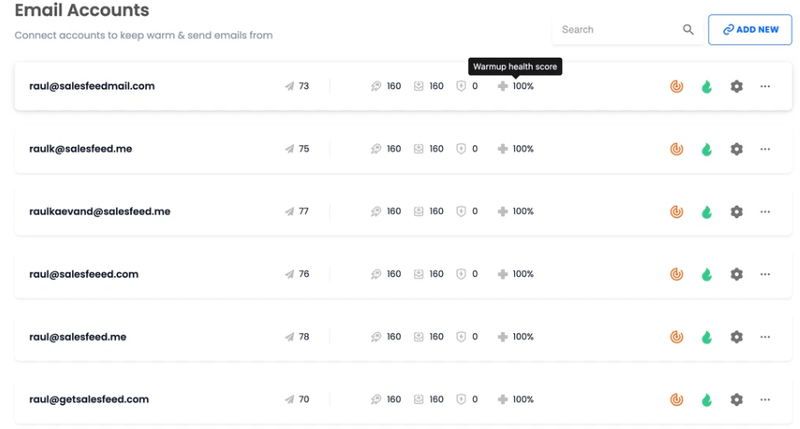
Six mailboxes, six scores at 100%, and not one of those figures says anything about where a campaign email landed last Tuesday. That column measures the warm-up pool, and it does that job well. Read it as a signal that the accounts are alive, then go and measure placement somewhere else.
Instantly keeps the domains it sets up for you
Instantly sells done-for-you email setups: new domains, new inboxes, DNS records configured, ready to send. It saves real hours. It's also the paragraph to read twice before you sign.
Per Instantly's terms of service and its help center articles on done-for-you and pre-warmed accounts, both read on September 7, 2026: Instantly registers, owns and operates those domains under its own name, and doesn't transfer them. What you buy is a right to use its sending infrastructure for the length of your subscription. The word purchase appears throughout the interface. Ownership never moves.
- 📤The domains stay behind. You can't take a warmed-up sending domain to another platform or to your own server, because it was never registered in your name.
- 🔒Cancelling ends the accounts immediately, and once every mailbox on a domain is canceled, that domain expires at the end of its one-year term. Conversations tied to those accounts get deleted after a short grace window.
Build your whole sending stack on done-for-you domains and your sender reputation lives inside Instantly and it isn't coming out. Buy the domains yourself at a registrar and let Instantly connect them, and none of this applies. That one decision at setup is what makes the reputation yours.
What users complain about
Public sentiment splits hard depending on where you're reading. G2 sits near the top of its range across thousands of reviews while Capterra and Trustpilot run considerably lower, and the gap is wide enough that third-party roundups keep flagging it. Four themes repeat in reports through the first half of 2026.
- 🎧Support slows down as accounts get complicated. Simple billing questions get handled fast. Multi-workspace and deliverability problems draw bot-first replies and multi-day waits, and reviewers describe a stalled campaign costing more than the subscription did.
- 💬The 2025 move to a credits system caused billing confusion, with glitches still being flagged on public review sites into early 2026. Duplicate charges and unclear credit balances are the recurring specifics.
- 📁Lead database accuracy is uneven at scale. Outdated addresses and wrong job titles turn up in exports, which pushes bounce rates up and burns credits on people who left. Median job tenure in the United States is 3.9 years, with 22% of employees under a year in role, so every database is fighting the same decay.
- 📨Outlook deliverability is inconsistent, and done-for-you domains drew the sharpest criticism in early 2026 threads, where users reported pre-built domains arriving with weak reputation.
None of that makes Instantly a bad product. It makes it a product with known edges. Three of those four hit small teams harder than agencies, because a small team doesn't have anybody whose job is working around them.
Who should buy Instantly and who should not
- 🏢You run an agency sending 10,000 cold emails a month across 40 inboxes for a dozen clients
- 🧰You already own a data source and need only the sending layer on top of it
- 📧You send 5,000 to 100,000 emails a month and want unlimited mailboxes without per-account pricing
- 👥Somebody on the team checks placement outside the platform every week
- 🔥Your bottleneck is capacity, and the list itself is producing replies
- 📌You send under 1,000 emails a month from two mailboxes and won't fill a tier
- 🧮You budgeted the advertised $47 and can't stretch to $144 once the database is added
- 📞You need calls or social touches inside the same sequence, which Instantly doesn't do
- 🧭Nobody owns deliverability, so a green dashboard would be your only signal
- 🔎Replies are low because of who's on the list, and more sends won't change that
More inboxes won't fix a list that was wrong on day one
Gojiberry watches more than 30 buying-intent signals across socials and the web, then shows you which accounts moved this week and why they're worth a message.
See it on your marketWhat if the leads came to you instead
Instantly rests on one assumption: you need more email going out. That assumption holds when the list is good and capacity is the only limit. It falls apart when replies are low because the wrong people are receiving the mail, and adding inboxes doesn't change who those people are.
Gojiberry is an AI-powered multichannel prospecting platform. It tracks more than 30 buying-intent signals across socials and the web, surfaces the leads who are in-market right now, and triggers personalized outreach across several channels. Rather than filtering a static database, it starts from what changed this week: a hiring push, a funding round, a tool swap, a new person in a role you're selling to.
Here's what Gojiberry doesn't do. It doesn't send cold email at volume. There's no unlimited mailbox pool, no rotation across forty inboxes, no warm-up network. If your job this quarter is to put 50,000 emails into the world, we're the wrong tool and Instantly is a good one.
For most teams the two aren't in competition. Put intent in front of the sender and the sender does better work, because every message is aimed at an account with a reason to reply this month.
GTE Localize
100+ meetings booked after moving from email volume to intent outreach.
Read the case studyYour sender is fine. The list feeding it is the problem.
Try intent-based prospectingYour questions about Instantly
How much does Instantly cost?
Outreach starts at $47 a month for Growth, $97 for Hypergrowth and $358 for Light Speed on monthly billing, with roughly 20% off when you commit annually. Those plans cover sending, and that is all they cover.
The lead database is a second subscription at $47, $97 or from $197 a month, and Instantly's own bundles put sending plus data at $94, $194 and $555. Checked on the pricing page on September 7, 2026.
Is Instantly good for deliverability?
The infrastructure holds up. Unlimited warm-up, inbox rotation, per-account sending caps, and dedicated IP rotation on the top tier are all included, and none of it's oversold.
The weak point is measurement. The in-app health score reports how warm-up emails were filed inside Instantly's own network, so it can read green while campaigns land in spam. Check Google Postmaster Tools and run your own seed tests instead of trusting the dashboard alone.
Can you keep your domains if you leave?
Not the ones Instantly set up for you. Per its terms of service and help center, both read on September 7, 2026, Instantly registers and owns done-for-you and pre-warmed domains under its own name and doesn't transfer them.
Cancel and those accounts stop immediately, then the domain expires once every mailbox on it has been canceled. Domains you buy yourself at a registrar and connect to Instantly stay yours.
Is Instantly worth it for a small team?
It depends where the problem sits. A team of three that already has a list and needs to send 6,000 emails a month gets a sending layer for $144 a month that'd cost more to assemble from parts.
If replies are low because the list is stale, that same $144 buys a faster way to send the wrong email. Wispra now sources 60% of its weekly demos from intent signals, and you can read how that shift worked.
Does Instantly have a free plan?
There's a 14-day free trial on Outreach plans and no permanent free tier. The Credits and CRM modules don't come with their own trials, so testing the lead database means subscribing to it first.
What is the difference between Instantly Credits and an Outreach plan?
Outreach is the sending engine: inboxes, warm-up, sequences and the shared reply inbox. Credits is the lead database, where one credit reveals one contact from a pool Instantly puts at 450 million B2B records.
They're billed separately, credits don't roll over month to month, and a campaign needs both unless you're bringing your own list.
If you'd like the wider view before deciding, we keep a running list of the best Instantly alternatives, a head-to-head on Smartlead against Instantly, and a direct comparison of Gojiberry against Instantly for teams weighing targeting against volume.
Email the people who are already looking
Gojiberry surfaces the accounts showing buying intent this week and opens the conversation for you. There's a free plan and no credit card.
Start for freeSee client results

More High-Intent Leads = Your New Growth Engine.
Start Now and Get New High Intent Leads Delivered Straight to Slack or Your Inbox.