
AI SDR Tools: How to Choose the Right Platform for Your Team

Heard this one? "The right AI SDR tool can increase lead generation by 300%." It's not just marketing hype; case studies and user reports are showing that the right AI-powered Sales Development Representative (SDR) tool can be a massive force multiplier for a sales team. It's the difference between your reps drowning in manual data entry and them spending their time actually selling. 🚀
But here's the problem: the market is flooded. You've got dozens of "AI SDR platforms," each promising the moon. How do you know which one is actually right for your team, your budget, and your unique sales process? It’s easy to get lost in a sea of feature lists and conflicting reviews.
Quick quiz: find your best option
That's exactly why we put this guide together. Think of it as your roadmap to choosing the perfect AI SDR tool. We'll break down everything you need to know:
- -What these tools actually are (and what they're not).
- -The different types of AI SDR tools and who they're for.
- -The must-have features you should demand.
- -A side-by-side comparison of the top platforms in 2025.
- -A step-by-step framework to help you make a confident choice.
Ready to find your team's new secret weapon? Let's dive in.
What is an AI SDR Tool?
An AI SDR tool is a platform that uses artificial intelligence to automate and augment the tasks of a What is a Sales Development Representative (SDR). Its job is to handle the repetitive, time-consuming parts of prospecting so your human SDRs can focus on high-value activities like building relationships and closing deals.
Core capabilities typically include:
- -Lead Research & Prospecting: Automatically finding companies and contacts that match your Ideal Customer Profile (ICP).
- -Personalized Outreach: Drafting and sending tailored emails, LinkedIn messages, and other communications at scale.
- -Lead Qualification: Engaging with potential buyers to see if they're a good fit before handing them off to an Account Executive.
So, how is this different from a simple email autoresponder? Traditional tools work off static lists and send generic templates. An AI SDR tool is dynamic. It uses real-time buying signals (like a company hiring for a specific role or a prospect engaging with a competitor's content) to find who to talk to and when to talk to them. The expected ROI isn't just time saved; it's a higher volume of better-qualified meetings in your pipeline.
Types of AI SDR Tools
Not all AI SDR tools are created equal. They generally fall into one of four categories, each with its own strengths.
- LinkedIn-Focused Tools (e.g., Expandi, HeyReach, Meet Alfred): These platforms specialize in automating outreach on LinkedIn. They are great for sales teams whose buyers are highly active on the platform. Their strength is deep LinkedIn automation, but they often require separate tools for email and other channels.
- Multi-Channel Tools (e.g., Instantly, Lemlist, Outreach): These are the workhorses of sales engagement. They orchestrate outreach across email, LinkedIn, and phone calls from a single platform. Marketers find them ideal for running complex, coordinated campaigns.
- CRM-Integrated Tools (e.g., HubSpot Sales Hub, Salesforce Sales Cloud): These tools are built directly into your CRM. Their biggest advantage is seamless data synchronization. All activities are logged automatically, providing a single source of truth. However, their AI features might not be as advanced as specialized tools.
- AI-Powered Prospecting Tools (e.g., GojiberryAI, Clay, Warmly): This new breed of tool focuses on the "top of the funnel." They use AI to analyze buying signals, identify high-intent prospects, and enrich data before the outreach even begins. They act as an intelligent layer on top of your existing sales stack.
Which type is right for you? It depends entirely on your team's primary channels and biggest pain points.
Pro tip: Make sure your LinkedIn profile is dialed in before reaching out. Use our free LinkedIn summary generator to write an About section that converts.
Key Features to Look For
When you're evaluating different AI SDR software, it can feel like you're drowning in features. Here’s a checklist of what really matters.
- ✅ Lead Research & Enrichment: Does the tool find new leads, or just work with lists you provide? How good is it at finding verified email addresses and direct-dial phone numbers?
- ✅ Personalization Capabilities: Can the AI generate personalized first lines based on a prospect's LinkedIn profile or recent company news? The more specific, the better.
- ✅ Multi-Channel Outreach: Does it support the channels your buyers actually use? Look for native integration with LinkedIn, email, and ideally SMS or calling.
- ✅ CRM Integration: This is non-negotiable. It must have a deep, bi-directional sync with your CRM (e.g., HubSpot, Salesforce) to avoid manual data entry.
- ✅ Analytics & Reporting: Can you easily track open rates, reply rates, and meetings booked? Good analytics help you understand what's working and what's not.
- ✅ Compliance & Safety: Does the platform have built-in safeguards to prevent your reps from getting their LinkedIn or email accounts suspended? This includes features for randomizing delays and respecting connection limits.
- ✅ Ease of Use: How quickly can a new SDR get up and running? A powerful tool is useless if it takes months to master.
- ✅ Customer Support: When something goes wrong (and it will), how responsive and helpful is their support team? Look for reviews that mention support quality.
- ✅ Pricing Flexibility: Does the pricing model align with your team's growth? Be wary of rigid annual contracts if you're a startup.
Top AI SDR Tools in 2026
Alright, let's get to the main event. We've researched the ecosystem, analyzed user feedback, and dug into case studies to bring you a balanced look at the top AI SDR platforms on the market today.
GojiberryAI
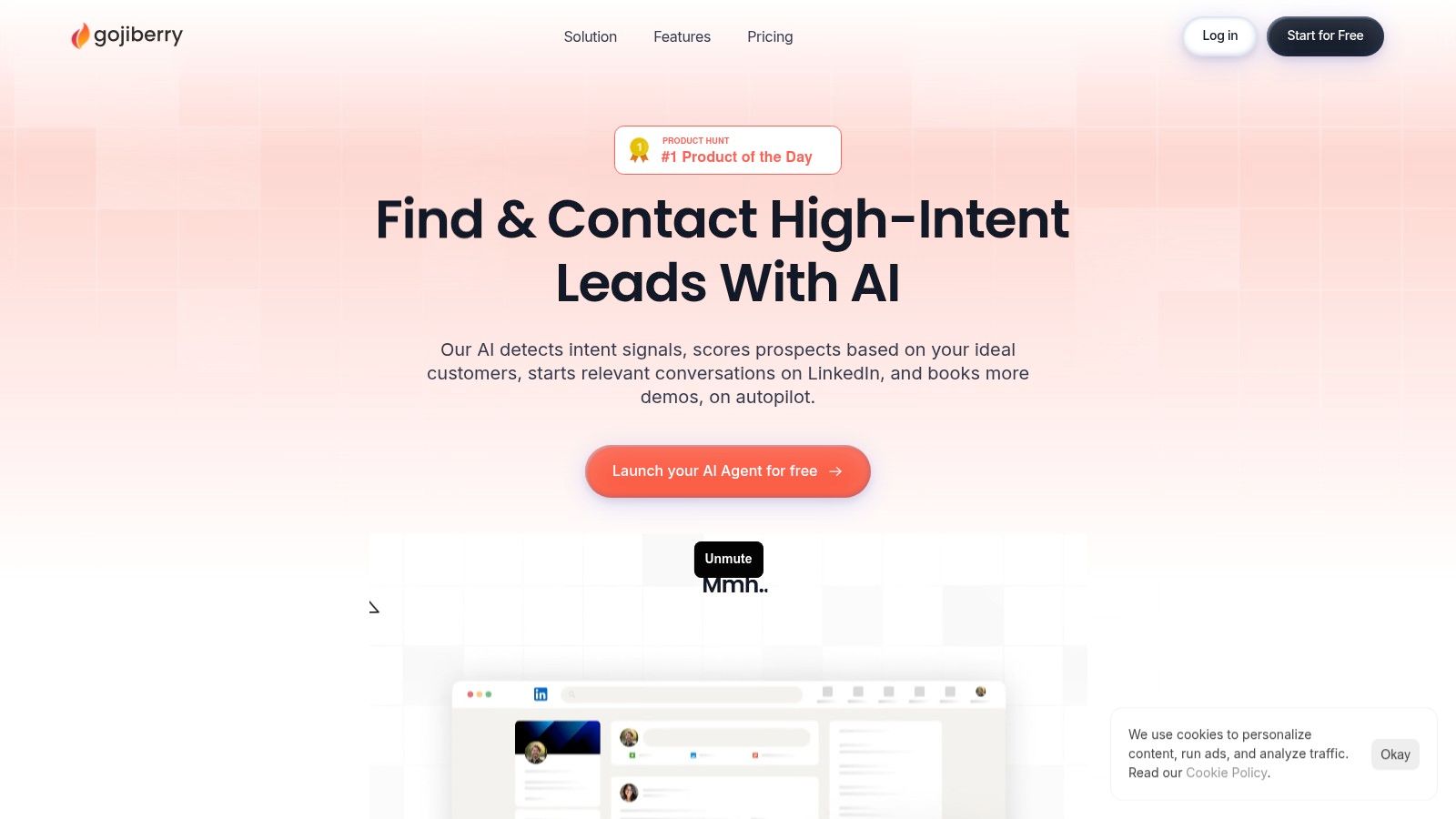
- -Overview & Best For: GojiberryAI is an AI co-pilot designed for founders and small sales teams who need a predictable pipeline without the manual grind. It stands out by focusing on real-time buying signals instead of static lists, delivering warm leads who are already showing purchase intent. It’s best for teams that want to shift from cold outreach to intent-driven engagement.
- -Key Features: Its AI agents monitor 10+ signals (like job changes or funding announcements), filter prospects against your ICP, enrich contacts with verified data, and can initiate outreach directly on LinkedIn. It's a true end-to-end automation solution.
- -Pricing: Starts with a Free Agent plan to test the waters. The Pro Plan is $99/month and includes full signal access and CRM integrations. Custom plans are available for larger teams.
- -Pros: Users report a focus on high-quality, warm leads, which leads to higher reply rates. The complete automation saves a ton of time. The free plan offers a great way to start.
- -Cons: Because it leverages LinkedIn heavily, users need to be mindful of platform rules and connection limits. Scaling to a large team requires a custom plan.
Outreach
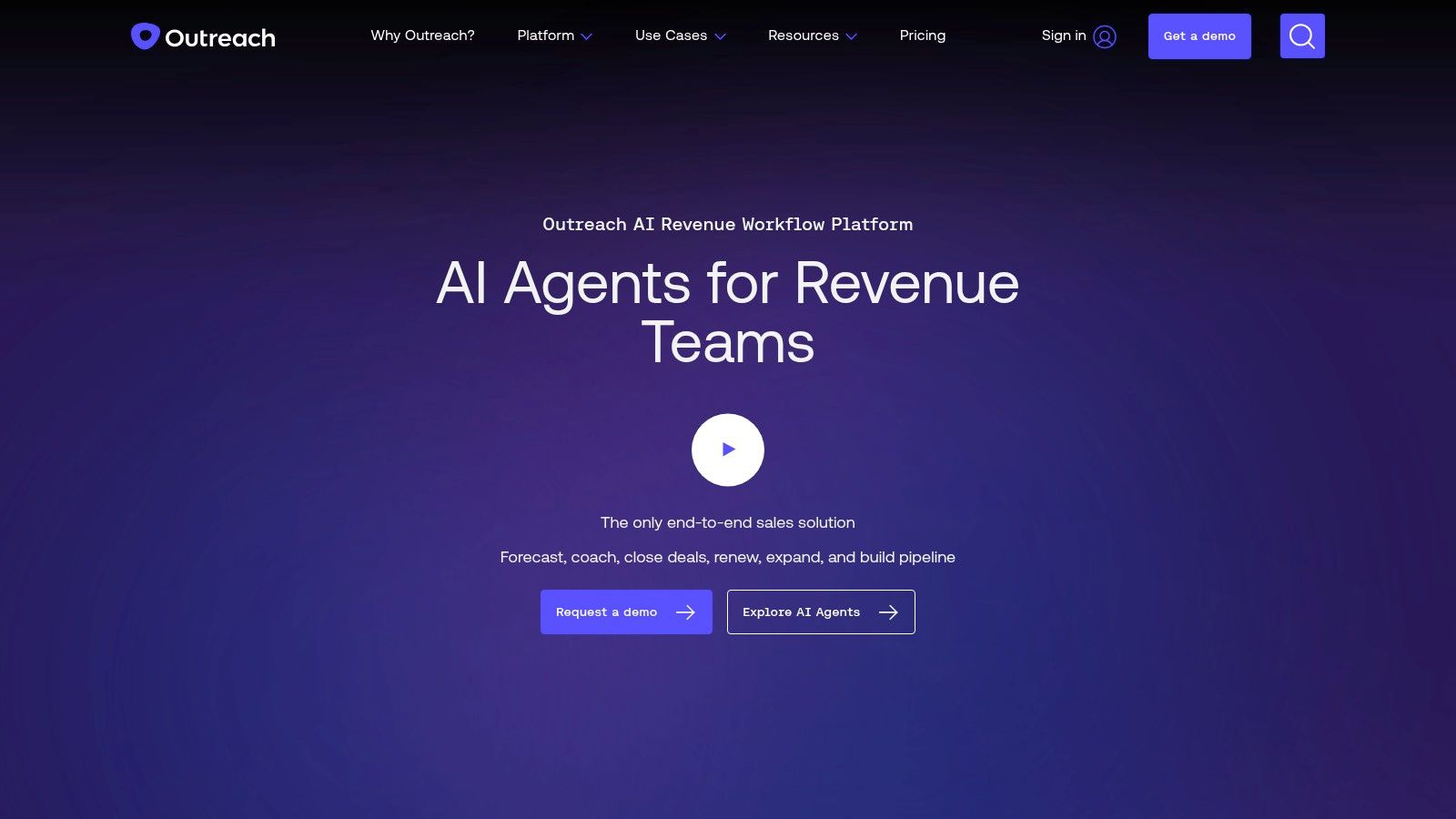
- -Overview & Best For: Outreach is a heavyweight in the sales engagement space, built for large, enterprise teams. It's a central command center for orchestrating complex sales motions at scale. It's best for organizations that need robust governance, deep analytics, and AI-powered coaching.
- -Key Features: Its AI, Kaia, provides real-time conversation intelligence during sales calls. It also features an AI email assistant and agentic workflows to automate tasks across sequences.
- -Pricing: Premium, quote-based, and typically involves annual, per-seat contracts. Not ideal for small teams on a tight budget.
- -Pros: It’s a mature, all-in-one platform with powerful AI-guided selling and coaching features. The administrative controls are excellent for large teams.
- -Cons: The high price point and contract structure make it inaccessible for many SMBs. It can be complex to implement.
Salesloft
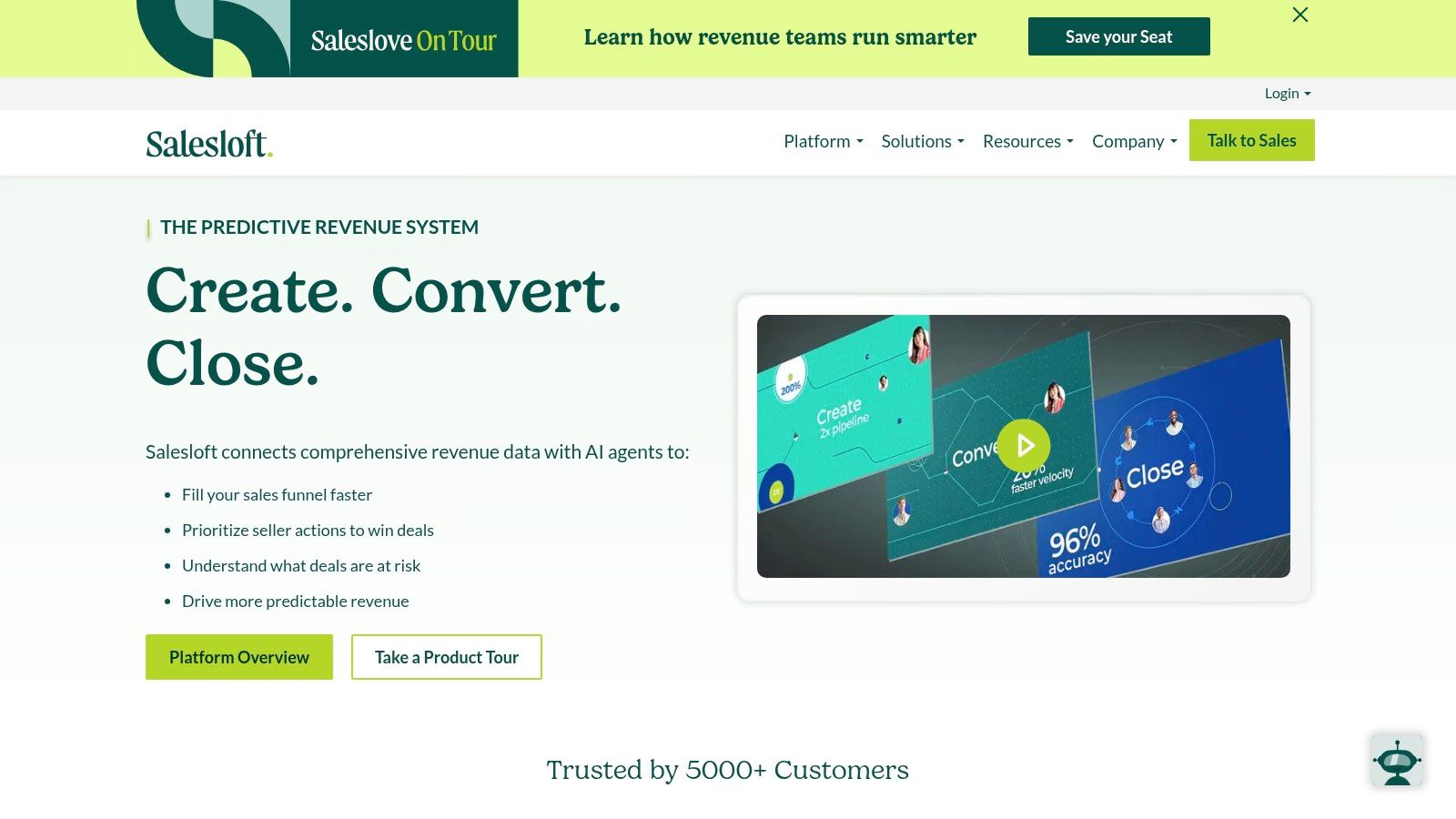
- -Overview & Best For: Salesloft is another top-tier sales engagement platform popular with mid-market and enterprise companies. It's known for balancing powerful features with a user-friendly interface. It's best for teams who want a robust revenue orchestration platform with strong coaching features and deep Salesforce integration.
- -Key Features: It offers "No-Code Agentic Plays" that automate tasks based on buyer signals in your CRM. Its conversation intelligence and AI assistants help with call analysis and reporting.
- -Pricing: Quote-based and considered a premium tool. Many of the advanced AI features are often sold as add-ons.
- -Pros: Marketers find its cadence builder intuitive. The platform has a strong reputation for ease of use and well-integrated coaching tools.
- -Cons: The pricing can be steep. Users should do their own due diligence regarding some industry reports of third-party integration security issues.
Apollo.io
- -Overview & Best For: Apollo.io is a hugely popular all-in-one platform that combines a massive B2B contact database with sales engagement tools. It’s a go-to for SMBs and mid-market teams looking for powerful functionality without the enterprise price tag.
- -Key Features: A vast database with filters for technographics and buying intent, multi-channel sequencing (email and calls), and a built-in dialer.
- -Pricing: Offers a generous free tier to get started. Paid plans are affordable, but heavy users should watch out for credit overage costs.
- -Pros: Excellent value for the money, combining data and outreach in one tool. It's easy to get started and scales well.
- -Cons: The data quality can sometimes be inconsistent compared to premium providers. Some essential features are locked behind more expensive plans.
Clay
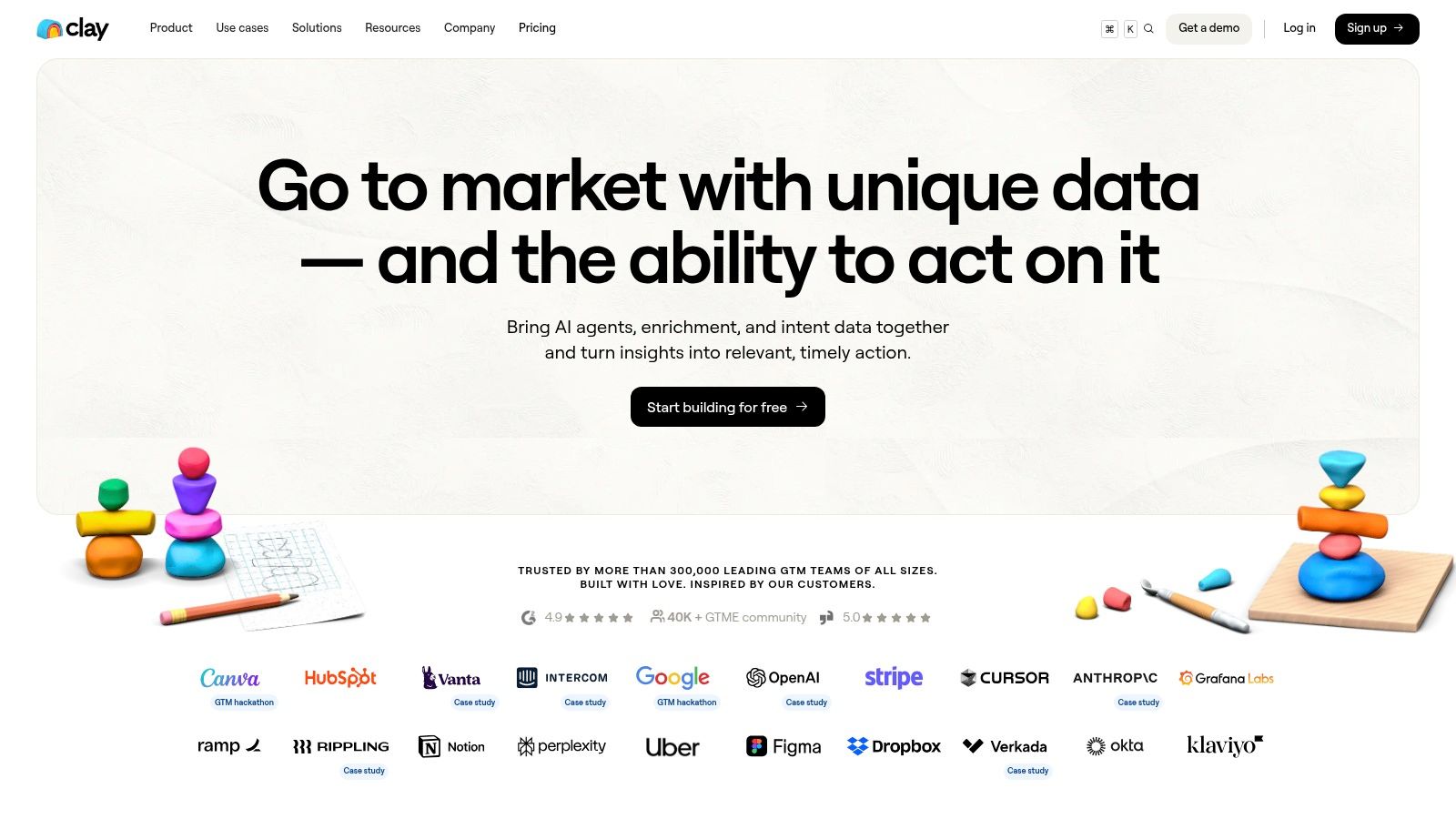
- -Overview & Best For: Clay isn't an outreach tool itself; it's a prospecting operating system. It's built for technical sales ops leaders and SDR teams who want complete control over their data enrichment workflows. It’s best for teams that want to build a unique competitive edge through highly customized data processes.
- -Key Features: It unifies over 100 data sources (like Clearbit and PeopleDataLabs) into one interface. You can build "waterfall" enrichment flows and use its AI agent, Claygent, to research websites and draft personalized copy.
- -Pricing: A credit-based model where you pay for the data you use. This can be more cost-effective than bundled data if used wisely.
- -Pros: Unmatched flexibility for creating tailored prospecting lists. The pay-as-you-go model is transparent.
- -Cons: It has a steep learning curve and requires a process-design mindset. It's not a plug-and-play solution for outreach.
Comparison Table: AI SDR Tools
Let's put them head-to-head. This table gives you a quick snapshot to help you compare.
| Tool | Key Strengths | Pricing Model | Best For |
|---|---|---|---|
| GojiberryAI | Real-time buying signals, end-to-end automation | Freemium, affordable monthly plans | Founders & small sales teams focused on intent |
| Outreach | Enterprise governance, AI coaching, deep analytics | Premium, quote-based annual contracts | Large, established sales organizations |
| Salesloft | User-friendly cadences, conversation intelligence | Premium, quote-based with add-ons | Mid-market & enterprise teams |
| Apollo.io | All-in-one data + engagement, great value | Freemium, tiered monthly plans | SMBs & mid-market teams needing a fast start |
| Clay | Data workflow automation, extreme flexibility | Credit-based, pay-as-you-go | Technical sales ops & custom prospecting |
How to Choose the Right AI SDR Tool
Feeling a bit more clear? Great. Now, let's turn this knowledge into a decision. Follow this simple, six-step process.
- -Step 1: Define Your Needs. Before you even look at a demo, answer these questions: What are our primary sales goals? What's our realistic budget? How many reps will be using this?
- -Step 2: Assess Your Tech Stack. Make a list of your must-have integrations. Does the tool need to talk to your CRM? Your marketing automation platform? Your calendar? A tool that doesn't fit your stack will cause more headaches than it solves.
- -Step 3: Evaluate Key Features. Use the checklist from earlier. Separate your "must-haves" (like CRM integration) from your "nice-to-haves" (like an AI dialer). Don't get distracted by shiny objects.
- -Step 4: Compare Pricing & ROI. Don't just look at the sticker price. Think about the potential return on investment. If a $200/month tool saves each rep 10 hours a week, is it worth it? Absolutely.
- -Step 5: Request Demos & Trials. This is crucial. Shortlist your top 2-3 contenders and book a demo. Ask them to show you exactly how their tool solves your specific problems. If they offer a free trial, take it.
- -Step 6: Check References & Reviews. What are other users saying? Look for reviews on sites like G2 and Capterra. If possible, ask the vendor for a customer reference in your industry.
AI SDR Tool Selection Criteria
As you go through your evaluation, keep these seven criteria in mind. They're often the deciding factors between a good fit and a bad investment.
- Industry Expertise: Does the tool have a proven track record in your industry (e.g., SaaS, B2B services, etc.)?
- Ease of Implementation: Based on user feedback, how long does it really take to get set up and running?
- Learning Curve: How intuitive is the platform? Will your team need extensive training to become productive?
- Support Quality: Do reviews praise their customer support for being responsive and helpful?
- Compliance & Security: Does the tool adhere to data privacy regulations like GDPR? Is your data secure?
- Integration Capabilities: How deep and reliable are the integrations with your critical systems?
- Pricing Transparency: Are there hidden fees or confusing add-on costs? Look for clear, straightforward pricing.
Common Tool Selection Mistakes
Want to avoid buyer's remorse? Steer clear of these common pitfalls.
- -Choosing on price alone. The cheapest tool is rarely the best. Focus on value and ROI, not just the monthly cost.
- -Not using a free trial. You wouldn't buy a car without a test drive. Don't buy software without trying it first.
- -Ignoring integration needs. A tool that creates data silos is a step backward, not forward.
- -Overlooking compliance features. Getting your company in hot water over data privacy is not worth it.
- -Not considering team size. A tool built for a 500-person enterprise team is likely overkill for a 3-person startup.
AI SDR Tool Pricing Models
Pricing can be confusing. Here's a quick breakdown of the four main models you'll encounter.
- Flat Monthly Fee: One price for a certain level of access. Simple and predictable.
- Per-User Pricing: The cost scales with the number of reps on your team. Common for enterprise tools.
- Usage-Based Pricing: You pay for what you use (e.g., number of contacts enriched, emails sent). This model is flexible but can be hard to budget for.
- Performance-Based Pricing: A rare model where you pay for results (e.g., per meeting booked). This aligns incentives but is not widely offered.
Real-World Tool Selection Case Studies
Let's look at how this plays out in the real world.
- -Case Study 1: The SaaS Startup. A 10-person SaaS company needed to generate more demos but had a limited budget. They chose a tool like GojiberryAI because its intent-driven approach delivered high-quality leads and its affordable monthly plan fit their budget. They avoided enterprise tools like Outreach because the cost and complexity were too high.
- -Case Study 2: The B2B Services Agency. A marketing agency managing outreach for multiple clients needed a flexible tool. They evaluated Apollo.io for its all-in-one data and outreach but ultimately chose Clay because they needed to build highly custom prospecting flows for each client's unique ICP. The flexibility outweighed the steeper learning curve.
- -Case Study 3: The Enterprise Corporation. A Fortune 500 company with a 200-person sales team needed to standardize its sales process and improve coaching. They implemented Salesloft across the entire organization. The key selling points were its robust admin controls, deep Salesforce integration, and conversation intelligence features that helped managers coach their reps at scale.
These examples show there's no single "best" tool—only the best tool for a specific situation.
So, what are you waiting for? The future of sales isn't some far-off concept; it's here, and it's powered by AI. The tools we've discussed are designed to take the "robot" out of the sales rep, freeing them up to do what humans do best: connect, empathize, and solve problems.
Your next step is simple: pick your top contenders, book those demos, and start a free trial. The time you invest now in finding the right AI partner will pay for itself a hundred times over in saved hours and a fuller pipeline. Stop grinding and start selling. Your team (and your quota) will thank you for it.
Want to see how an AI SDR tool can deliver warm, intent-qualified leads to your inbox every day? Check out GojiberryAI and launch your free AI agent today.
Frequently Asked Questions (FAQ)
Will an AI SDR tool replace my human SDRs?
No, and that's a common misconception. The goal of an AI SDR tool is to augment, not replace, your human talent. Based on industry-wide adoption, the most successful teams use AI to handle the 80% of prospecting work that is repetitive and low-value (like list building and data entry). This frees up their human SDRs to spend 100% of their time on high-value activities like personalizing outreach, handling complex objections, and building relationships. Think of it as giving your SDRs a team of virtual assistants.
How do I measure the ROI of an AI SDR tool?
Measuring ROI is critical. You should track both quantitative and qualitative metrics.
- -Quantitative: The most important metric is meetings booked. Also track reply rates, time saved per SDR per week (ask your reps!), and cost per lead/meeting. Compare these to your pre-tool benchmarks.
- -Qualitative: Survey your sales team. Are they happier? Do they feel more productive? Is lead quality better? A happy, motivated team is a more effective team.
What's the biggest mistake teams make when implementing an AI SDR tool?
The biggest mistake is a "set it and forget it" mentality. These are not magic wands. Successful implementation requires an initial setup phase where you clearly define your Ideal Customer Profile (ICP) and messaging for the AI. More importantly, it requires a weekly or bi-weekly check-in. User feedback consistently shows that the teams getting the best results are those who review the AI's performance, tweak the parameters, and refine the messaging based on what the analytics are telling them. Treat your AI SDR tool like a new team member that needs coaching and guidance to perform at its best.

More High-Intent Leads = Your New Growth Engine.
Start Now and Get New High Intent Leads Delivered Straight to Slack or Your Inbox.